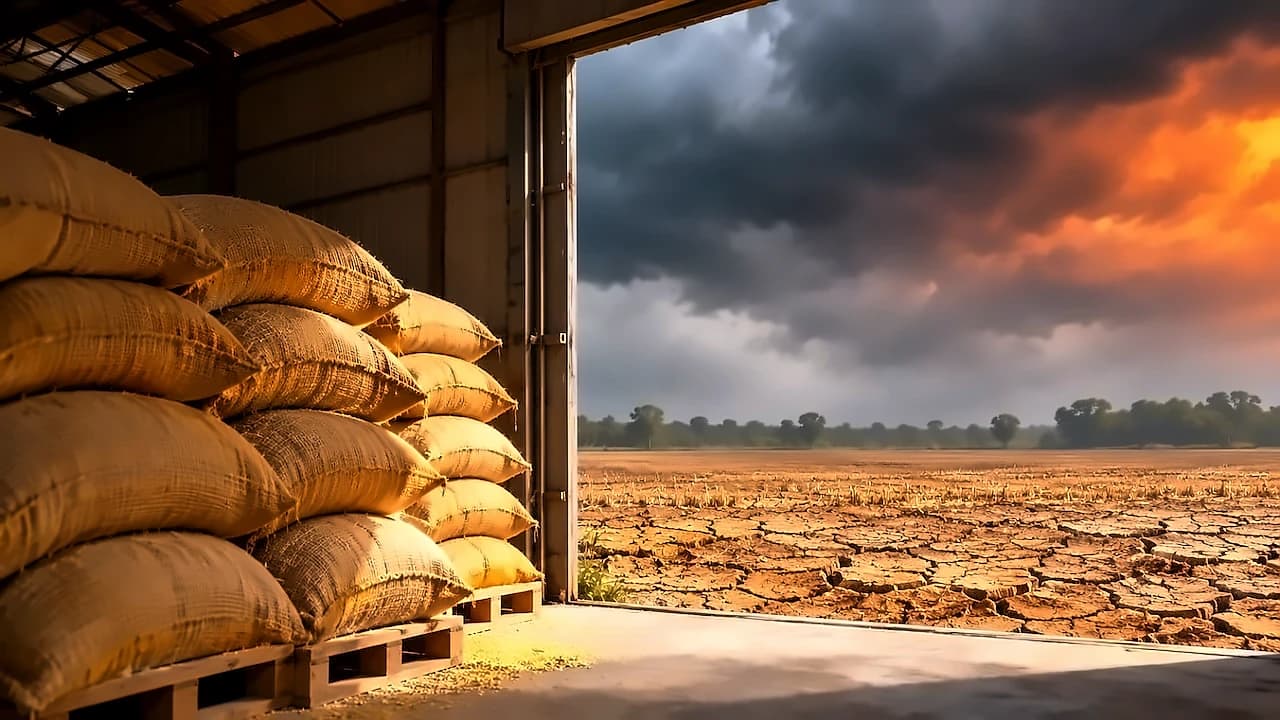
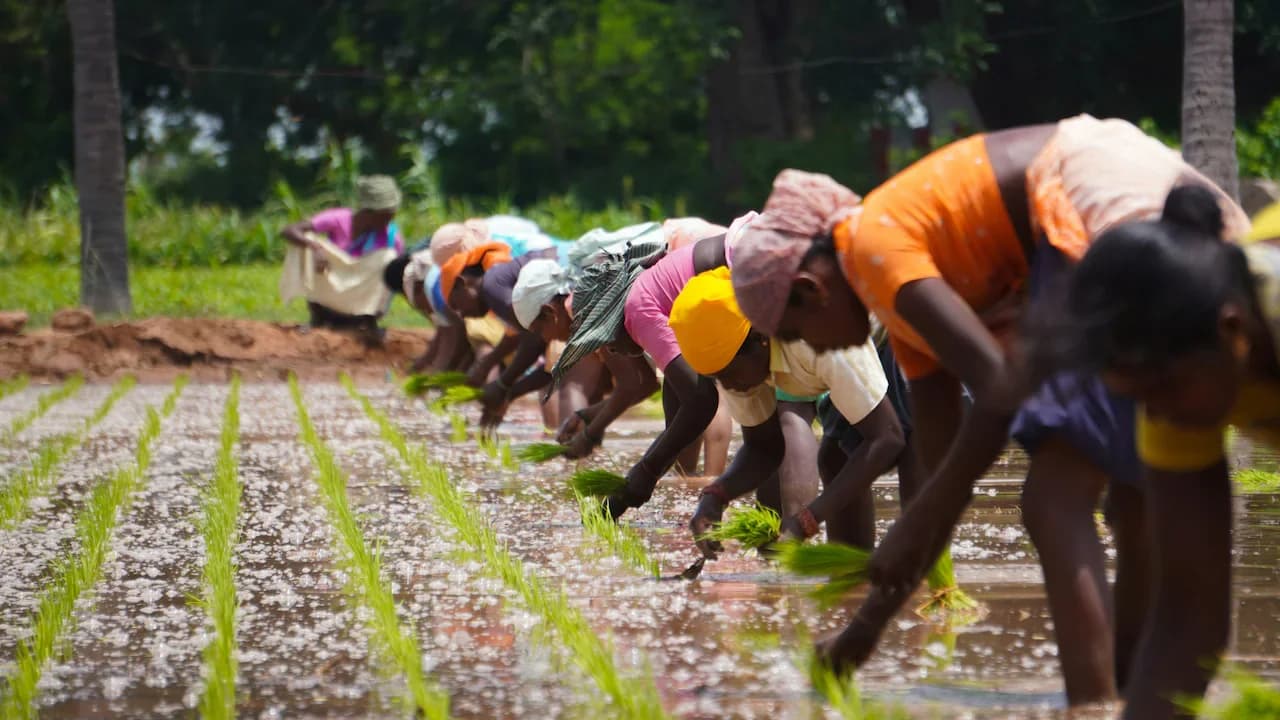
The El Niño phenomenon is creating a global agricultural crisis, with India's wheat sowing down 15.27% to 50.07 lakh hectare as of November 13, 2026, compared to 59.10 lakh hectare in the previous year, according to the Union Agriculture Ministry. The total rabi crop coverage has declined 11.33% to 178.25 lakh hectare from 201.04 lakh hectare last year, as reported by Business Standard. The wheat crop, usually sown in October-November and harvested in March-April, was planted on 336 lakh hectare in the 2025-26 crop year. The pace of wheat sowing is lagging behind due to the 13% deficient June-September monsoon, which reduced residual soil moisture before sowing began, compounded by lower irrigation availability with reservoir and canal water levels below normal in key wheat-growing states.
Chickpea sowing has also lagged significantly, with chana acreage standing at 3.11 million hectares by November 13, compared to 3.9 million hectares a year ago, amid deficient post-monsoon rainfall. According to Business Standard, post-monsoon rainfall in India was almost 34% below normal from October 1 to November 16, coupled with subpar southwest monsoon rainfall in several states. The crop is normally sown across around 9.98 million hectares, meaning there is still considerable time before a clearer picture emerges. A senior official noted that significant sowing will take place after Diwali and Chhath festivities, when farmers return to their fields, which could ensure faster pick-up in the coming weeks. November is the most crucial month for chana sowing, and any major shortfall during this period could affect final yields significantly.
The agricultural distress extends across multiple regions, with Karnataka declaring drought in 246 of 240 talukas and Telangana Chief Minister asking farmers to skip one crop due to mounting pressure on water and power supply. In Rajasthan, irrigation systems are failing as water runs short and groundwater goes unreplenished, with the situation expected to deteriorate by mid-November. According to Dr L.N. Harsh, former Vice Chancellor of Agriculture University, Jodhpur, moong production has become close to negligible and bajra output has suffered significantly. The crisis is now affecting Kenya's major maize-growing counties with significant yield deficits, even as flooding threatens farms due to the strengthening El Niño rains, creating a dual threat of drought and flooding across different regions.
Beyond wheat, pulses area declined 14.34% to 47 lakh hectare as of November 13, compared to 54.87 lakh hectare a year ago, with gram acreage remaining lower at 31.13 lakh hectare against 39.70 lakh hectare last year. Coarse cereals coverage lagged behind at 11.56 lakh hectare compared to 12.18 lakh hectare previously, with jowar and maize coverage lower at 6.24 lakh hectare and 3.41 lakh hectare respectively. Oilseeds acreage fell 7.37% to 61.71 lakh hectare from 66.62 lakh hectare, with mustard area at 59.31 lakh hectare against 64.78 lakh hectare last year. The Central Water Commission's November 12 data showed total live storage in 178 reservoirs at 163.055 BCM compared to 257.812 BCM estimated to have been created in the country.
Despite current challenges, India maintains substantial food security reserves with the Central pool at approximately 87 million tonnes against a required minimum of 30.77 million tonnes, leaving around 56 million tonnes in excess. According to Dr Ritu Srivastava, Associate Professor of Economics at K J Somaiya Institute of Management, with procurement prices falling and Public Distribution System (PDS) and open market sales eating into grain stocks, a net loss of 15-25 million tonnes annually would drain the buffer in two to three years. The professor projects that by 2028, the government would inevitably reduce open-market sales, lift export bans, import wheat and rice duty-free, and face rising cereal inflation and PMGKAY demands. Chickpeas, grown during the rabi season, are important to India's pulse economy and rank among the country's most widely cultivated pulses, accounting for around 46% of India's 27.4 million tonnes pulse production in the 2025-26 crop year.