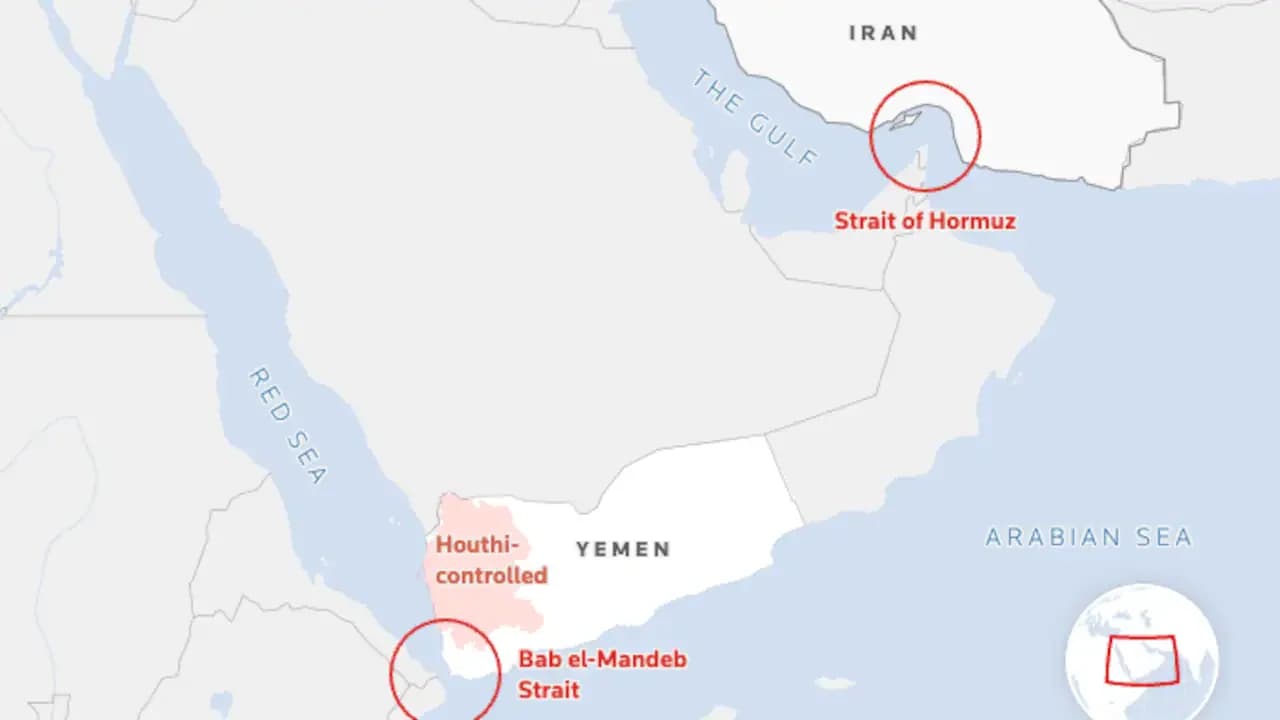
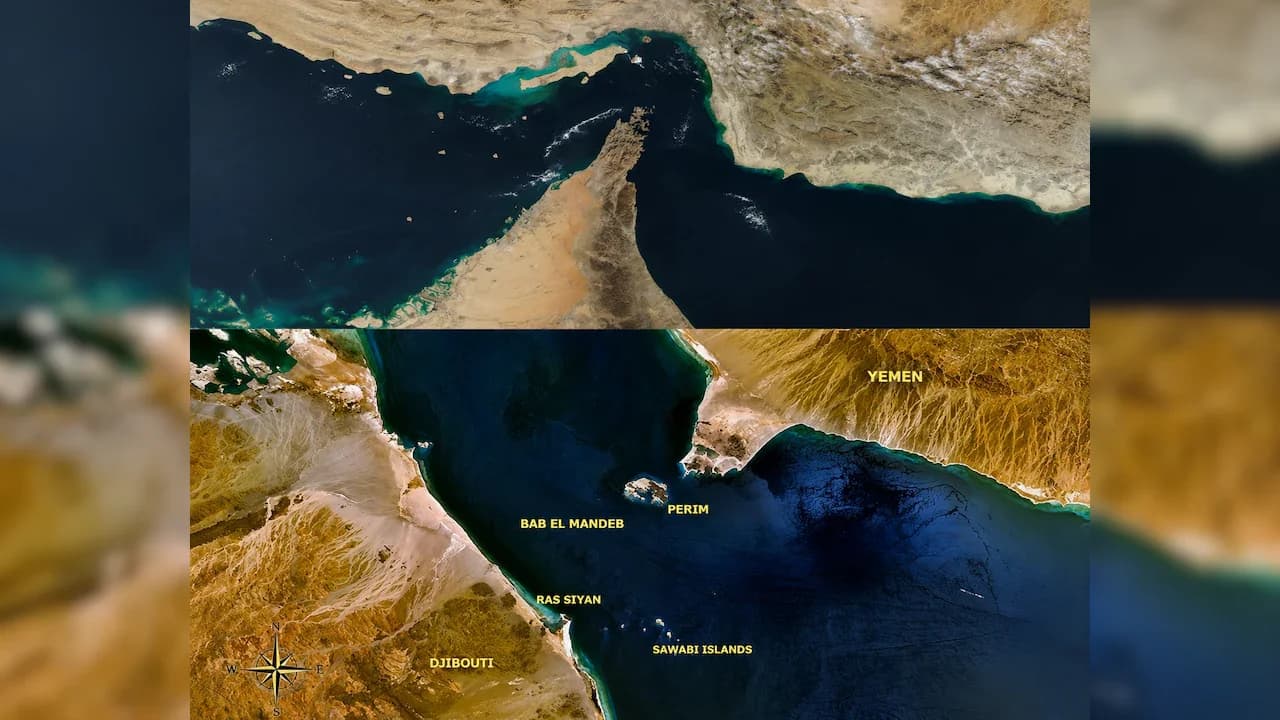
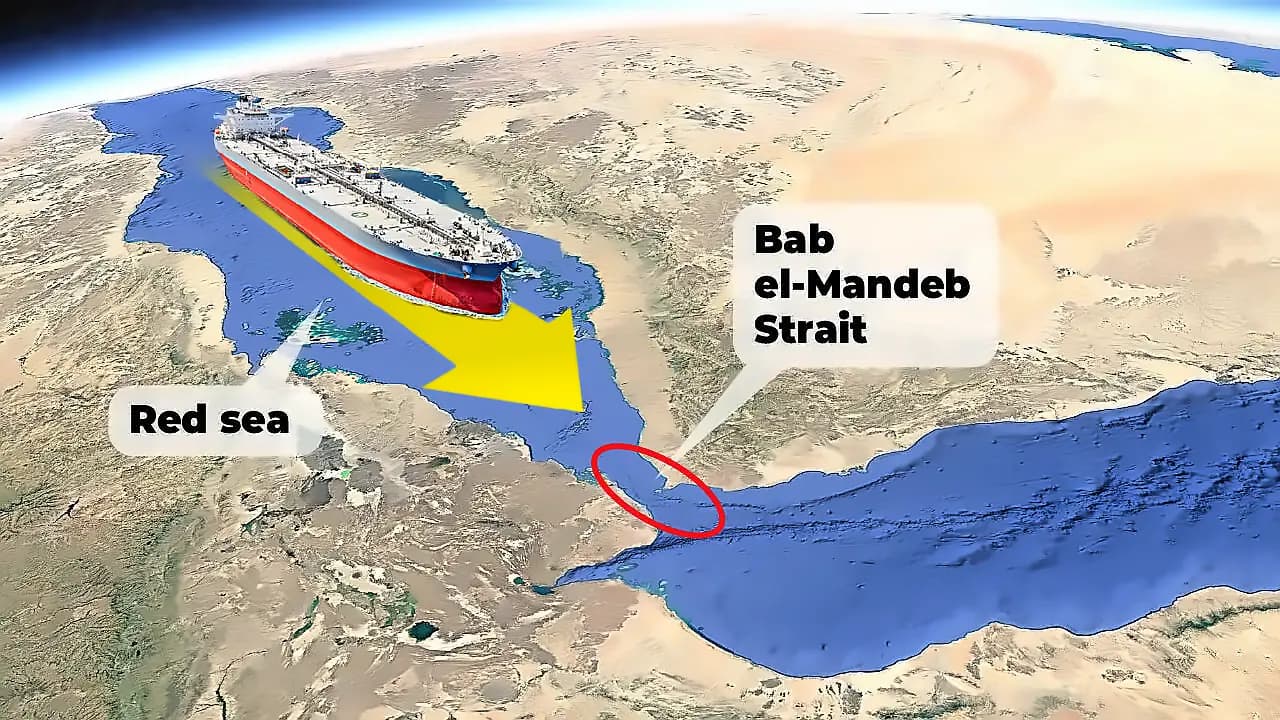
Yemen's Houthi Movement has announced plans to replicate Iran's Strait of Hormuz strategy by disrupting shipping through the Bab el-Mandeb, according to Yemeni Foreign Minister-designate Afrah Al-Zouba. Speaking to journalists at the Yemeni embassy in Riyadh, Al-Zouba stated that "The Houthis want to copy the Iranian model and this will shut down two main straits, the gateways into the Gulf and Red Sea." This escalatory approach follows the Houthis' threat last week to expand disruptions to global oil supplies by announcing a blockade targeting Saudi Arabia's oil industry in the Red Sea. The Red Sea has become a new front in the Iran war, with the Houthis taking an escalatory approach against Saudi Arabia by firing missiles and drones at the kingdom, declaring a blockade on Saudi shipping, and targeting sensitive crude oil supply and transportation sites linked to eastern Saudi Arabia and the Red Sea oil export hub of Yanbu.
Oil prices have surged past $100 per barrel again, reaching levels not seen since the US-Israeli war on Iran in March. According to Oxford Economics, if both the Red Sea and Strait of Hormuz were effectively closed to traffic, oil could eventually pass $160 per barrel. The International Energy Agency (IEA) warned that renewed fighting in the Middle East is increasing concerns over energy supplies, with world production currently below pre-war levels by around 9.4 million barrels per day. European Central Bank President Christine Lagarde expressed alarm at the Houthi attack on a Saudi vessel in the Red Sea, noting the situation is having an impact on Brent crude prices that evolve almost by the hour. As per Rystad Energy consultancy, much of the world's spare production capacity has already been used, while strategic and commercial oil inventories are lower than when the war began, leaving the market with fewer buffers against a prolonged supply disruption.
China's crude oil imports are expected to rebound significantly in July after hitting their lowest level in more than a decade. According to preliminary figures from data analytics firm Kpler, seaborne imports are projected to average approximately 7.8 million barrels per day in July, representing a substantial increase from 6.2 million barrels per day in June. The June figure marked the lowest daily import rate since November 2015, as reported by CNBC TV18. This recovery comes as the Red Sea threat raises stakes for alternative routes, with Saudi Arabia having stepped up shipments via pipeline to the Red Sea port of Yanbu, allowing it to export some three-quarters of its pre-war level. However, the current levels remain significantly below pre-war purchases of about 12.6 million barrels per day in February, including pipeline flows of up to 1 million barrels per day.
The import recovery is primarily driven by accelerated flows through the Strait of Hormuz and increased purchases of Russian oil. As reported by Kpler analyst Muyu Xu, higher inflows in July are largely attributed to cargoes that had been stranded in the Persian Gulf finally arriving in China. Shipments from Saudi Arabia have more than doubled in July, while flows from the United Arab Emirates have surged more than tenfold, according to Kpler data. However, this workaround is now facing headwinds as the blockade and threat of attacks on ships will make passage through the Red Sea less viable in the near term. Oil flows from the Persian Gulf ramped up following an interim peace agreement between the US and Iran last month, but a recent escalation of hostilities in the region has snarled Hormuz traffic. The IEA cited increased exports from several countries and Saudi Arabia and United Arab Emirates oil reaching markets by alternative routes as cushioning factors.
Russian oil inflows have also contributed to the import recovery, with flows climbing by approximately 10% in July. According to Kpler data, this represents a significant increase in China's diversification of crude oil sources. The recovery comes after China's crude imports had been significantly impacted by the Iran war that began in late February. Producers including Brazil, Kazakhstan, the United States and Venezuela are also increasing their production to help limit further crude oil price rises. The head of French oil giant TotalEnergies was similarly phlegmatic when announcing the company's second-quarter results, stating "We have no problem with stocks to supply our refineries."
The current escalation has raised concerns about a potential return to full-scale war in Yemen, where conflict killed hundreds of thousands of people after the Houthis stormed the capital Sanaa in 2014, prompting Saudi Arabia to intervene at the head of an Arab coalition. A truce was reached in 2022 but has been pierced by recent cross-border fire, with Saudi officials, Western diplomats and Yemeni officials seeing a return to full-scale war as more likely now than at any point since then. Yemen's government, which enjoys strong Saudi backing, is prepared for escalation, with firing taking place along the frontline spanning the country's northwest from the Red Sea up to the Saudi border, according to Foreign Minister-designate Al-Zouba. She stated that "We think that this conflict now needs to come to an end, either via peaceful means, or the other way."