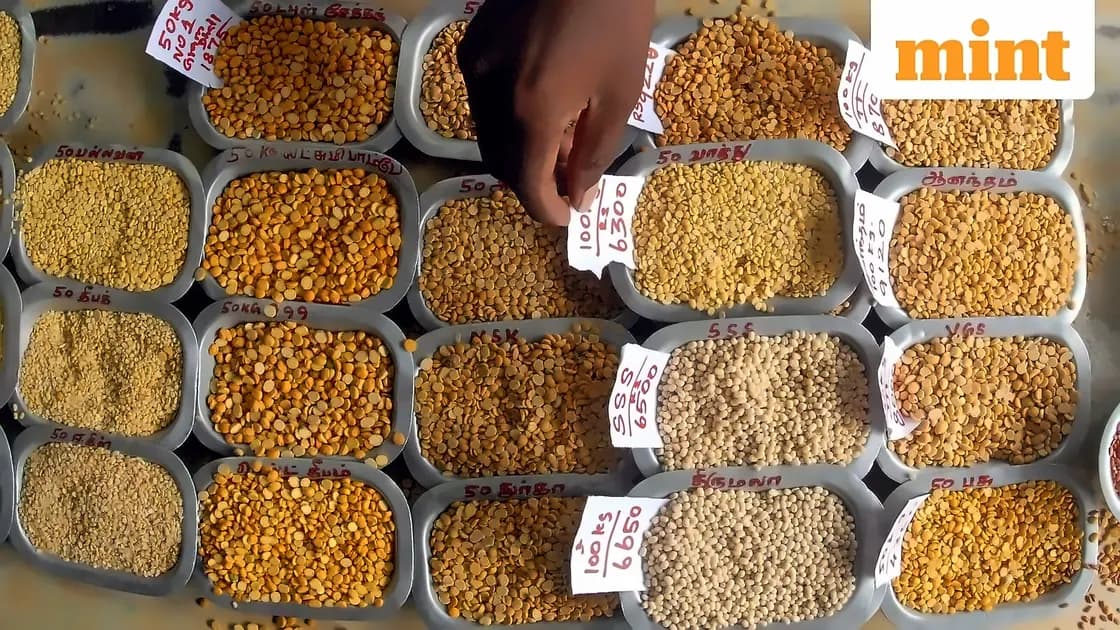
The government is considering cutting import duties on lentils and yellow peas to boost supplies and curb food inflation, as reported by Reuters citing two government officials and an industry source. Currently, India imposes 10% import tax on red lentils and chickpeas and 30% on yellow peas, with chickpeas excluded from any potential reduction. The country has already allowed duty-free imports of pigeon peas and black gram until March 2027. India is the world's biggest producer, consumer and importer of pulses, with imports accounting for about 23% of consumption in 2024-25 when the country produced 25.7 million tons and imported 7.3 million tons. An erratic monsoon has fueled concerns about this year's harvest size, prompting the government to weigh tariff reductions on select pulses to ease food-price pressures.
Agriculture Minister Shivraj Singh Chouhan on Wednesday approved procurement worth ₹5,547.99 crore at Minimum Support Price (MSP) under the Price Support Scheme (PSS) for the Kharif Marketing Season 2026-27. According to reports from The Hindu BusinessLine, the decision aims to protect farmers from declining market prices and ensure remunerative returns for their produce, particularly for pulse and oilseed growers across three states. Around 706,000 tonnes of pulses and oilseeds will be procured at MSP across the three states under this initiative, with the procurement of 5.21 lakh tonnes of pulses and 1.90 lakh tonnes of oilseeds at their minimum support prices as the fresh kharif harvest starts arriving in mandis.
In Uttar Pradesh, the largest share of approved procurement worth ₹3,992.57 crore has been sanctioned. As reported by The Hindu BusinessLine, this includes procurement of 4,66,000 metric tonnes of tur valued at ₹3,937.70 crore and 6,250 metric tonnes of moong valued at ₹54.87 crore at MSP. The state accounts for the majority of the total approved procurement value and represents the largest contribution to the national pulse and oilseed procurement initiative.
For pulse and oilseed farmers in Karnataka, procurement worth ₹1,107 crore has been approved under PSS. According to The Hindu BusinessLine, this includes 1,15,500 metric tonnes of soybean valued at ₹659.27 crore, 38,250 metric tonnes of moong valued at ₹335.83 crore, and 13,413 metric tonnes of sunflower valued at ₹111.90 crore. In Telangana, procurement worth ₹448.42 crore has been approved, comprising 62,000 metric tonnes of soybean valued at ₹353.90 crore and 10,766 metric tonnes of moong valued at ₹94.52 crore.
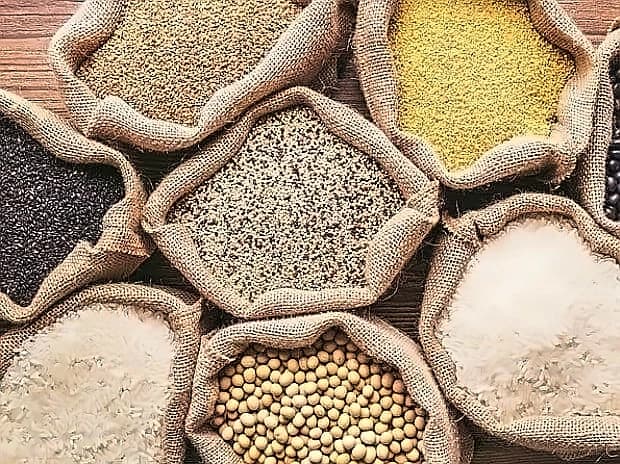
Pulses are mainly cultivated in rain-fed areas, and output is expected to drop sharply this year after top producing states received up to 30% less rain than average during the June-September monsoon season, as reported by Business Standard. Farmers are likely to start planting chickpeas from October, and the government could encourage a larger planting area by retaining import duties on the crop. Food inflation in India has been rising since December and stood at 5.95% in August, with pulses remaining elevated - pigeon pea inflation at 5.6% and black gram inflation at 7.4% year-on-year. Prime Minister Narendra Modi's government has already cut import tariffs on vegetable oils and adjusted sugar exports to tame prices.