In a first, Bihar has joined the Centre's pulse procurement network following a policy change that allows central agencies to purchase masoor directly from the state's farmers rather than through state-level agencies, according to two government officials aware of the development. The move opens Bihar's participation in the pulse procurement programme, giving its farmers access to the government's minimum support price (MSP)-based procurement mechanism. The state had abolished its agricultural produce market committee (APMC) system in 2006, due to which farmers were largely dependent on private traders and other market channels to sell their produce, often forcing them to sell their crops below the MSP.
According to the first official cited above, around 3,000 tonnes of masoor has been procured from Bihar as of the first week of August, against a target of 32,000 tonnes. The procurement has benefited about 750 farmers, who have received around ₹21 crore for their produce at the MSP of ₹7,000 per quintal. Two central agencies are managing the procurement: the National Cooperative Consumers' Federation of India (NCCF) and the National Agricultural Cooperative Marketing Federation of India (Nafed). NCCF has bought about 1,200 tonnes of masoor across Nalanda, Patna, Vaishali and Rohtas, while Nafed has procured about 1,850 tonnes from Jehanabad, Kaimur, Lakhisarai, Nalanda, Patna and Rohtas.
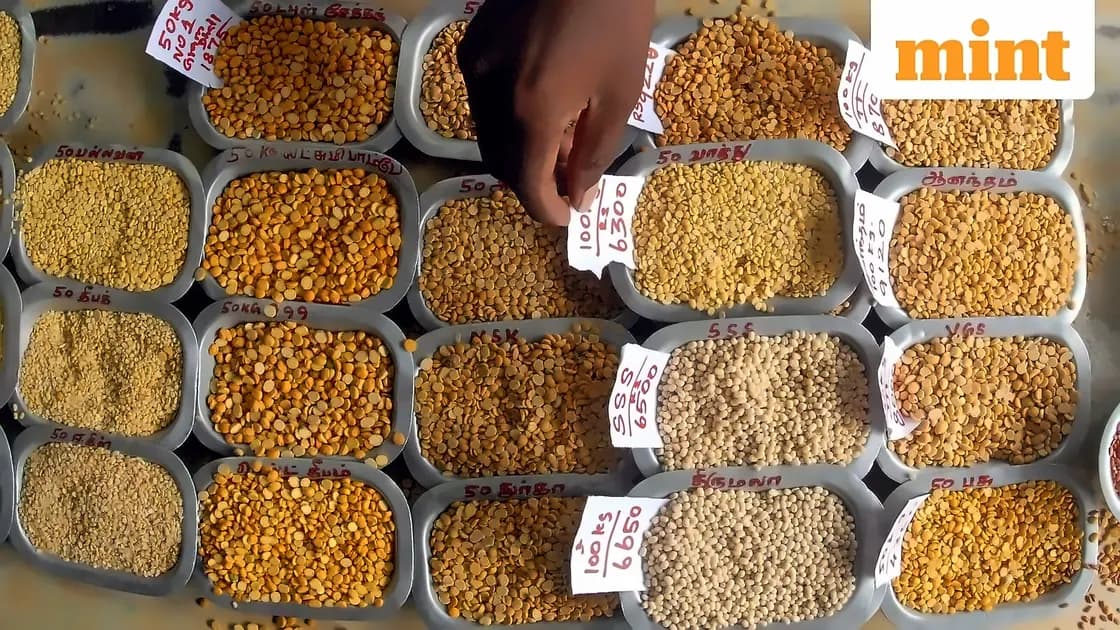
The move is significant on two counts. First, it marks Bihar's entry into the Centre's pulse procurement network for the first time, despite the state producing nearly 400,000 tonnes of pulses annually. Second, it shifts the operational model by allowing central agencies to buy directly from farmers rather than through state-level intermediaries. Bihar accounts for around 448,000 hectares under pulse cultivation, making it a key market for expanding the Centre's direct procurement drive. Along with major pulse-producing states such as Madhya Pradesh, Bihar is one of the country's primary masoor-growing regions.
"The successful procurement could help establish confidence among farmers in the state about the Centre's MSP-based procurement mechanism and encourage more pulse growers to participate in government procurement in the future," said Binod Anand, agricultural economist and member of the Centre's high-powered committee on MSP, crop diversification and natural farming. Bimal Kothari, chairman of the India Pulses and Grains Association (IPGA), said the initiative is the outcome of the Centre's move to encourage farmers in rainfed areas to increase the acreage under pulses through the Mission for Aatmanirbharta in Pulses. He added that earlier, Bihar produced lentils largely for domestic consumption and therefore did not participate in government procurement.
"Earlier, Bihar produced lentils largely for domestic consumption and therefore did not participate in government procurement. The government is now seeking to achieve self-reliance in pulses, and this is a step in that direction," said Kothari. India continues to rely on imports to meet domestic demand for lentils, although their import value declined to ₹5,197.72 crore in FY26 from ₹6,916.03 crore in FY25, according to data from the directorate general of foreign trade. In volume terms, imports from Australia rose to 566,000 tonnes from 470,000 tonnes, while those from Canada fell to 533,000 tonnes from 626,000 tonnes.