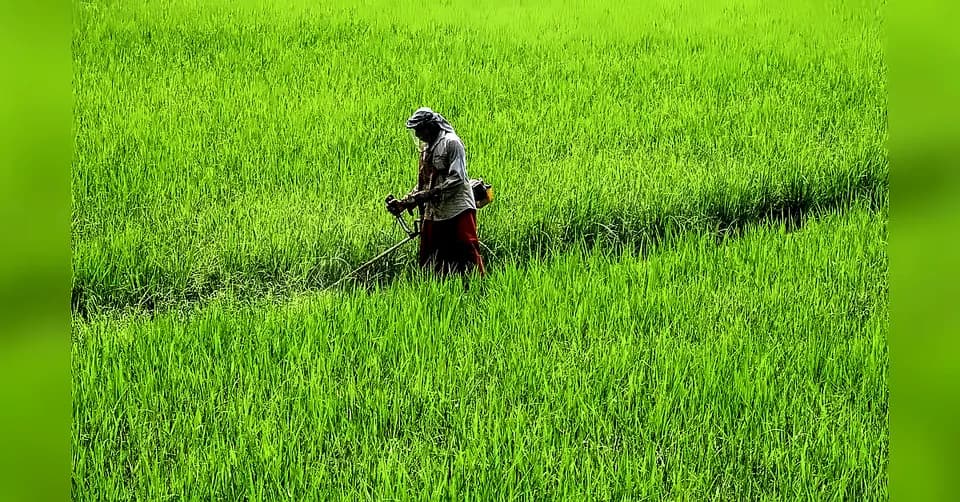
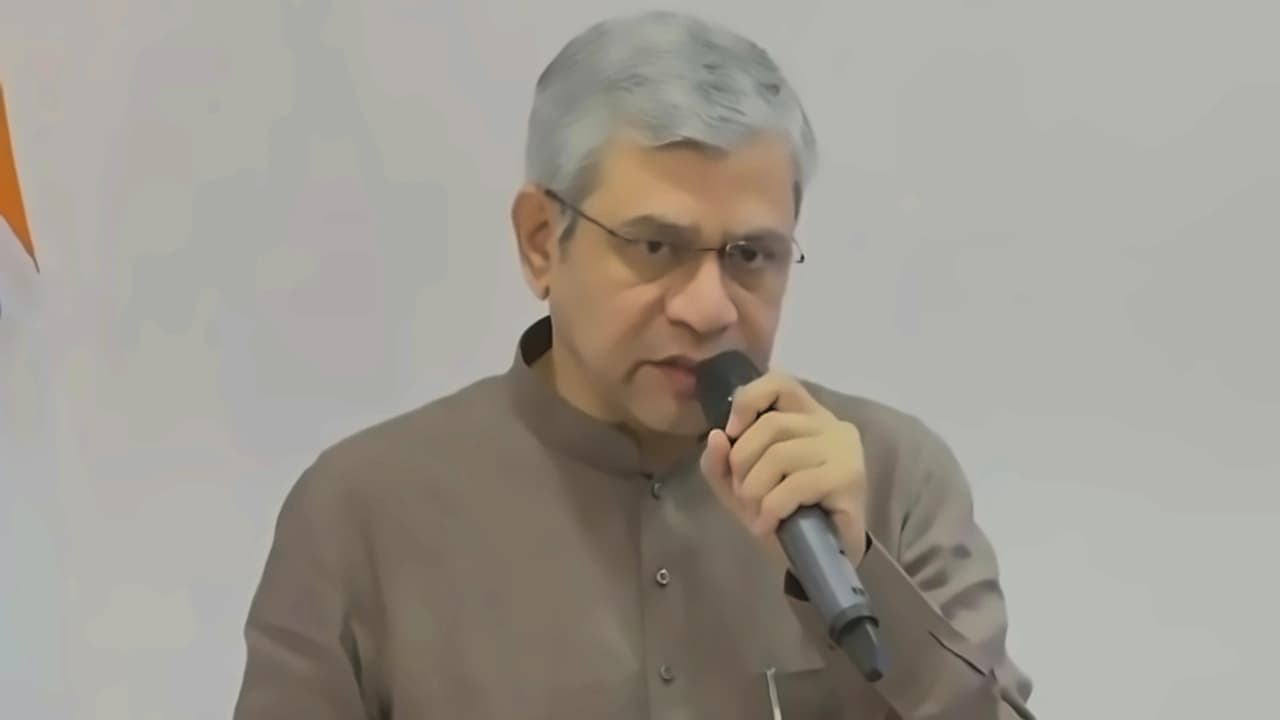
The Cabinet Committee on Economic Affairs has approved revised Minimum Support Prices (MSPs) for 14 kharif crops for the 2026-27 season, as reported by Upstox Securities. According to Union Minister Ashwini Vaishnaw, the revised MSPs are expected to result in payments of around ₹2.6 lakh crore to farmers. The announcement comes amid heightened global volatility and supply chain disruptions due to the West Asia war, with the government seeking to support India's food and energy security. The announcement covers a comprehensive range of agricultural commodities for the upcoming kharif season, with the highest absolute increases recommended for Sunflower Seed (₹622 per quintal), Cotton (₹557 per quintal), Nigerseed (₹515 per quintal), and Sesamum (₹500 per quintal). Among major food grains, the MSP for common paddy has been increased to ₹2,441 per quintal for the 2026-27 season, up by ₹72 from the previous year's MSP of ₹2,369 per quintal, with Grade A paddy fixed at ₹2,461 per quintal. The Ministry of Agriculture & Farmers Welfare confirmed that the revised MSPs are in line with the Union Budget 2018-19 commitment of fixing MSPs at least 1.5 times the all-India weighted average cost of production.
The Indian Vegetable Oil Producers' Association (IVPA) has welcomed the government's decision to increase MSPs for oilseeds, particularly praising the significant hikes for sunflower, soybean, sesamum and groundnut. As reported by The Hindu BusinessLine, Sudhakar Desai, President of IVPA, emphasized that "A sustainable edible oil economy requires a balanced approach that protects farmer remuneration while also safeguarding consumer affordability. MSP support plays a critical role in strengthening farmer confidence and encouraging crop diversification towards oilseeds." The association noted that higher MSP support for oilseeds is aligned with India's long-term objective of reducing import dependence and strengthening domestic oilseed productivity and value addition. IVPA believes India now needs a more stable and dynamic import duty framework that can respond to changing global price cycles, domestic crop economics and inflationary trends, stating that a calibrated policy mechanism can help maintain equilibrium between farmer interests, industry viability and consumer price stability.
The revised MSP structure is projected to deliver substantial financial benefits to farmers across the country. According to Union Minister Ashwini Vaishnaw, the total payouts of around ₹2.6 lakh crore are expected to reach farmers through these enhanced support prices. The government estimates annual procurement at 82.441 million tonnes for the upcoming season. This financial support is designed to provide adequate remuneration for agricultural produce during the 2026-27 kharif season, with the MSP framework ensuring farmers receive fair compensation for their crops based on production costs. The government emphasized that the MSP revisions are aimed at ensuring better income security for farmers, promoting crop diversification, and strengthening domestic agricultural production. For the last decade (2014-15 to 2025-26), MSP payments to paddy farmers reached ₹16.08 lakh crore, compared to ₹4.44 lakh crore during 2004-05 to 2013-14, while total MSP payments for all 14 Kharif crops combined touched ₹18.99 lakh crore over the last decade, significantly higher than the ₹4.75 lakh crore paid during the previous ten-year period.
The Centre has continued to encourage cultivation of pulses, oilseeds, and nutri-cereals by offering relatively higher MSP increases compared to cereals. According to the Ministry of Agriculture & Farmers Welfare, paddy procurement stood at 8,418 lakh metric tonnes (LMT) between 2014-15 and 2025-26, compared to 4,590 LMT during 2004-05 to 2013-14. Similarly, procurement of 14 Kharif crops during 2014-15 to 2025-26 reached 8,746 LMT, nearly double the 4,679 LMT recorded in the previous decade. For pulses, the MSP of tur/arhar has been increased to ₹8,450 per quintal (up ₹450), moong to ₹8,780 per quintal (up ₹12), and urad to ₹8,200 per quintal (up ₹400). In the oilseeds category, sunflower seed MSP has been fixed at ₹8,343 per quintal (up ₹622), soybean at ₹5,708 per quintal (up ₹380), sesamum at ₹10,346 per quintal (up ₹515), groundnut at ₹7,517 per quintal (up ₹254), and nigerseed at ₹10,052 per quintal (up ₹515). Cotton prices have also witnessed significant increases, with medium staple cotton MSP fixed at ₹8,267 per quintal (up ₹557) and long staple cotton at ₹8,667 per quintal (up ₹557), the second-highest absolute increase among all crops. For other cereals, jowar (hybrid) MSP has been fixed at ₹4,023 per quintal (up ₹324), with the Maldandi variety at ₹4,073 per quintal, bajra at ₹2,900 per quintal (up ₹125), ragi at ₹5,205 per quintal (up ₹319), and maize at ₹2,410 per quintal (up ₹10).
Alongside the agricultural support measures, the Union Cabinet approved comprehensive energy security initiatives totaling ₹3.18 trillion in outlay. The ₹36,500 crore coal gasification incentive scheme aims to set up 25 gasification plants over the next three to four years to reduce dependence on imported liquefied natural gas (LNG). Union Coal Minister G. Kishan Reddy announced that the scheme will support gasification of around 75 million tonnes of coal/lignite and accelerate India's 100 MT coal gasification mission. The initiative is expected to mobilize ₹2.5–3 lakh crore in investments and generate around 50,000 jobs, while synthetic gas produced through coal gasification will be used in fertilizer production and reduce natural gas imports. Additionally, the Cabinet cleared a semi-high-speed double railway line connecting Sankhej to Dholera in Gujarat and the upgrade of Nagpur International Airport. These measures come as 20% of global gas supplies have come to a near-halt since the start of the US and Israel's war on Iran on 28 February, with subsequent blockade of the Strait of Hormuz affecting global energy supply chains.