Prime Minister Narendra Modi's latest Independence Day message has outlined a transformative vision for Indian agriculture, urging farmers to move beyond domestic markets and participate in global agri-markets. As per India's Top Digital Agri Magazine, Modi emphasized that farmers must leverage Free Trade Agreements (FTAs) and establish Indian agricultural brands in international markets, calling for Indian farmers to take traditional foods, millets, spices, fruits and flowers to global markets. This represents a significant evolution from the government's traditional focus on food security to building India into an agricultural powerhouse in global markets. The Prime Minister highlighted that agriculture and allied GVA has risen from ₹20.94 lakh crore in 2014-15 to an estimated ₹52.08 lakh crore in 2025-26, while foodgrain production increased from 265.05 million tonnes to an estimated 376.56 million tonnes over the same period. The emphasis on chemical-free farming and global competitiveness aligns with the government's broader policy of combining traditional knowledge with modern technology and certification systems.
According to the Comptroller and Auditor General's State Finances 2024-25 report, states spent ₹1.89 lakh crore on energy subsidies, representing 43.4% of their overall subsidy expenditure. As reported by Business Standard, Rajasthan, Karnataka and Madhya Pradesh recorded the highest spending on agricultural electricity subsidies, with some states providing free power to agricultural consumers. The 13 major agrarian states, accounting for 99% of India's agricultural electricity sales, incurred over ₹1.3 lakh crore in farm power subsidies in FY25, as per a report by the Council on Energy, Environment and Water. This creates a separate financial burden for distribution companies through unpaid bills, subsidies and government liabilities, prompting states to separate agricultural consumers and their associated finances from existing distribution companies.
In July 2026, the Telangana Electricity Regulatory Commission granted a distribution licence to Telangana Rythu Power Distribution Company Ltd (TGRPDCL), which will operate as the state's third electricity distribution company. According to Business Standard, the new Discom will take over 29 lakh agricultural consumers along with certain water-supply connections. The restructuring involves transfer of network assets, receivables, loans and payables from existing Discoms, with the new company required to begin operations by November 10, 2026. The entity will continue providing free electricity to agricultural consumers under existing state policy, with agricultural pump sets not requiring individual metering. As per the Telangana government's December order, the new entity was created to supply electricity to agriculture, lift irrigation schemes, the Composite Protected Water Supply Scheme/Mission Bhagiratha, the Hyderabad Metropolitan Water Supply and Sewerage Board, and municipal water connections with separate distribution transformer connections.
In April 2026, Maharashtra approved the demerger of agricultural power distribution business from Maharashtra State Electricity Distribution Company Ltd (MSEDCL), creating MSEB Solar Agro Power Ltd as a separate entity for agricultural consumers. Under the restructuring scheme notified in May, ₹32,679 crore of MSEDCL's ₹59,527 crore in pending agricultural dues will be written down, with the Maharashtra government assuming an equivalent liability through government securities. The state has also approved using power from solar projects, including those under the Mukhyamantri Solar Krishi Vahini Yojana, for the agriculture-focused entity. The remaining ₹26,848 crore in agricultural dues will be transferred to the new agriculture entity, along with subsidy receivables and security deposits from agricultural consumers. The government will also provide a minimum guarantee of ₹2,500 crore to meet the entity's working-capital needs, despite MSEDCL's own financial stress with ₹90,659 crore in borrowings and an accumulated loss of ₹35,671 crore.
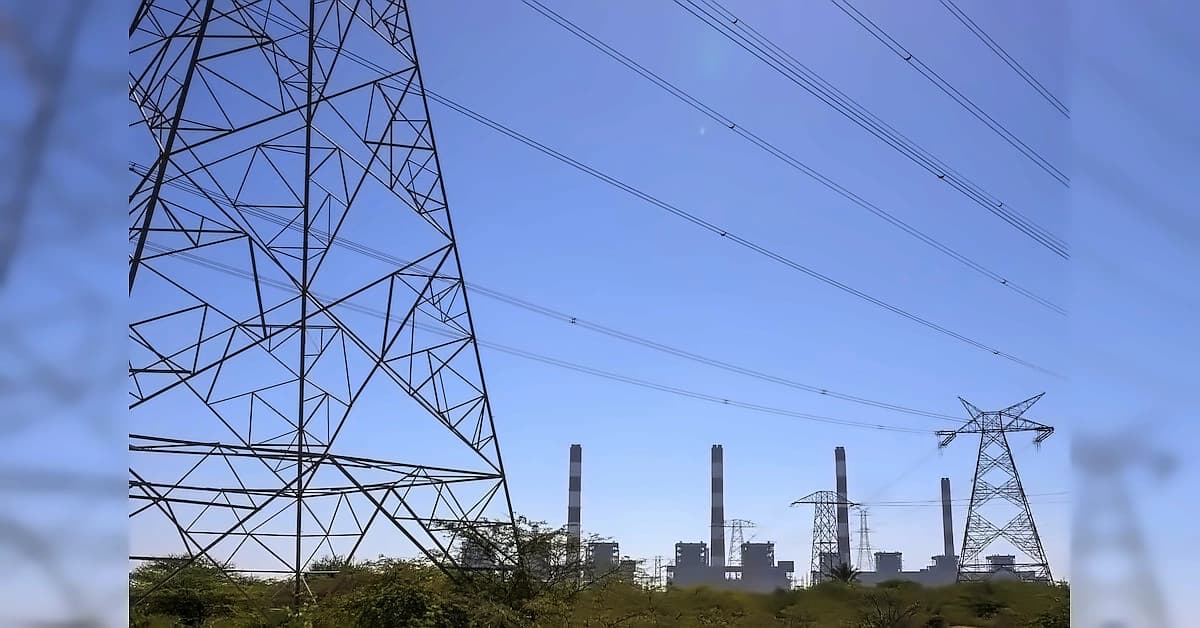
In March 2026, Haryana proposed a separate Agriculture Discom to handle electricity supply to agricultural consumers, with the government citing the faster release of agricultural connections and reliable power supply to farmers as reasons for the proposed entity. However, the plan has faced significant opposition from power-sector employees. The All India Power Engineers Federation (AIPEF) has strongly opposed the creation of a separate agriculture Discom, with AIPEF media adviser VK Gupta stating that the proposed restructuring would not provide operational benefits. "Therefore, creating a new DISCOM offers no additional technical, operational, or consumer service advantage," Gupta was quoted as saying by The Tribune. AIPEF has also opposed separating agricultural consumers from other categories served by existing Discoms, raising concerns about financial viability and operational efficiency of the proposed separation. The farmers' march has also faced opposition from Haryana Police, with authorities detaining some SKM leaders ahead of the planned protest and refusing permission for the march, citing security concerns.