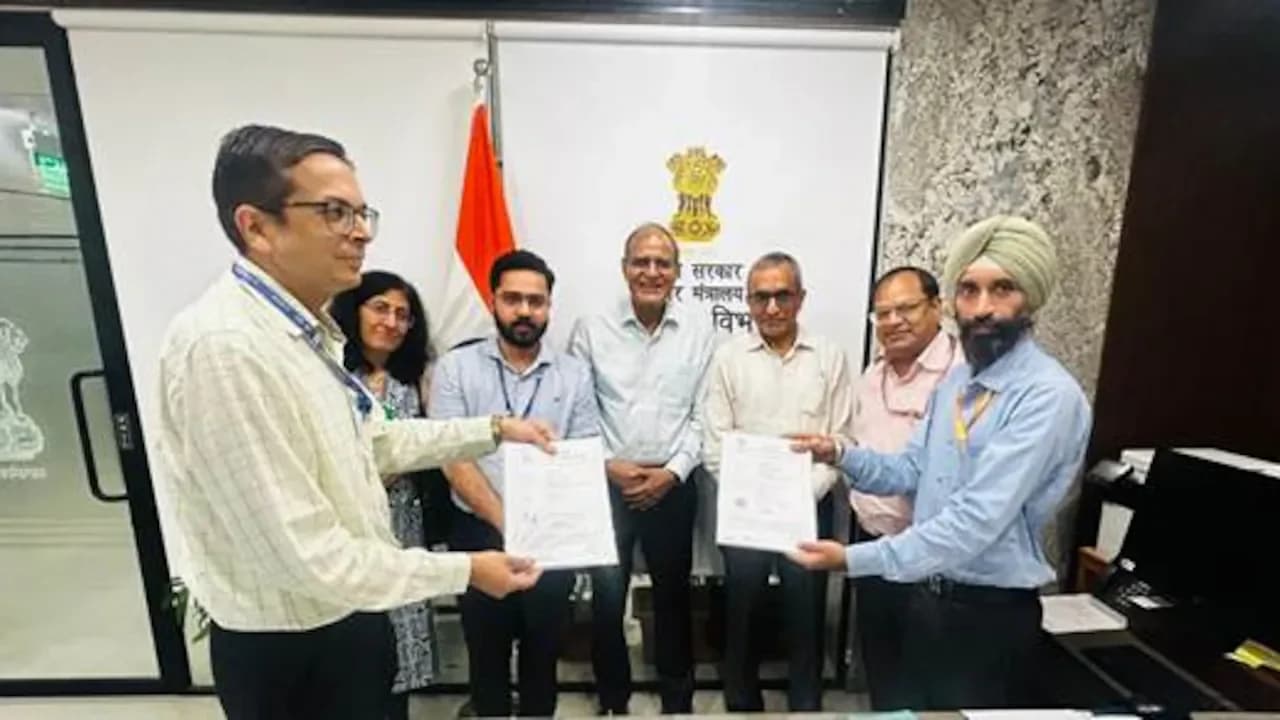
The Centre has approved an additional ₹3,384 crore under Phase-III of the BharatNet programme for Odisha's rural digital infrastructure expansion. According to the latest reports, the funding, sanctioned under the Digital India Mission, will be utilised to upgrade all 6,799 gram panchayats with Internet Protocol Multi-Protocol Label Switching (IP MPLS) technology in a ring topology while extending Fiber to the Home (FTTH) connectivity to villages. The project is scheduled for completion over the next three years under the guidance of Chief Minister Mohan Charan Majhi. As per the state government, the expanded network will provide internet services to more than 50,000 villages, strengthening access to digital education, healthcare, e-governance and rural economic activities.
The project will establish a carrier-grade IP-MPLS network capable of delivering reliable high-speed broadband and fibre-to-the-home (FTTH) connectivity to gram panchayats, government institutions, rural communities and households. As reported by multiple sources, all gram panchayats will be connected through a modern ring-topology-based broadband network. The BharatNet Phase-III project will upgrade 6,799 gram panchayats with IP MPLS technology using ring topology to extend high-speed Fiber-to-the-Home (FTTH) connectivity to rural areas. According to the latest plan, each block will serve as a Block Optical Fiber Connectivity Centre, from where connectivity will be extended to Panchayat Optical Fiber Connectivity Centres and subsequently to individual households. Additionally, both block and gram panchayat levels will function as data exchange centres to improve network reliability and service delivery. Officials expect the upgraded infrastructure to significantly improve e-governance, digital education, telemedicine, financial inclusion and rural entrepreneurship while generating nearly 10,000 direct and indirect employment opportunities across Odisha.
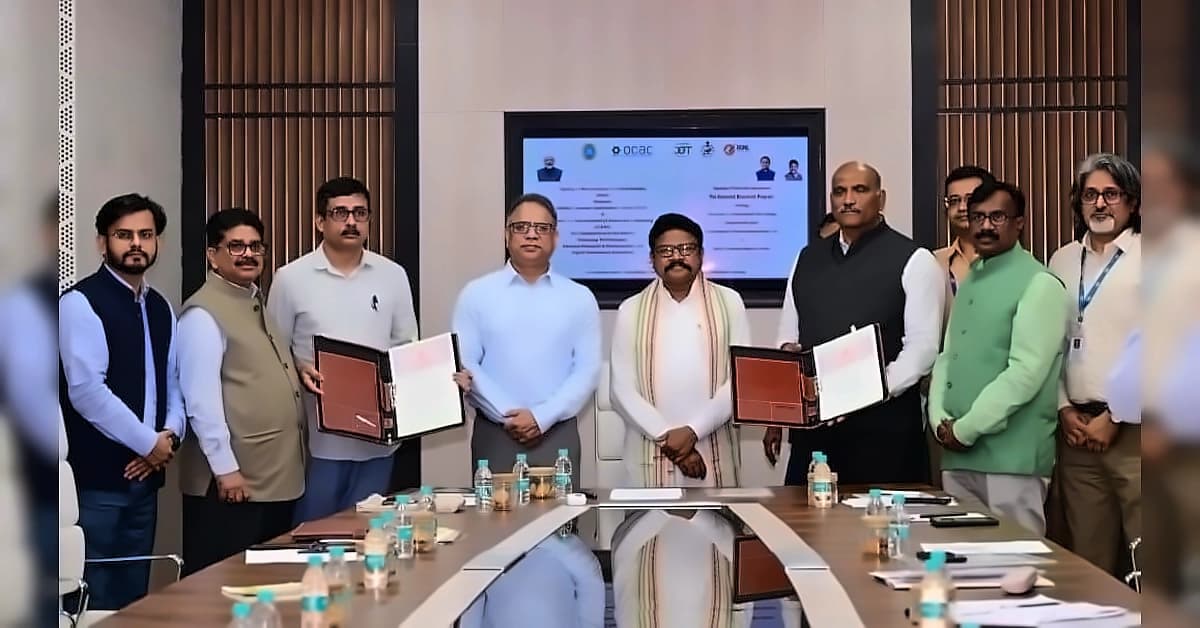
Simultaneously, the Odisha Computer Application Centre (OCAC) signed an agreement with the Centre for Development of Advanced Computing (C-DAC) to collaborate on frontier technologies including artificial intelligence (AI), high-performance computing (HPC), cybersecurity, quantum computing, language technologies and digital governance. According to multiple reports, the partnership with C-DAC is expected to support the adoption of Artificial Intelligence (AI) and cyber security solutions, enabling faster, more secure and transparent delivery of government services. The initiative is expected to facilitate the development of next-generation governance solutions and create world-class skilling opportunities for Odisha's youth. This agreement was signed as the second MoU between the state's Electronics and IT Department and the Centre for Development of Advanced Computing (C-DAC) to enhance collaboration in emerging technologies, research, and digital governance.
Electronics and Information Technology Minister Mukesh Mahaling thanked Prime Minister Narendra Modi and Chief Minister Mohan Charan Majhi for facilitating the project, saying it would significantly accelerate Odisha's digital transformation. As reported by multiple sources, Mahaling emphasized that digital technology has become a key driver of the state's socio-economic development, with robust digital infrastructure coupled with emerging technologies ushering in a new era of governance and public service delivery. The government stated that the two agreements would provide fresh momentum to Odisha's digital infrastructure development and contribute to building a more connected and technology-driven state. The first MoU involves a tripartite agreement between Digital Bharat Nidhi (DBN), the Odisha Electronics and IT Department, the Department of Telecommunications (DoT) and BSNL for implementation of the revised BharatNet programme in the state.