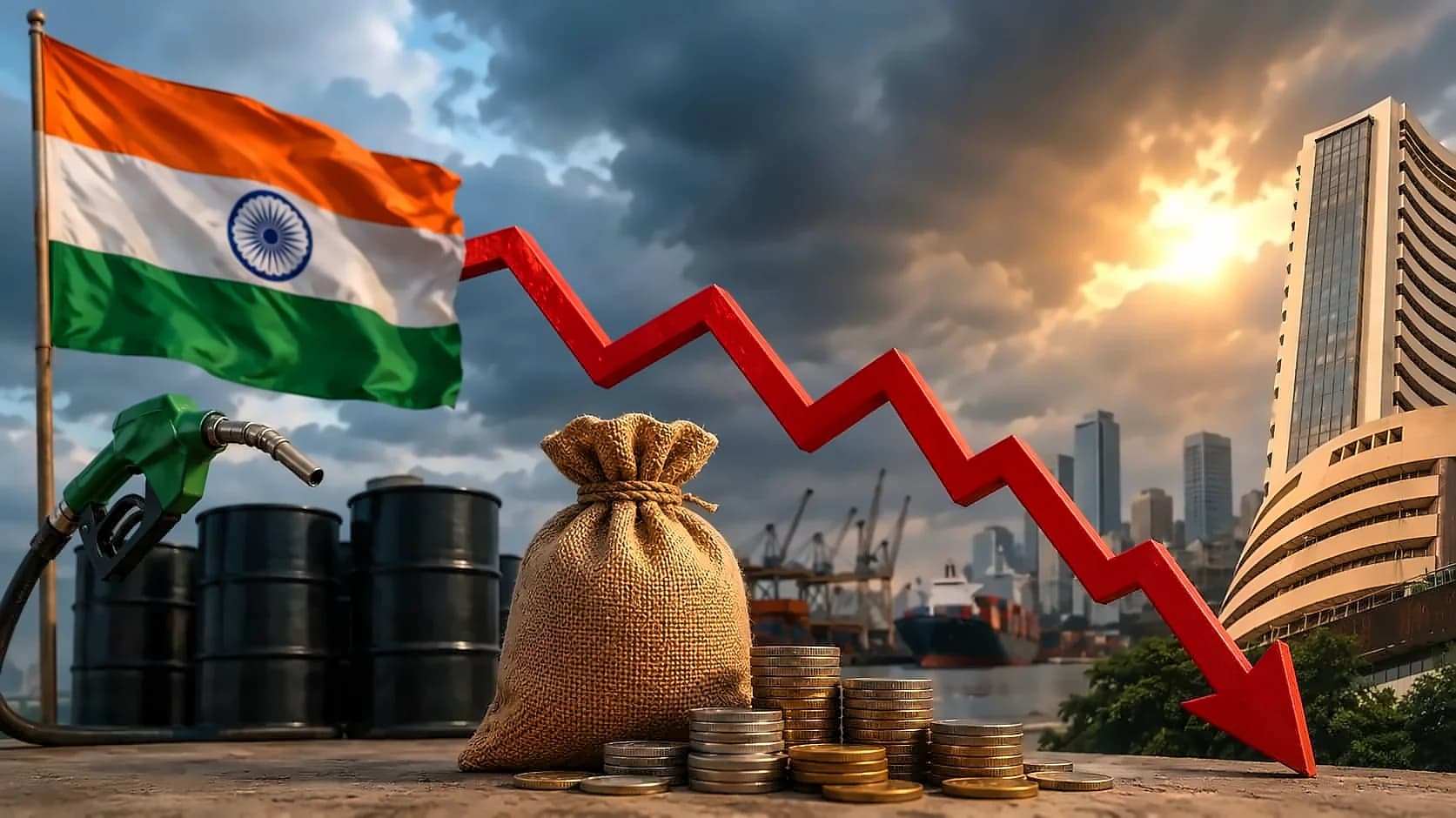
Reserve Bank Governor Sanjay Malhotra has issued the clearest warning yet of an impending fuel price hike, stating that the government may eventually have to raise petrol and diesel prices if the ongoing West Asia crisis continues for a prolonged period. Speaking at the 12th High-Level Conference on the International Monetary System jointly convened by the International Monetary Fund and the Swiss National Bank, Malhotra emphasized that 'if this is to continue for a longer period of time, it's already, you know, about 75 days... I believe that the government, it's, you know, it's a matter of time that the government will actually pass on some of these price increases'. The RBI governor noted that 'We have this framework of flexible inflation targeting, but in such times it's not sufficient', adding that fiscal coordination becomes critical 'if the supply shock is as big as it is'. The closure of the Strait of Hormuz has added to concerns around supply-chain disruptions and inflationary risks for India, which imports a large share of its energy requirements. As per PTI, Malhotra highlighted that excise duties had been cut while state-run fuel retailers were absorbing the increase in crude prices as the conflict continues.

Prime Minister Narendra Modi at the weekend urged citizens to voluntarily reduce petrol and diesel consumption and defer gold purchases in order to help preserve the country's foreign exchange reserves. According to PTI, the government has already reduced duties and state refiners continued absorbing higher crude prices as the conflict persisted. The International Monetary Fund had earlier this month backed a pass-through of higher crude oil prices to consumers while saying India still had room to manage the current energy shock caused by the closure of the Strait of Hormuz. Oil Minister Hardeep Singh Puri sought to calm concerns over a possible fuel price increase after Modi's appeal, acknowledging concerns about how long oil marketing companies would be able to continue selling fuel below market rates while absorbing losses. 'How long will the oil companies be able to take it? Frankly, that worries me,' Puri said at an industry conference. The government has absorbed part of the global price shock through excise duty adjustments on petrol and diesel, with officials estimating the revenue impact of fuel-related tax reductions at nearly ₹1.6 lakh crore.
The government's decision to hold retail fuel prices steady despite rising international crude rates has increased pressure on state-run oil companies. According to official discussions reviewed during recent government briefings, OMCs are estimated to be losing between ₹1,000 crore and ₹1,200 crore every day because of elevated crude prices and unchanged pump rates. Under-recoveries are estimated to have approached nearly ₹2 lakh crore during the first quarter of 2026. Oil Minister Hardeep Singh Puri recently assured that there is no immediate plan to raise petrol and diesel prices, stressing that India currently has around 60 days of crude oil and LNG reserves, along with about 45 days of LPG stock, and there is 'absolutely no cause for anxiety'. However, Puri acknowledged the financial strain on oil companies, stating 'How long will the oil companies be able to take it? Frankly, that worries me.'
India's inflation edged up to 3.48% in April from 3.40% in March, coming in lower than expected as the government absorbed higher crude costs. However, risks remain as rising energy prices from the Middle East conflict weigh on the outlook. The RBI has forecast growth of 6.9% this financial year, with inflation averaging 4.6%. However, economists warn that higher energy costs linked to the Middle East conflict continue to build inflationary pressure, with experts expecting slower growth and higher inflation if the conflict continues. The RBI has kept its benchmark repo rate unchanged at 5.25% in April, with the central bank remaining flexible in its policy response. As reported by Bloomberg, the RBI Governor said the central bank is being 'more and more data-dependent' and taking decisions 'more meeting by meeting'. The RBI's next monetary policy meeting is scheduled for June 5, with the central bank prepared to look through temporary shocks but ready to take action if the impact is entrenched.
RBI Governor Sanjay Malhotra highlighted India's deep economic dependence on the Middle East at a time when the region is facing heightened geopolitical tensions. He revealed that one-sixth of India's imports originate from the region, while one-sixth of exports are directed there. Additionally, around 40% of remittances, 40% of fertiliser imports and nearly 60% of gas supplies are linked to the region, making India highly exposed to developments there. The Governor noted that food still accounts for nearly 40% of the CPI basket, despite a reduction from about 46% after the latest revision, making India particularly vulnerable to supply shocks. Malhotra emphasized that 'in such an environment, monetary policy has to remain highly flexible, agile and nimble in responding to rapidly evolving global and domestic conditions'. He added that while temporary and transitory supply shocks can sometimes be looked through, policymakers must intervene if second-round effects begin spreading across the broader economy and inflationary pressures become generalized.