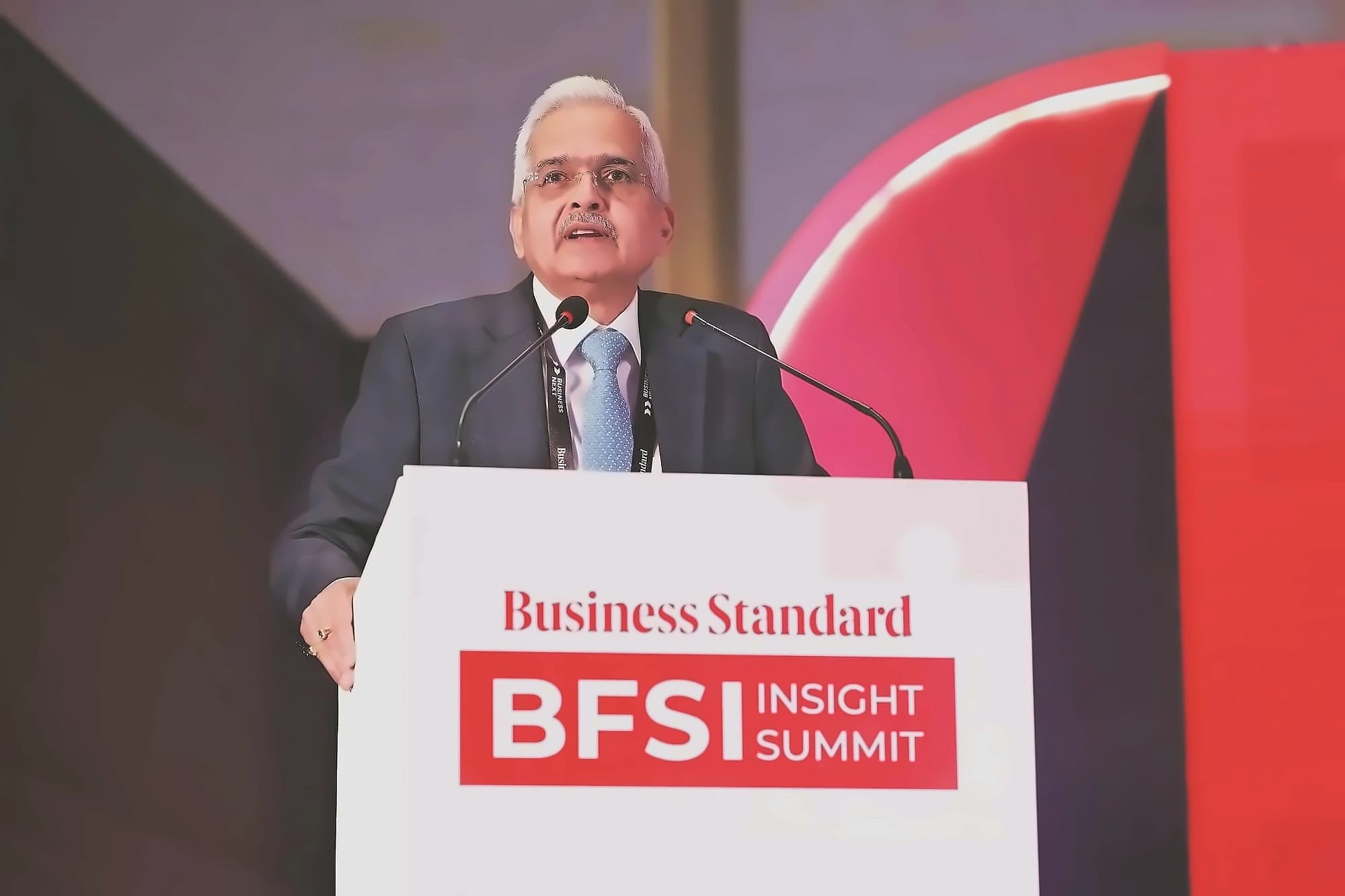
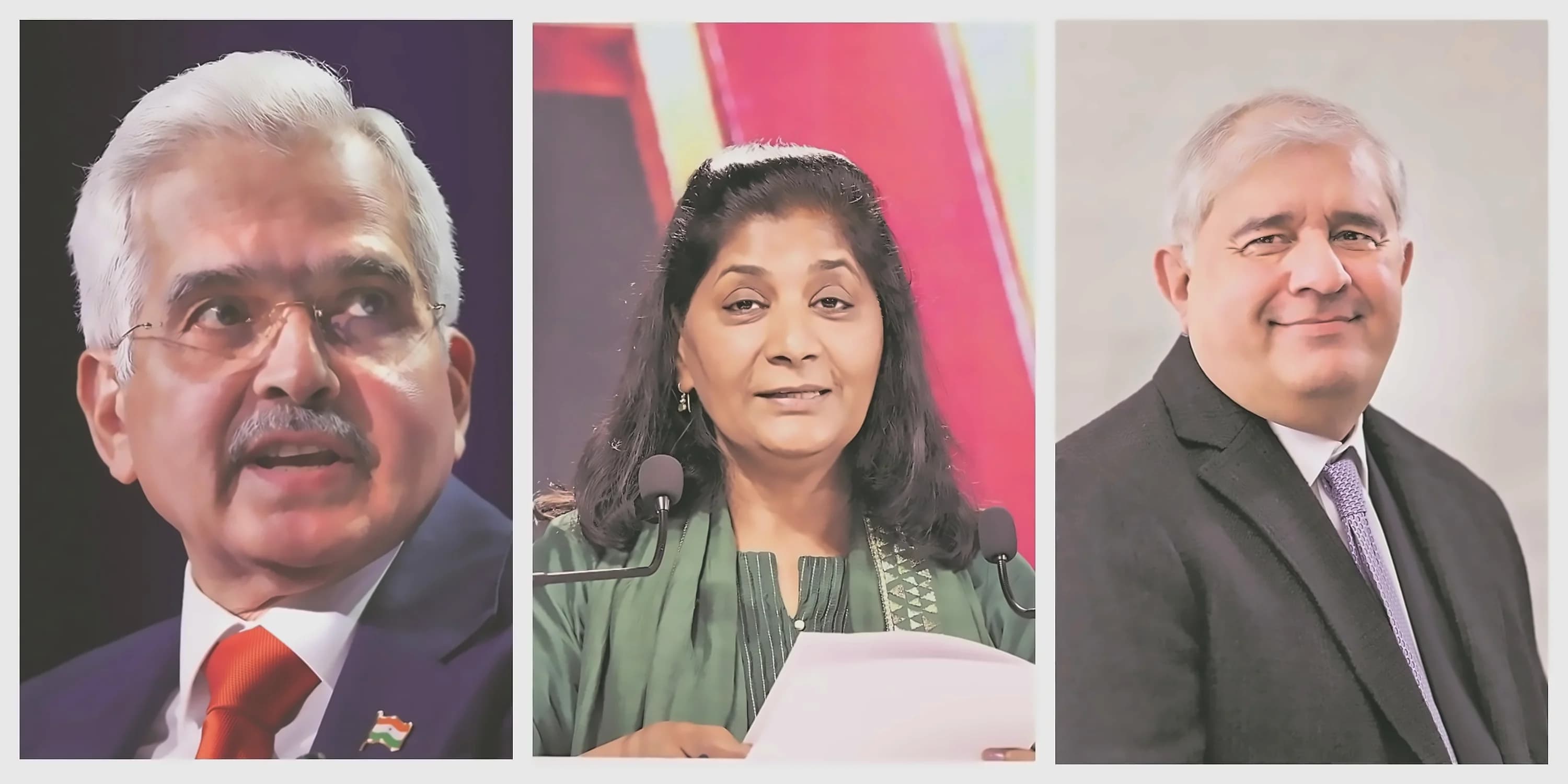
At the Business Standard BFSI Insight Summit 2026 in Mumbai, Shaktikanta Das, Principal Secretary 2 to the Prime Minister and former RBI Governor, outlined India's ambitious financial sector goals. Das emphasized the need for larger, globally competitive Indian banks with the scale, resilience, and international presence to compete with the world's leading lenders. According to reports from Business Standard, this vision aligns with Prime Minister Modi's goal of having an Indian bank among the world's top five within the next decade. The call for consolidation comes as the gross non-performing asset (GNPA) ratio of scheduled commercial banks fell to a multi-decade low of 1.8% in March 2026, while the net NPA ratio declined to 0.4%, demonstrating significant improvement in asset quality. As Das noted, "Larger financial institutions are better positioned to underwrite complex projects and absorb shocks in an increasingly volatile environment." Speaking on Tuesday, October 27, Das highlighted that the consolidation of public sector banks over the past decade had created a foundation for institutions capable of financing complex projects and absorbing global economic shocks. At a recent media event, Das reiterated that India is in striking distance of 8% growth, with the economy being powered by the triple engines of macroeconomic stability; continuing structural reforms; and strategic policy initiatives to develop domestic capacity where India is largely import dependent.
The banking system's financial health has shown remarkable improvement, with the capital-to-risk-weighted-assets ratio of scheduled commercial banks standing at 17.7% at the end of March 2026, while the common equity Tier-I ratio reached 15.3%. As reported by Business Standard, the banking system has successfully shaken off the hangover of high bad loans, with the GNPA ratio declining from 8.5% in March 2020 to 7.3% by March 2021, significantly below the Reserve Bank of India's July 2020 Financial Stability Report projection of up to 14.7% under severe stress scenarios. Bank credit to industry grew by around 20% year-on-year in July 2026, indicating early signs of revival in the private corporate investment cycle. According to Das, this credit growth provides "an early indication of a revival in the private corporate investment cycle, which is crucial for sustaining higher economic growth." Highlighting improvements in banking sector health, Das noted that Indian lenders had strengthened their capital positions, profitability and asset quality since the pandemic, with the sector demonstrating enhanced resilience across key metrics.
The corporate bond market, accounting for around 15-16% of GDP with outstanding issuances of about ₹53.6 trillion in 2024-25, remains dominated by private placements and highly rated borrowers with limited liquidity and investor participation. According to Business Standard reports, Das emphasized the need to expand the public issue route to encourage greater retail and institutional engagement, improve price discovery, and create a more diversified investor base. He noted that a deep and liquid corporate bond market can provide an additional investment avenue for households, particularly as household borrowing for consumption and investment had expanded at double-digit rates over the past decade. Das also called for developing a stronger municipal bond market to finance India's growing urban infrastructure requirements, with municipal bodies needing to improve governance, accounting practices and financial capacity while the BFSI sector helps them develop bankable projects and access capital markets. Speaking at the summit, Das urged that India's credit market must expand substantially to support infrastructure development, energy transition, advanced manufacturing and urbanisation, with increased public bond issuances attracting retail and institutional investors.
Das highlighted the critical role of the BFSI sector in supporting India's digital transformation and financial inclusion initiatives. He emphasized that the sector has a crucial role to play in India's journey from a lower-middle-income economy to a high-income economy through its intermediation in allocation of financial resources. The sector must support India's next-gen Digital Public Infrastructure (DPI), including the globalisation of UPI; expansion of real-time cross-border payment linkages to reduce remittance costs and friction in international trade settlements; and greater deployment of CBDC for wider adoption. Das called for the BFSI sector to take the lead in financing large infrastructure and new-age manufacturing to support massive public and private asset creation. Financial institutions are also expected to support strategic sectors such as semiconductor, advanced electronics, and defence production to reduce India's dependence on imports. The predominantly bank-led financial system must shift its focus from conventional corporate lending towards financing long-term capital formation and expanding credit access in tier II and tier III cities and rural areas, particularly for small businesses and agriculture. However, he stressed that lending expansion must be accompanied by prudent risk management to maintain financial stability.
India's economic resilience has been demonstrated despite global headwinds, with the Indian economy growing 7.8% in April-June (Q1) of the current financial year despite external pressures from the West Asia conflict. According to Business Standard, the International Monetary Fund (IMF) subsequently raised India's growth projection to 7% in FY27 from its earlier estimate of 6.4%. Das reiterated that India is within striking distance of achieving annual economic growth of 8%, supported by macroeconomic stability, continuing structural reforms, and efforts to build domestic capacity. The country recorded average annual real GDP growth of 7.9% between 2021-22 and 2025-26 (FY26), positioning it as the fastest-growing major economy over the next five years. Das also highlighted the changing financial position of Indian households, noting that household liabilities had risen to 45.9% of GDP by March 2026, reflecting the evolving financial landscape as the economy transitions toward its goal of becoming a developed economy by 2047. The Viksit Bharat 2047 goal serves as the ultimate framework for these financial sector reforms, requiring sustained focus on infrastructure financing, green investment, and financial inclusion to achieve India's development ambitions. As Das noted, "India's success in its march towards Viksit Bharat, despite the ongoing turbulent global conditions, will depend on a sound, efficient and profitable BFSI sector."