Uday Kotak warned at the Business Standard BFSI Insight Summit 2026 that India must prepare for a repayment obligation of $160-170 billion over the next three to five years as foreign currency non-resident (bank), or FCNR(B), deposits mature. Speaking at the Mumbai summit, the veteran banker said the deposits, which have tenures of three to five years, will eventually have to be repaid along with interest, creating a sizeable future foreign currency outflow. Kotak described the scheme as a 'strong insurance policy' against global economic and geopolitical uncertainty, noting that the RBI and government acted at the right time to bolster the country's foreign currency resources. However, he emphasized that policymakers, banks, and businesses must use the intervening period to prepare for the eventual repayment.
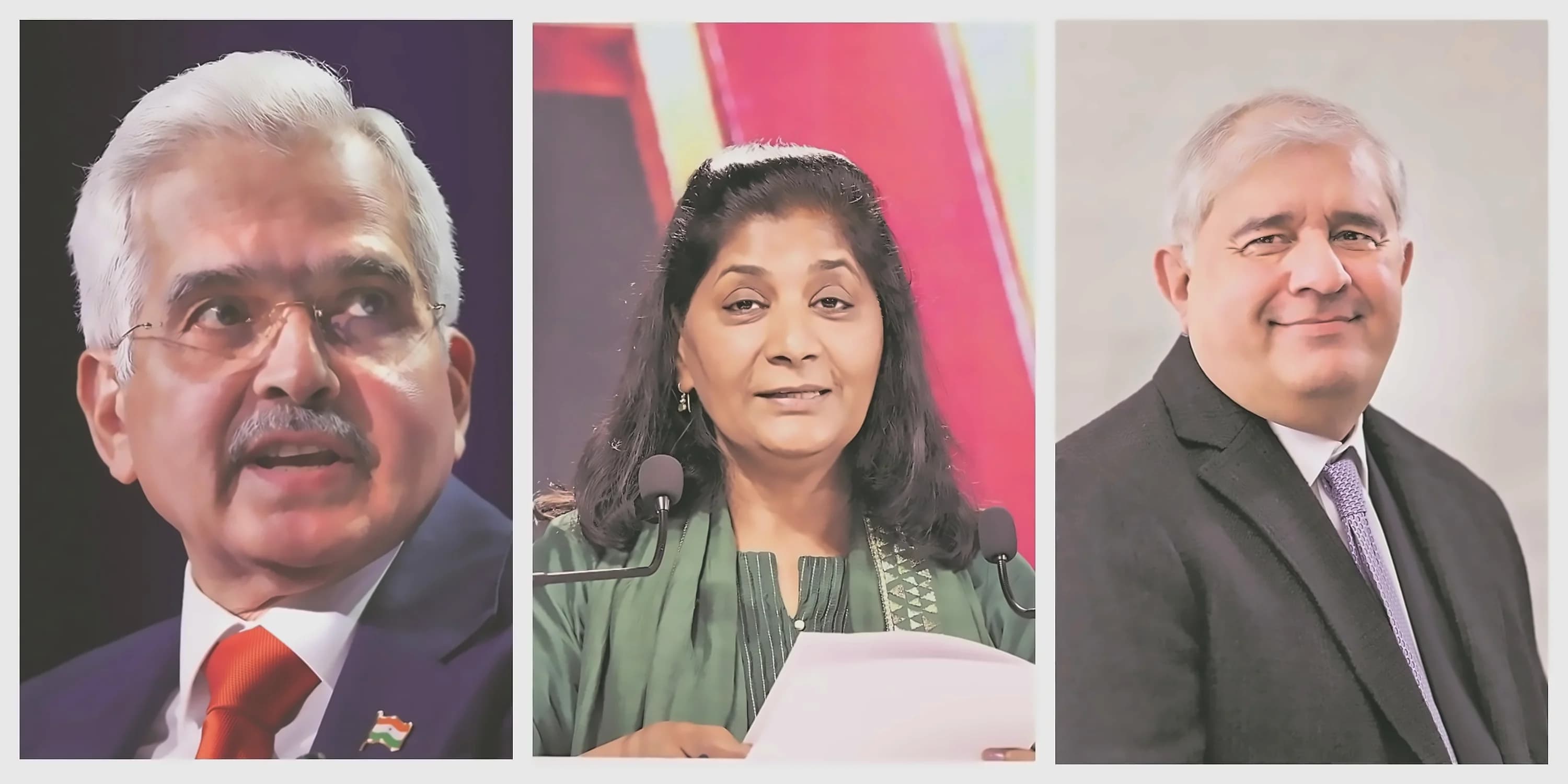
Economists speaking at the Business Standard BFSI Insight Summit 2026 called for wider credit access, productive lending, stronger domestic capital markets and sustained investment to drive India's growth. According to Business Standard, the discussion titled 'The Financial Sector's Role in India's Growth Story' featured prominent economists including Aditi Nayar from Icra, Sonal Varma from Nomura, Samiran Chakraborty from Citibank, and Aastha Gudwani from Barclays. Samiran Chakraborty revealed that India's bank credit-to-GDP ratio had doubled from 25% to 50% between 2004 and 2010, then remained between 50-55% for over a decade before crossing 60%.
The RBI launched a special dollar-rupee swap facility on June 8 to attract foreign currency inflows, with banks mobilizing $132.98 billion through FCNR(B) deposits by August 31. According to the RBI, total inflows under the broader facility reached $143.6 billion by September 18, including overseas foreign currency borrowings and external commercial borrowings. The facility reduced banks' currency hedging costs, making it more attractive for them to mobilize overseas deposits. Kotak commended the RBI for closing the FCNR(B) mobilisation window on August 31, saying India had locked in dollar funding before US bond yields rose sharply in early September. He noted that five-year and 10-year US Treasury yields crossed 5% after the window closed, making the timing particularly advantageous for India.
Kotak flagged a disparity between returns on fully hedged US government bonds and Indian government securities, with a 10-year US Treasury yield of around 5% combined with a currency hedge costing about 3.5% annually translating into a rupee return of 8.5%, compared with around 7.4% on India's 10-year government bond. He called for a narrower gap between the tax treatment of interest income and capital gains, arguing that the difference of 39% versus 14% is too wide. Kotak welcomed the government's decision to make income of up to ₹12 lakh tax-free under the new tax regime, saying it would help smaller savers keep their money in bank deposits. However, he emphasized that the larger pool of savings needed more attractive interest-earning instruments.
Kotak highlighted gold imports as a source of pressure on India's external position, particularly at a time when foreign portfolio flows were under pressure. He cited a current account deficit (CAD) of $26 billion for the year ended March, against gold imports of $72 billion. Excluding gold, India would have been in current account surplus, he said. For the year ending March 2027, gold imports could rise to $90 billion, while CAD affected by oil imports could widen to $60-65 billion. Kotak distinguished between households holding gold as a store of wealth and the financialisation of gold through investment products such as mutual funds and ETFs, questioning why financing against gold was easier than lending against shares.
Kotak emphasized that India needed to strengthen its fundamentals and invest in areas that would be important to the global economy during the three to five years of FCNR(B) support. He called for greater support for the 'missing middle' in Indian entrepreneurship, noting that while the country had a strong start-up ecosystem and large companies making substantial investments, the middle layer needed support. Kotak stressed that India needed to build strength in a few strategic areas over the next five years, with businesses investing more in research, technology and innovation. He remained bullish on India's long-term prospects, drawing on his experience of economic cycles, but emphasized that optimism needed to be accompanied by a strategy to address the country's macro challenges.