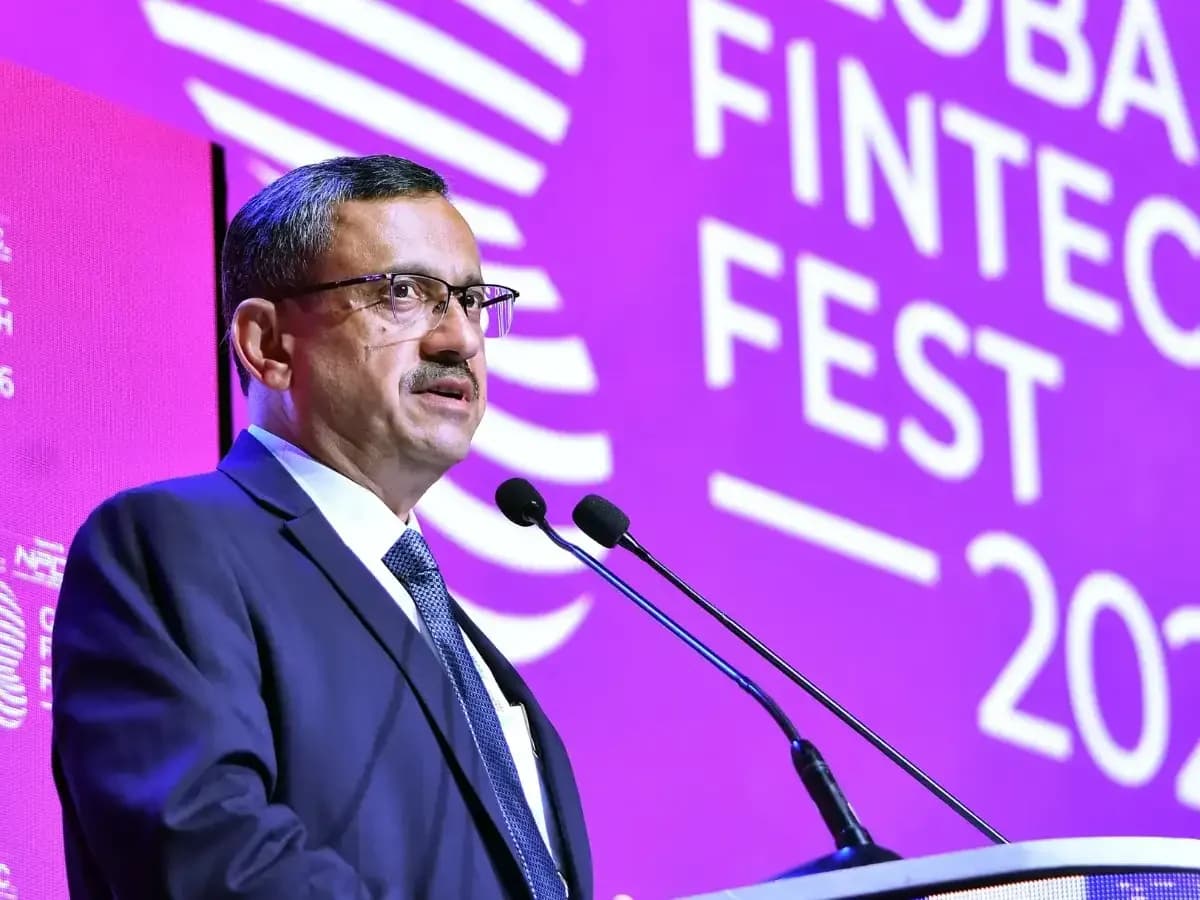
RBI Deputy Governor Rohit Jain emphasized that India's financial markets must provide wider access to bond markets to meet the country's ambitious development goals. Speaking at the Financial Institutions Leadership Conference organized by Standard Chartered Bank in Mumbai on July 24, Jain stated that while India's traditional bank-led financing model has served the economy well, the scale, tenor and diversity of financing required for developed economy status cannot be met through bank balance sheets alone. As reported by The Hindu BusinessLine, Jain noted that the financial markets required by a developed economy must be built before the economy reaches developed status — not afterwards. He observed that this will require more than an increase in issuance or trading volumes, with the objective being not merely to make our markets larger, but to make them deeper, broader, and more resilient, with regulation evolving alongside the market.
As India moves towards Viksit Bharat (2047), the country must build financial markets that match the scale of its ambitions, according to Rohit Jain, Deputy Governor of the Reserve Bank of India (RBI). According to reports from The Hindu BusinessLine, Jain emphasized that markets must channel savings into productive investment, enable risks to be priced and distributed efficiently, and serve businesses and investors with transparency and fairness. Above all, these markets must command confidence not only when conditions are favorable, but also when markets are tested. As per The Times of India, Jain noted that India's economic ambitions require its financial markets to mobilise substantially more long-term capital and distribute risk more efficiently. As per The Hindu BusinessLine, Jain emphasized that India will require long-term capital for infrastructure, manufacturing, urban development, technology and the expansion of Indian enterprises, both domestically and internationally. The scale and tenor of these requirements make it important to broaden the channels through which savings are converted into investment.
While regulation can create conditions for such markets, participants must provide the capability, liquidity and conduct that sustain them, Jain noted. As reported by The Hindu BusinessLine, he highlighted that deep markets require participants with different balance sheets, investment horizons, risk appetites and views. Where participants have similar mandates and respond to developments in the same manner, markets can become one-sided precisely when liquidity is most needed. According to The Times of India, Jain cautioned that market size does not necessarily indicate efficiency. He emphasized that the purpose of innovation should be to make risk more manageable, not less visible. According to The Hindu BusinessLine, Jain warned against mistaking complexity for sophistication, noting that introducing new financial products alone would not deepen markets.
Jain outlined specific requirements for deepening India's financial markets, including stronger complement of market-based finance including government and corporate bond markets for long-duration capital and deeper foreign exchange and derivatives markets to price and distribute risks. As reported by The Hindu BusinessLine, he noted that well-functioning financial markets can connect these long-term savings with long-term investment needs. Government securities markets finance public investment and provide a benchmark for pricing other rupee assets, while corporate bond markets connect long-term savings with private investment. Money markets strengthen monetary transmission and liquidity management, and foreign exchange and derivative markets allow businesses, financial institutions and investors to manage risks rather than avoid economically valuable opportunities. According to The Times of India, Jain also flagged limited activity in the term money market and concentration in India's derivatives markets, noting that while overnight money markets were active and efficiently transmitted policy rate changes, activity beyond the overnight segment remained modest.
Jain emphasized the importance of building deep and resilient financial markets, noting that institutions must have the expertise, systems and risk-management capacity to transact actively, provide liquidity where appropriate and manage the exposures they assume. According to The Hindu BusinessLine, this capability becomes crucial for maintaining market stability and ensuring efficient price discovery mechanisms. As reported by The Times of India, Jain put the onus on financial institutions to translate regulatory reforms into functioning markets, saying regulators could create an enabling framework but could not manufacture liquidity. He added that while the regulator can create the conditions for markets to develop, it is the market participants who must convert that opportunity into liquidity, capability and trust. According to The Hindu BusinessLine, deeper markets would also enable financing risks to be shared across a wider and more diverse set of participants, rather than remaining concentrated on the balance sheets of a limited number of intermediaries. According to The Times of India, Jain noted that India's push to become a developed economy by 2047 will depend on how financial markets address the challenge of long-term financing.