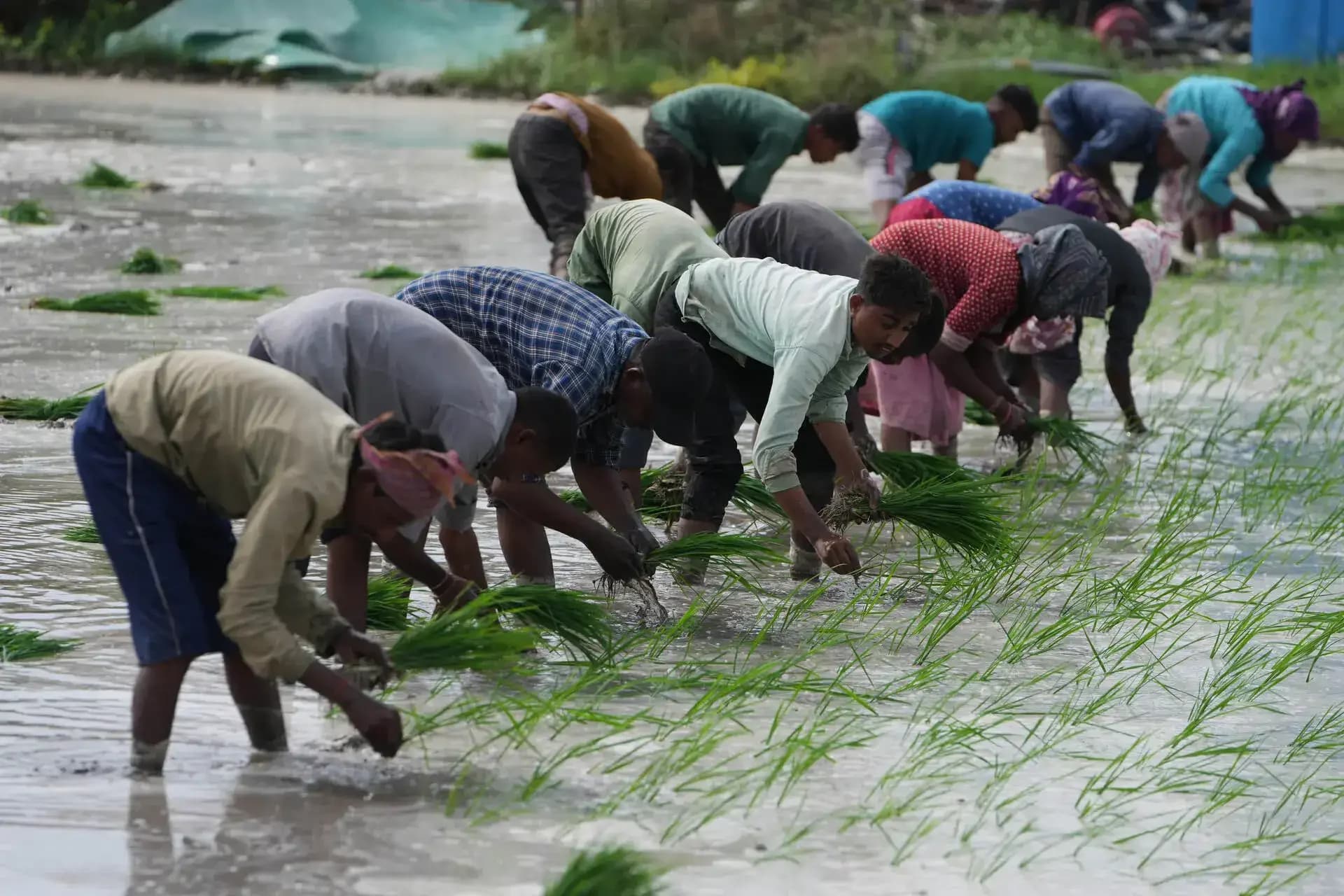
The Reserve Bank of India has provided empirical evidence that India's rural economy is becoming more resilient to weak monsoons as allied activities, irrigation and diversification cushion the impact of rainfall shortfalls. According to the RBI's Monetary Policy Committee report, rural incomes are becoming less dependent on monsoons as a growing share of non-crop activities, diversification into allied sectors, and rising irrigation coverage reduce the dependence of rural incomes on the rains. The report analyzed growth in agriculture and non-agricultural rural activities over 2011-12 and 2022-23 base years, finding that non-agricultural growth remains close to 6% across different rainfall conditions, while agricultural growth suffers more in years of higher monsoon deficits.
India's ₹3.30 lakh crore microfinance market is encountering significant credit risk challenges as deficient and uneven rainfall across states potentially dents rural household incomes. According to The Economic Times, drought in five states - Karnataka, Maharashtra, Andhra Pradesh, Telangana and Rajasthan has made the situation worse, with cumulative rainfall 12.6% below the long period average at the end of September. As reported by The Economic Times, Ganesh Narayanan, managing director at CreditAccess Grameen, stated that the institution is closely monitoring the drought situation and has adopted a calibrated approach in affected districts while continuing to support customers. The bottom of the pyramid loan sector, having higher exposure in rural areas, has been showing signs of recovery from a downward credit cycle but weak monsoon may potentially delay the process.
Credit ratings agency S&P Global has projected 12-14% growth in financial sector lending this fiscal, despite concerns about potential slowdowns in rural areas. According to latest reports from The Economic Times, the agency expects credit growth to remain robust despite weather-related challenges affecting agricultural and rural lending segments. The agency notes that credit growth has moderated over the past two years as banks and non-banking financial companies tightened underwriting standards for unsecured loans, personal loans, and microfinance following higher non-performing loans in some segments.
According to Nikita Anand, director of financial institutions ratings at S&P Global, pockets of stress are likely to emerge in unsecured segments, particularly among self-employed borrowers and micro and small enterprises. As reported by The Economic Times, these stress areas could have potential spillovers into commercial vehicle loans and affordable housing segments. The RBI analysis shows that for agricultural households possessing land up to one acre, wages contribute more than 55% of household income, while crop production and livestock together contribute 36%. NABARD's Chairman highlighted upcoming interventions on climate risks, noting that RBI is coming out with a risk categorisation and draft guidelines, while NABARD is setting up data for climate resilient agriculture with state-specific insights from partnering states.
S&P Global has projected 7% GDP growth for India in FY27, slower than the 7.8% growth recorded in the June quarter. According to The Economic Times, the agency expects growth to remain relatively resilient over the medium term, supported by steady domestic demand. Private-sector capital expenditure is picking up, with capital expenditure by the top 200-300 Indian companies increasing around 10% year-on-year. The agency expects investment in areas such as data centres and semiconductors to add to the momentum, although much of the private capital expenditure is being funded without incremental bank borrowing. Crisil has projected 5.1% inflation for FY27, amidst challenges from global factors, which could constrain economic momentum.
On monetary policy, S&P Global expects only limited changes, with the central bank likely to remain mindful of supply-side inflation pressures while supporting domestic demand. As reported by The Economic Times, the agency expects a moderate tightening of interest rates during the year but does not foresee any significant change in the monetary policy stance. Food inflation is another concern, with the agency flagging the risk of weaker agricultural output and higher food prices amid El Nino-related disruptions. These pressures are expected to weigh on consumers and keep up the pressure on the central bank to maintain a relatively tighter policy stance.