Sign in to fuzzto save your conversations, follow your research and come back anytime.

Syrma SGS Technology Limited is an Indian company specializing in electronic system design and manufacturing. Founded in 1978, it operates 11 manufacturing facilities across India and provides turnkey electronics manufacturing services. The company focuses on precision manufacturing for diverse industries including automotive, healthcare, IT, industrial appliances, energy management, and consumer products. Syrma SGS offers services such as product design, prototyping, PCB assembly, box build, and tester development. It has three R&D facilities, two in India and one in Germany, and a supplier network spanning 19 countries. The company manufactures various electronic products including sub-assemblies, disk drives, power supplies, RFID products, and magnetic induction coils. In 2021, Syrma SGS acquired SGS Tekniks Manufacturing Private Limited and 75% of Perfect ID India Private Limited to expand its market share and capabilities.
In the news
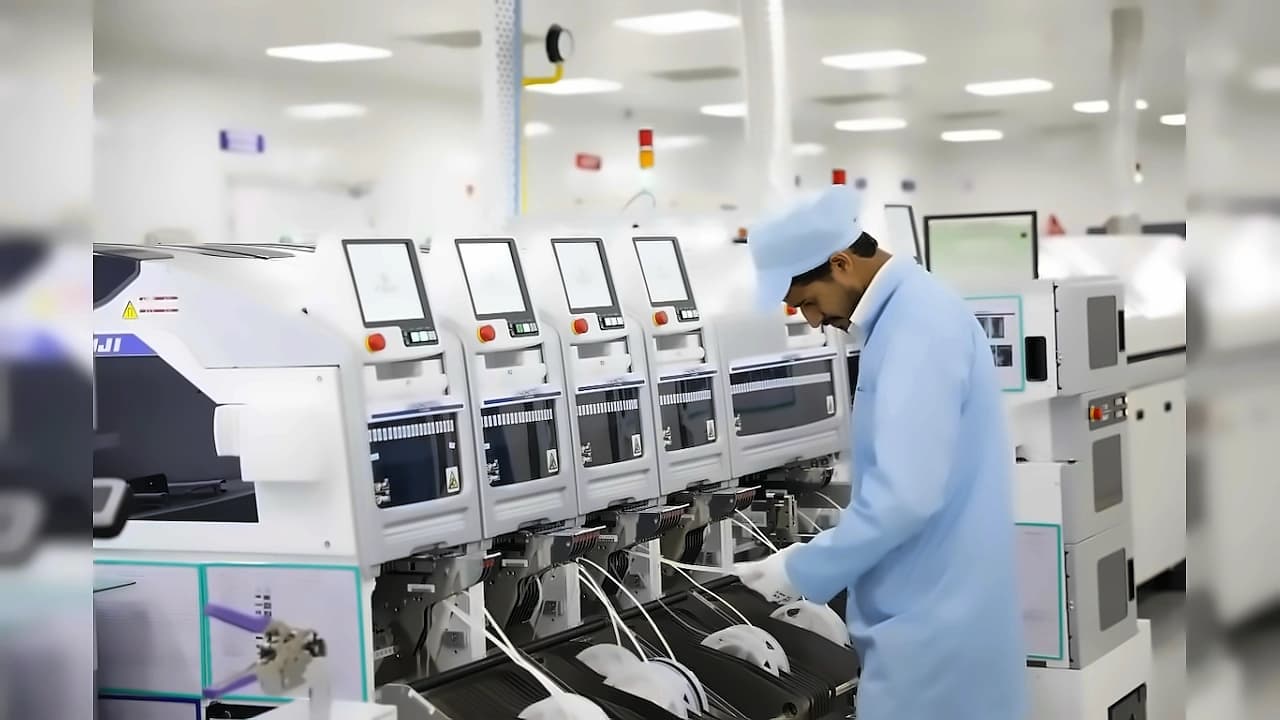
Syrma SGS Shares Surge 144% in 2026 on ODM Expansion

Semiconductor stocks rally up to 10% as SEMICON India 2026 continues

Syrma SGS Technology surges 9% to record high, up 125% in 2026

Geojit picks 3 stocks for tech chart strength: Aster DM, SPARC

Smallcap 500 hits 52-week high; Syrma, Strides surge 12%

Syrma JV targets ₹200 crore revenue in first year from Bengaluru facility

Syrma SGS Q4FY26: 56% Revenue Surge, Record Highs, and FY27 Ambitions
The Quarter story
The two most recent quarterly results, compared side-by-side.
Syrma SGS Technology delivers strong revenue and profit growth across key segments, though rising material and operating costs require careful margin management.
Auto revenue grows from ₹2,215 Cr to ₹3,949 Cr from Q1 FY26 to Q1 FY27 — consistent segment momentum drives top-line expansion.
Gross margin eases from 25.4% to 24.5% from Q1 FY26 to Q1 FY27 — mix normalization and input costs pressure profitability.
Total revenue expands from ₹9,600 Cr to ₹16,037 Cr from Q1 FY26 to Q1 FY27 — strong core business growth across all verticals.
Material costs rise from ₹7,107 Cr to ₹11,992 Cr from Q1 FY26 to Q1 FY27 — volume-driven input pressure requires careful pricing management.
Profit after tax rises from ₹499 Cr to ₹1,057 Cr from Q1 FY26 to Q1 FY27 — robust net earnings generation despite higher input costs.
Operating expenses increase from ₹1,467 Cr to ₹2,278 Cr from Q1 FY26 to Q1 FY27 — scaling costs track revenue but need margin vigilance.
ROCE improves from 11.4% to 17.3% from Q1 FY26 to Q1 FY27 — superior capital efficiency from strategic investments.
Total debt rebounds from ₹5,294 Cr to ₹6,860 Cr from Q3 FY26 to Q1 FY27 — renewed funding supports expansion but increases leverage.
Consumer revenue climbs from ₹3,178 Cr to ₹5,328 Cr from Q1 FY26 to Q1 FY27 — strong product demand fuels segment traction.
Working capital days rise from 69 to 71 from Q1 FY26 to Q1 FY27 — slightly stretched inventory and receivables management needs monitoring.
Company insights, generated from the most recent coverage.
Q1 FY27 EBITDA margin fell to 11.0% from 12.6% QoQ and gross margin to 24.5% from 25.9%, on a richer consumer-electronics mix; management calls it seasonal with industrial and maritime schedules back-loaded into H2.
Down 5.2% to ₹1,599 on light volume (39% of 1-month average) with no company-specific news — this is orderly profit-booking, not panic selling, after a ~130% CY26 rally.
Key near-term levels: hold ₹1,590 (day's low) then reclaim the ₹1,650–1,675 EMA/SMA zone to neutralise the technical damage.