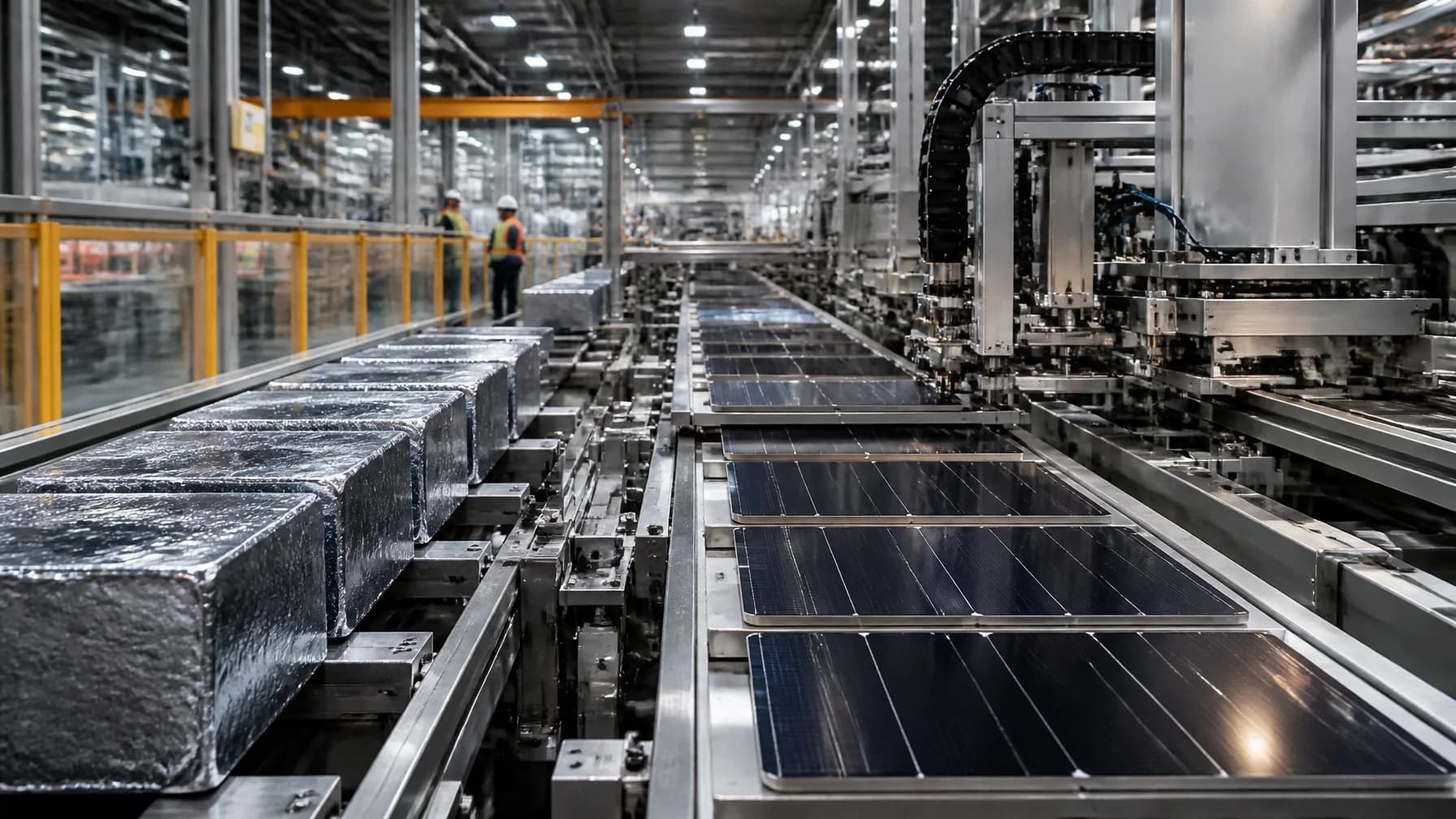
Elon Musk's Terafab initiative has delivered significant positive news for ASML Holding NV stock investors, as the Tesla and SpaceX partnership signals strong future demand for the European company's EUV machines. The Terafab initiative brings together SpaceX and Tesla in a joint venture to build a massive semiconductor manufacturing complex aimed at resolving both companies' potential supply chain bottlenecks and providing chips for Optimus (Tesla) and, in the future, Tesla electric vehicles alongside AI chips for SpaceX's data centers, including orbital data centers. This development validates ASML's strategic importance, as the company is the only company in the world that makes extreme ultraviolet (EUV) lithography machines that chip manufacturers use to make artificial intelligence chips and other advanced semiconductors. The initiative represents a major boost for ASML's business prospects despite ongoing regulatory challenges.
Commerce Secretary Howard Lutnick has raised significant concerns to ASML Holding NV executives about potential violations of US-led export restrictions. According to reports from Bloomberg, Lutnick expressed specific worries about the company's extreme ultraviolet lithography (EUV) machines, which are used by firms like Taiwan Semiconductor Manufacturing Co. to manufacture processors for companies such as Nvidia Corp. and Apple Inc. These EUV systems are never allowed to be shipped to China due to restrictions imposed during the first Trump administration. However, the situation escalated on June 18 when Washington warned ASML that one of its top-tier EUV lithography machines may have reached China in violation of export controls, as reported by Bloomberg. The concerns were first raised during a meeting that covered a range of other topics, including ASML's commitments to invest in the US. Both Lutnick and ASML Chief Executive Officer Christophe Fouquet have described that overall conversation in positive terms, without mentioning the EUV issue in their posts on LinkedIn. However, ASML has gone into crisis mode in private discussions, according to people familiar with the talks.
ASML has strongly denied any violations, explaining that none of the EUV tools are in China. As reported by Bloomberg, the company's spokesperson stated that the tools are the size of a school bus, manufactured in limited quantities, and require constant upkeep from ASML employees. The company has created a document titled 'No indication of any ASML EUV System in China', which shows there are 314 EUV machines in operation globally, with 26 decommissioned - and none in China. The presentation emphasizes that ASML can automatically detect any interruptions or abnormal behavior in its EUV portfolio, and customers cannot remove or relocate EUV systems without ASML involvement due to specialized handling procedures. However, ASML declined to comment on the June 18 warning, according to Bloomberg reports. A company spokesperson denied these allegations, saying, 'ASML has never shipped an EUV machine to China nor have we shipped to China any component, module or equipment specially designed to be used in an EUV machine'. The senior Trump administration officials said they have evidence of ASML shipping to China specialty equipment used to transport EUV machines, as well as other components that could be used in EUV systems, though they declined multiple requests for proof of these shipments citing the sensitivity of the information.
The situation carries significant implications for ASML, which is Europe's most valuable company and faces mounting pressure from both US and Chinese markets. China accounted for about a third of ASML's 2025 revenue, largely through legal sales of older DUV systems, but the company expects China to fall toward about 20% of revenue in 2026 as restrictions tighten. The potential restriction could add strain to already rocky relations between the US and the European Union. ASML expects to derive about 20% of 2026 revenue from China, making any restrictions particularly impactful for the company's financial performance. The company has been trying to keep two statements true at once: it can keep selling and servicing permitted equipment in China, and it has kept EUV out of the country, but Washington has now put the second statement under public strain. The company has previously refuted several unfounded rumors regarding non-compliance with export controls concerning China which were inaccurate and damaging to its reputation, according to a company spokesperson.
The situation has prompted Congress to step in with the MATCH Act, introduced in April, which would tighten restrictions on semiconductor manufacturing equipment sales to leading Chinese firms including SMIC, YMTC, CXMT, Hua Hong and Huawei. The legislation calls for an effective ban on shipments of all types of immersion DUV tools from ASML, which would dramatically limit the Dutch company's access to the Chinese market. The Trump administration hasn't taken a formal position on the legislation, which cleared a key congressional committee with some amendments in April. US Ambassador to the Netherlands Joe Popolo recently suggested that a favorable trade deal between the US and European Union would 'take some pressure off' the legislation, which is opposed by multiple foreign governments including the Hague. The weaker point in the control regime has always been the older gear, with Chinese fabs upgrading ASML's Twinscan NXT DUV systems and using independent engineers to squeeze more performance out of tools designed for advanced-node production. The senior Trump administration officials also expressed concerns about ASML's overall business activities, saying the company has been providing technological support to SwaySure Technology Co. to help build the company's resilience to US rules, though they declined to provide further details.