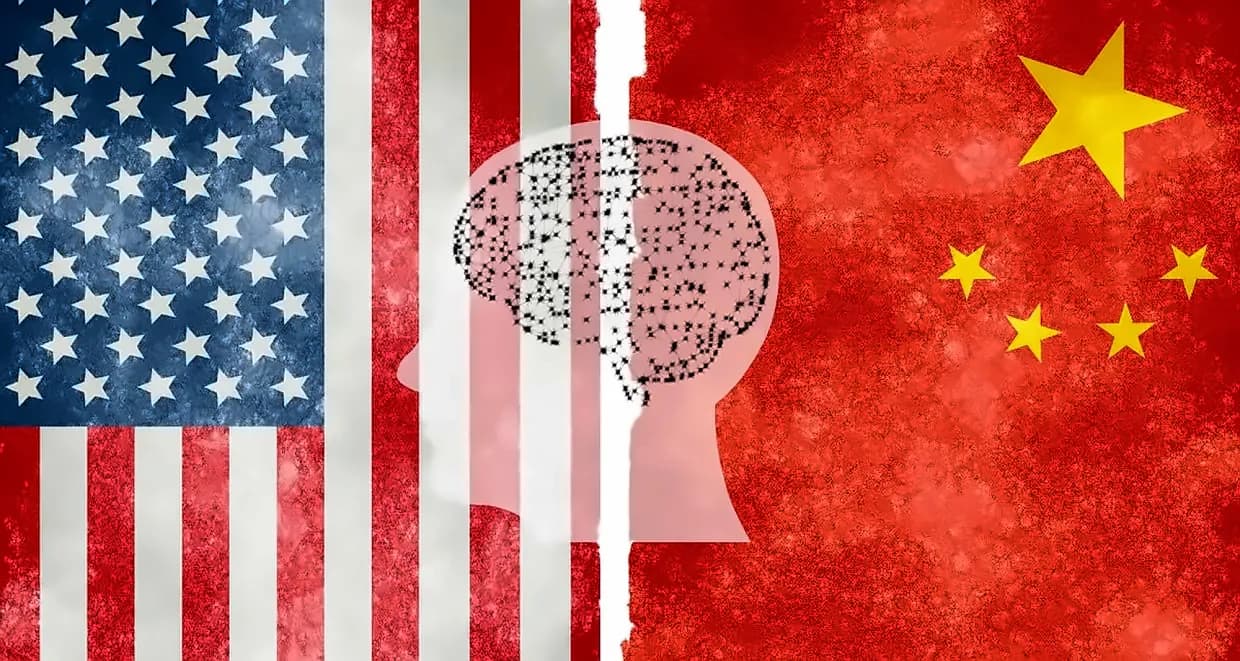
The United Nations is positioning itself to lead AI governance efforts, but faces significant challenges from the intensifying US-China rivalry, according to recent analysis from the Carnegie Endowment for International Peace. Stewart Patrick, senior fellow and director of the Global Order and Institutions Program, notes that the UN's aspirations collide with two fundamental realities: the fierce rivalry between the United States and China over AI dominance, and the fact that most AI capabilities rest in private companies engaged in zero-sum competition. This creates a complex landscape where traditional multilateral cooperation faces unprecedented challenges from geopolitical tensions and corporate competition dynamics.
The intensifying US-China AI rivalry is creating fundamental challenges for global AI governance, as reported by Business Standard. Anthropic CEO Dario Amodei has argued that AI development should be paced to allow safety measures to keep up with increasingly capable models, but recognizes the risk of slowing down too much could give China an opportunity to close the technological gap. This tension captures the broader debate: how fast should AI technology develop versus how much safety should come before speed. The urgency is heightened by dramatic advances in agentic AI models that are rapidly outpacing governance responses, raising profound safety concerns and even questions about the future of civilization.
US President Donald Trump has opposed calls to slow AI development, arguing that the US cannot afford to lose its lead over China, according to Reuters. Trump emphasized the US advantage, stating that "whoever wins AI wins," reflecting broader concerns about slowing development while China continues advancing. OpenAI CEO Sam Altman has also warned about AI advancing without adequate safety measures, identifying risks of humans losing control and excessive concentration of power in one person or company's hands. The US position reflects a strategic calculation that maintaining technological leadership is essential for national security and economic competitiveness.
Despite US advantages in computing infrastructure, China accounts for 74% of global compute capacity according to a White House report, as reported by Fortune. Chinese AI companies have developed methods to extract more value from limited computing resources, with models like GLM 5.2 and Kimi 2.6-2.7 handling 75% of engineering tasks at around one-fifth the cost of US models. Chinese open-source models captured 41% of total downloads on Hugging Face last year, with growing experimentation by companies including DoorDash, Airbnb, and Siemens. This computational advantage, combined with China's strategic focus on AI development, creates a formidable competitive landscape that the UN must navigate in its governance efforts.

The Carnegie Endowment analysis reveals that the UN's realistic accomplishments in AI governance are constrained by several factors. Lucia Velasco, co-director of the Oxford AI Diplomacy Lab, emphasizes that the UN's traditional multilateral approach faces challenges when AI capabilities are concentrated in private companies engaged in zero-sum competition. The organization must balance its aspirations for global coordination with the reality that geopolitical stakes make cooperation difficult due to enormous incentives to defect. This creates a governance gap where traditional international institutions struggle to establish effective oversight while private companies maintain control over critical AI infrastructure and capabilities.