SoftBank Group Corp. founder Masayoshi Son has made a significant financial commitment to nuclear fusion technology through his investment in Helion Energy. According to ME News, SoftBank Vision Fund II participated in Helion's Series G financing in 2026, following its earlier participation in the company's Series F financing in 2025. The latest funding round raised $4.65 billion, valuing the company at $15.5 billion. This investment represents a concrete demonstration of Son's conviction that fusion technology will become the primary energy source for AI data centers, moving beyond speculative predictions to actual financial backing.
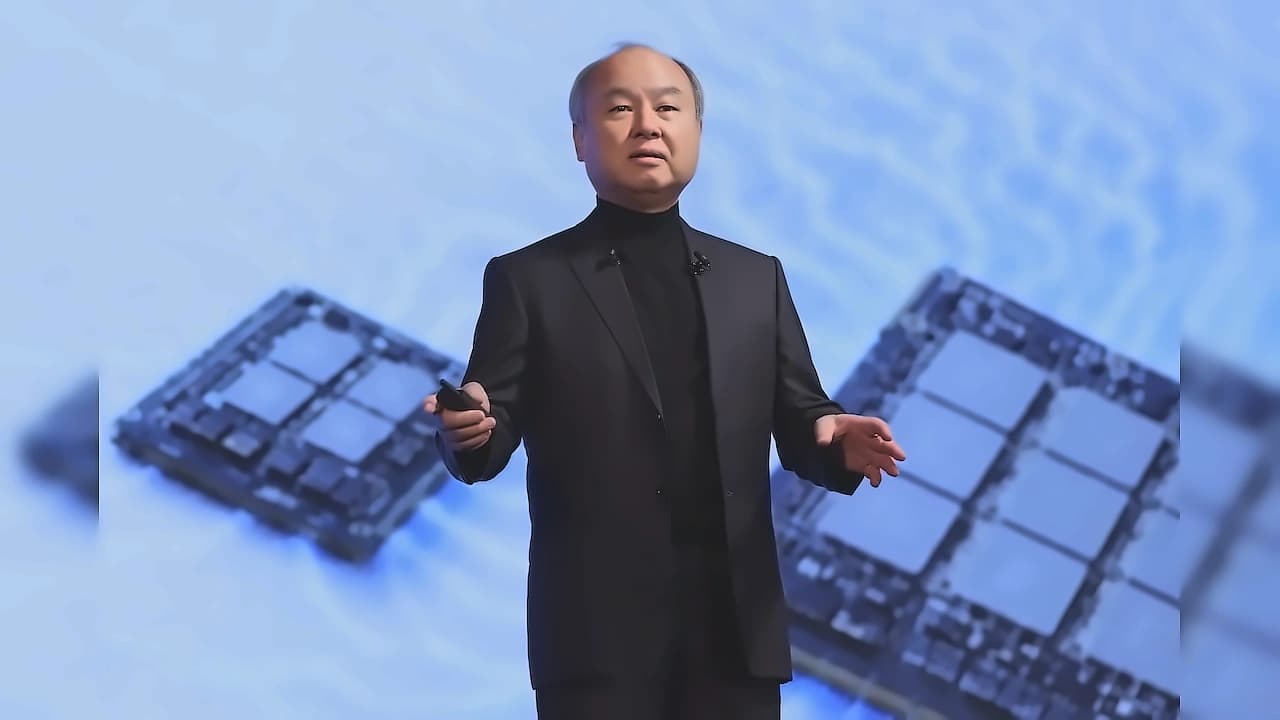
SoftBank Group Corp. founder Masayoshi Son has positioned nuclear fusion technology as the solution for powering AI data centers' future energy requirements. Speaking at the annual SoftBank World event in Tokyo, Son predicted that fusion will become the main source of a new kind of cheaper, clean and safe energy on Earth. According to reports from Bloomberg, Son stated that 'Is it okay to be using so much gas power? I think in 15 years, fusion will take its place.' He projected that the world will need 3 terawatts of data center capacity in 2040, representing a significant increase from current levels. Son, 68, emphasized that 'Fusion will become the main source of a new kind of cheaper, clean and safe energy here on Earth,' positioning it as the most realistic solution for AI's ballooning energy needs.
Natural gas currently provides the bulk of data centers' power needs, accounting for more than one-fifth of global power generation. As reported by Bloomberg, Son acknowledged that natural gas is readily available now and emits less greenhouse gases than oil or coal. However, he emphasized that 'Asking whether AI is a bubble is an incredibly foolish question,' dismissing growing concerns about whether the hundreds of billions of dollars spent on AI hardware will deliver returns. The extraordinary cost of building data center infrastructure will pay for itself, according to Son's assessment. While natural gas is readily available and emits less greenhouse gases than oil or coal, burning it still creates emissions that contribute to planetary warming.
Despite fusion's theoretical advantages of providing large amounts of energy with low carbon emissions and less long-lasting radioactive waste than conventional nuclear fission, many technological and financial challenges remain. According to BloombergNEF, fusion technology faces significant hurdles to becoming a viable energy source. In recent years, investment in fusion companies has surged, with several companies moving from research to building prototypes. The US Energy Department has set a goal for scaling up the technology in the mid-2030s. The technology is promising but complex: It offers tantalizing dreams of near-infinite clean electricity, but only a few countries have even managed to crack the basics so far. Nuclear fusion can, in theory, provide large amounts of energy with low carbon emissions, less long-lasting radioactive waste than conventional nuclear fission, without the risk of chain reactions.
Son issued a warning to Japan about missing opportunities in AI development, stating that 'If Japan is unable to recognize AI's potential, the country's economy will miss out on an opportunity for wealth that created the world's biggest companies such as Google, Amazon.com Inc. and Meta Platforms Inc.' According to Bloomberg, Son has argued fervently against reliance on nuclear power following the 2011 meltdown of Tokyo Electric Power Co.'s Fukushima Daiichi nuclear power plant. His vision for fusion technology represents a potential pathway to address both energy requirements and environmental concerns while avoiding nuclear fission risks, positioning Japan to capitalize on the global AI opportunity rather than missing out on the wealth creation that has characterized major technology companies.