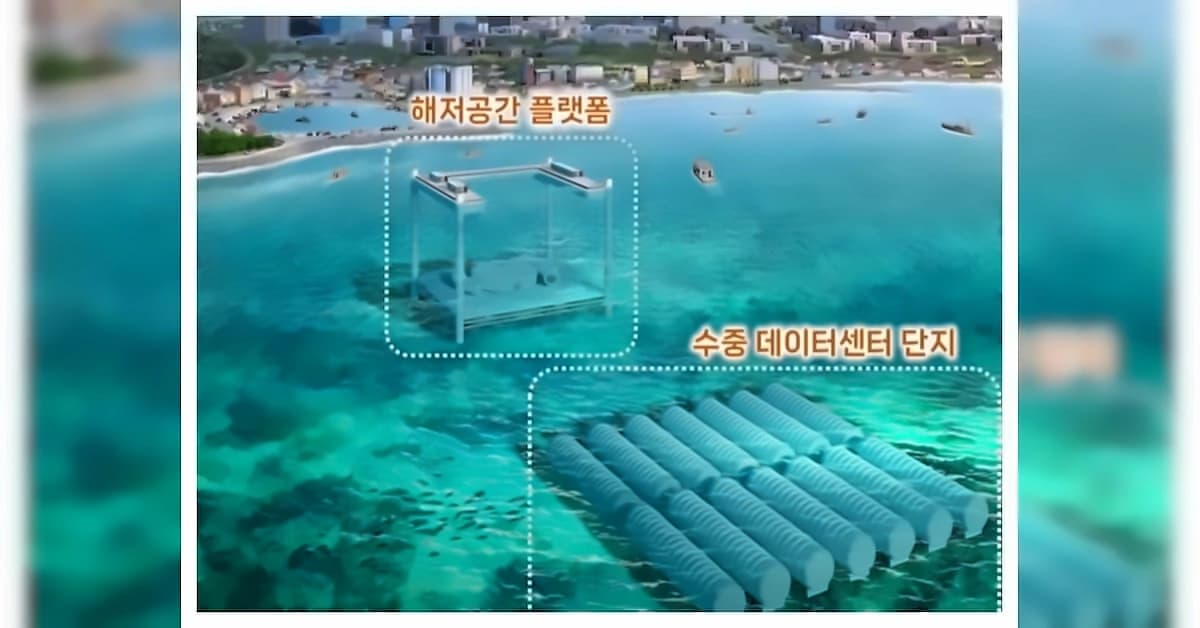
SoftBank Group Corp. founder Masayoshi Son has dismissed the concept of building data centers in space, as championed by Elon Musk, during an annual shareholder meeting for SoftBank's mobile unit on Tuesday. According to reports from GuruFocus, Son argued that the main advantage of space-based data centers would be to slash electricity costs, but such expenses comprise only a small fraction of total data center operating costs compared with hardware like chips. The tradeoff for any power cost reductions would include higher fees to transport equipment into space, maintenance and communication delays, he explained. Son has now publicly challenged Musk's orbital data center vision, stating that the AI arms race will be won by whoever builds the most compute capacity on the ground, not in the sky. The contrast is particularly significant given that Elon Musk's plan started taking shape in February when SpaceX merged with xAI in a deal framed as the fastest way to access power and space for AI compute, followed by SpaceX filing with federal regulators for permission to launch up to one million satellites built around orbital data centers.
Son emphasized the critical importance of the current AI race, stating that 'the next few years will be far more important than what might happen a decade or so from now' during the shareholder meeting. As reported by GuruFocus, he called Musk a 'remarkable agent of change' while announcing that SoftBank will focus on building 'formidable' data center capacity on Earth. The Japanese tech investor has committed about $65 billion to OpenAI and has now pledged to direct hundreds of billions of dollars into building data centers and related infrastructure globally. This includes a $500 billion pledge tied to AI initiatives in the US alone, encompassing partnerships with OpenAI and the ambitious Project Stargate. However, the timing matters significantly for investors, as following SpaceX's historic public debut at a $1.75 trillion valuation, the company faces fresh scrutiny over how it deploys its newly raised capital. Son's rejection centers on where the money actually goes, with electricity savings being real in orbit but power making up only a small share of total data center costs compared with chips and other hardware.
Despite acknowledging that AI competition is intensifying, Son expressed confidence in the market's growth potential. According to GuruFocus, he said there was more than enough room for growth for OpenAI and its biggest rivals Anthropic PBC and Google. Son described AI as still being in its early stages with scope for 'ten-fold, a hundred-fold' growth. This optimistic outlook comes as both SpaceX and Jeff Bezos' Blue Origin have announced plans to build and launch orbital data centers to address energy and space constraints on Earth, while Son argues that these space solutions could take a decade or more to become viable. The split is no longer about whether the physics works, as engineers broadly agree that solar power and heat radiators function in orbit, but separates the two camps on a bet about timing rather than feasibility.
Separately, SoftBank's telecom unit is preparing forays into the neocloud and data center storage battery markets in the US, according to Junichi Miyakawa, who heads the unit and is Japan's third-largest wireless carrier. As reported by NDTV, the Japanese neocloud business is scheduled for launch this year. This expansion aligns with SoftBank's broader strategy to build comprehensive data center infrastructure on Earth rather than pursuing space-based alternatives, with Son's reasoning that 'he who strikes first wins' in the current AI race. The timing matters significantly, as SoftBank also walked away in January from a reported $50 billion bid for data center operator Switch, a setback for the same ground-based strategy Son is now defending. For investors tracking SoftBank Group, the space comments are less a tech opinion and more a defense of capital already committed, with Son having staked a large share of SoftBank's balance sheet on chips, OpenAI, and physical data centers reaching scale within the next few years.
During the annual general meeting, Son revealed new investment opportunities and technological advancements. He announced that SoftBank is seeking to invest in Tokyo Electric Power Co (TEPCO) to increase power supply and bring AI data centers to Japan. According to CNBC TV18, Son stated that 'If (TEPCO) were to join our group, we would increase power supply and bring AI data centers to Japan.' Additionally, SoftBank has started manufacturing robots at its 'physical AI plant' and will make an announcement on the matter soon. Son claimed that 'I think we're the first in the world to have robots manufacturing robots at scale.' The entrepreneur also revealed plans to lead the company into his 70s to achieve 'artificial superintelligence,' which he defines as being 10,000 times smarter than a human. Son expressed confidence in the AI market, stating that 'It's just the beginning. AI's potential will be unlocked' and that any talk of a bubble is 'blasphemy against AI.'