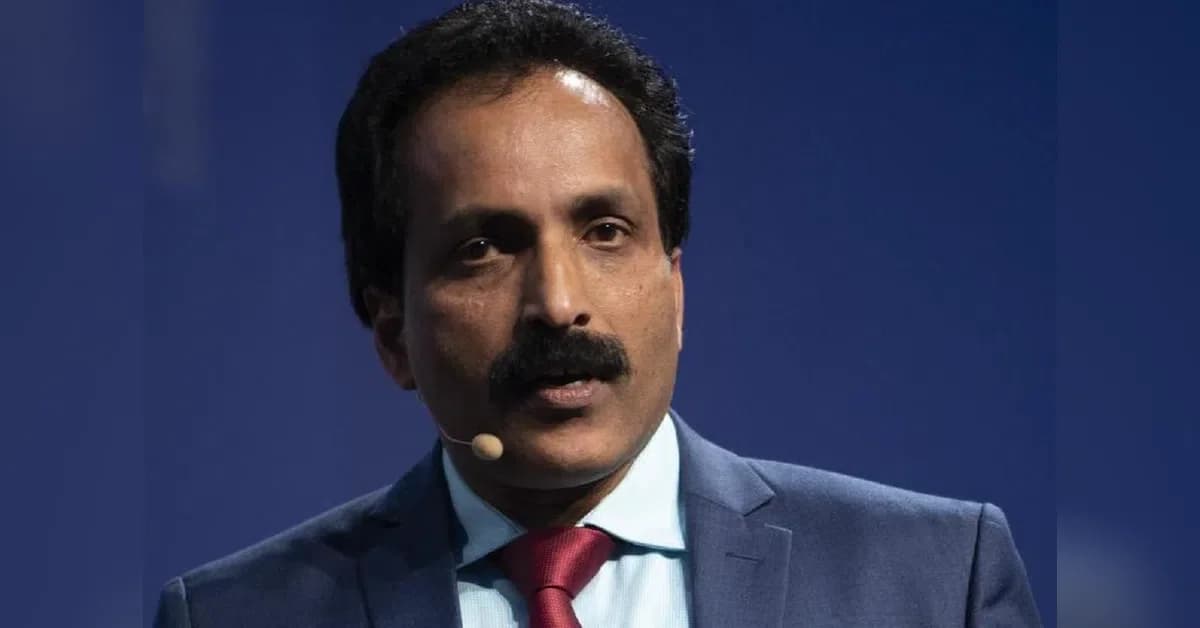
Group Captain Shubhanshu Shukla, India's first man on the International Space Station, is now preparing for his second space voyage as part of the Gaganyaan mission. According to reports from PTI Videos, Shukla is based in Bengaluru at the Human Space Flight Centre, living with his family as he prepares for the mission tentatively scheduled for mid-2027. The mission aims to demonstrate India's capability of human spaceflight by launching a team of three members to a low-Earth orbit of 400 kilometres for three days and bringing them back safely by landing in Indian sea waters. Speaking at Ashoka University in Sonepat, Shukla described this as a crucial juncture for space missions, especially as there is a race happening right now of going back to space and back to the moon.
Last June, Shukla was one of the four astronauts who travelled to space and spent 18 days aboard the International Space Station as part of NASA's Axiom-4 mission. As reported by PTI Videos, this marked the return of an Indian to space after 41 years -- Wing Commander Rakesh Sharma was the first to do so in 1984. Shukla described his experience as "surreal" and compared living in space to going to school, with a typical day starting at 6 am and continuing until 6 pm with activities and briefings throughout the day. "Living in space is exactly like going to school. You follow a timetable," he said, noting that a typical day aboard the ISS started at 6 am with the first briefing at 7:30 am, activities from 8 am until 6 pm, and evenings often involved sipping tea in a pouch and looking outside the window. "The fantastic crew helped a lot," he said, noting that conversations with fellow astronauts were very easy because they were in similar situations. "There are times I tried to suppress them so that I could keep functioning normally, because sometimes the weight of emotions can be crushing."
According to PTI Videos, Shukla described Gaganyaan as a developmental or 'prototype' mission, drawing from his background as an IAF test pilot. He emphasized that if successful, India will be only the fourth nation in the world to have shown capability of doing manned space missions, after the US, Russia and China. "Globally, there is a lot of respect for the Indian space community, specifically ISRO... transitioning to a human space mission is a change of magnitude -- it is a big shift from what we have been doing and what we are going to do," Shukla told PTI Videos. He noted that while there are people on-board the space station to talk to and things to do, sometimes not being able to communicate exactly the unique, first-time experience of spaceflight to his loved ones made him feel lonely. "Very few people have gotten a chance to see or feel that kind of perspective that you are getting to witness, and there is no good way to communicate it to your loved ones back home. You can just talk, you can just speak to them, but it doesn't even come close to doing the justice of communicating of what it is exactly."
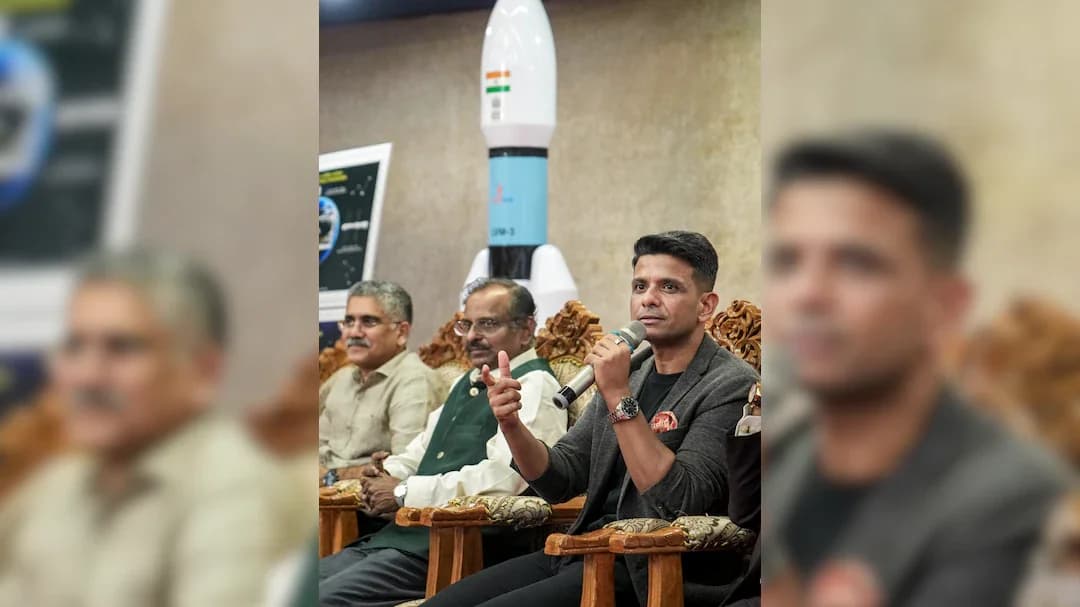
As reported by PTI Videos, Shukla is involved in the design and refinement of the system that will carry astronauts to space, with mission-specific training to commence once the design is finalized and frozen. The mission will demonstrate India's capability of human spaceflight by launching a team to low-Earth orbit and bringing them back safely by landing in Indian sea waters. New technologies comprising engineering and human centric systems are being developed and realized for ensuring human safety, which is of paramount importance in the Gaganyaan mission. In April, ISRO successfully conducted the second Integrated Air Drop Test (IADT-02) for Gaganyaan at the Satish Dhawan Space Centre in Sriharikota. IADT-02 is among the precursor, unmanned missions through which safety and reliability will be proven. If successful, India will be only the fourth nation in the world to have shown capability of doing manned space missions, after the US, Russia and China. "I think it is monumental in terms of capability that we as a country will possess when we are able to execute Mission Gaganyaan because it involves (the) development of a lot of new technologies which are otherwise not existing, with nations who do not pursue these missions," the Lucknow-born astronaut said.
In January, Shukla was awarded the Ashoka Chakra, India's highest peacetime gallantry award. According to PTI Videos, he described this as a crucial juncture for space missions, especially as there is a race happening right now of going back to space and back to the moon. Shukla noted that scientific experiments conducted during the Axiom-4 mission, including researching stem cells for preventing muscle damage in space or looking at growth of microalgae in microgravity, were curated with the basic theme of executing India's own human space missions in the future. "The fantastic crew helped a lot," he said, noting that conversations with fellow astronauts were very easy because they were in similar situations. "There are times I tried to suppress them so that I could keep functioning normally, because sometimes the weight of emotions can be crushing, can cripple you, the weight that comes with just the sheer understanding of what is happening."