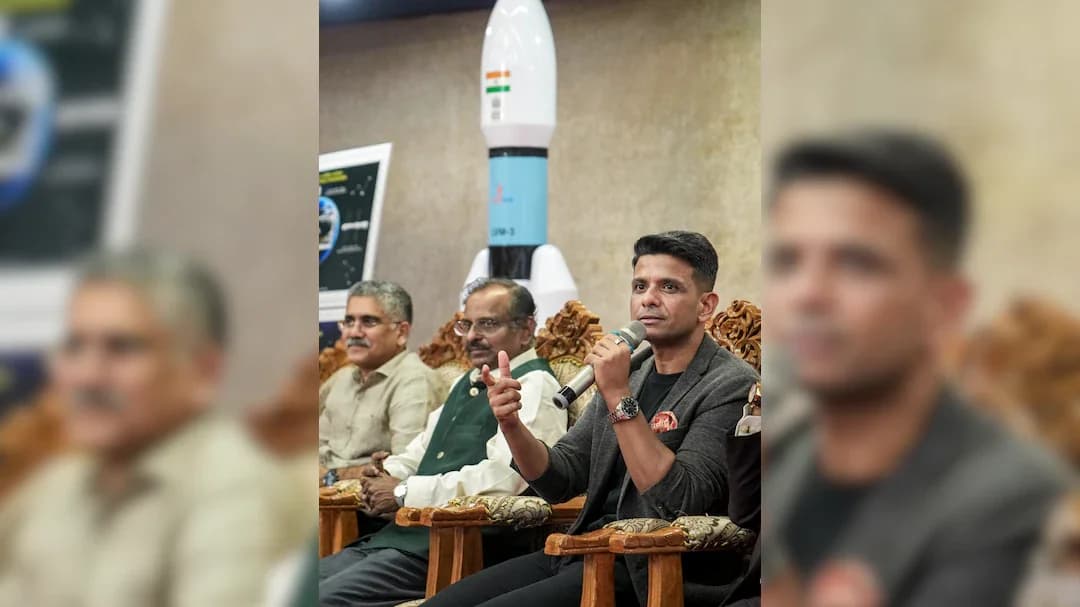
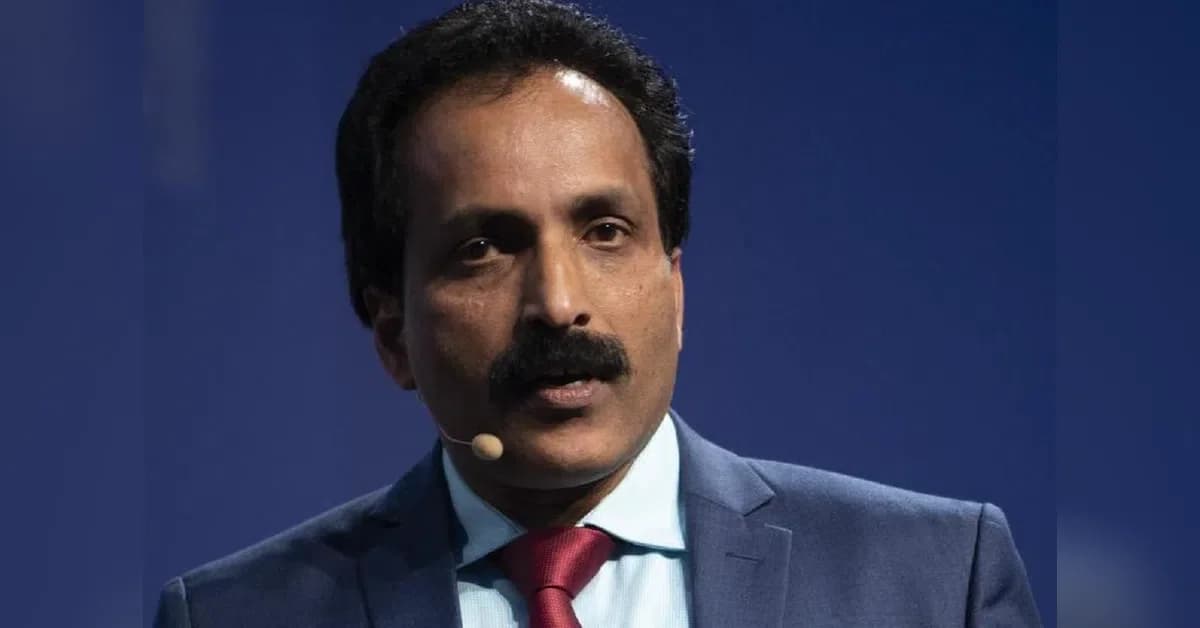
Agnikul Cosmos, India's leading private launch vehicle company, announced that S Somanath, former chairman of the Indian Space Research Organisation (ISRO), has joined as an observer on its board of directors. According to reports from Business Standard, this appointment comes as Agnikul prepares for Mission 02, a flight that will attempt, for the first time on Indian soil, the recovery of an orbital-class rocket booster and the extension of a rocket's upper stage into an on-orbit platform. Neither milestone has been demonstrated at this scale in India, representing the country's first serious foray into rocket reusability. Moin SPM, chief operating officer of Agnikul Cosmos, emphasized that booster recovery requires precision at every layer - propulsion, guidance, structural, avionics and the upper stage extension pushes the team into territory that few globally have operated in. The former ISRO chairman brings authority on launch vehicle design, propulsion systems and structural dynamics to support this technical frontier.
Mission 02 will fly a two-stage Agnibaan configuration in which the first-stage booster, after separation, will execute a controlled descent to attempt a barge-based ocean recovery. As reported by Business Standard, simultaneously, the upper stage will remain in low-Earth orbit as an ongoing, revenue-generating functional platform named Rock-Sat. The Agnite booster engine, validated earlier this year, produces thrust at a scale that makes recovery trajectories tractable, according to Moin SPM. Agnikul holds international patents in India, the United States and Europe covering this convertible upper-stage architecture, which allows the same vehicle hardware that delivers a satellite to then serve as an in-orbit asset. The strategic timing reflects the global reusability race, with SpaceX conducting over 650 Falcon 9 booster flights and individual boosters accumulating up to 35 missions, driving cost-to-orbit down to levels that expendable rockets cannot approach.
By recovering and refurbishing the lower stage and managing independent launchpads, Agnikul aims to slash standard small-satellite launch costs by up to 80%. This cost reduction potential represents a transformative opportunity for the small-satellite market, making space access more affordable for commercial and institutional customers. The company's convertible upper-stage concept, combined with indigenous semi-cryogenic propulsion, represents a coherent and defensible technical strategy that could fundamentally change the economics of space access in India. Moin SPM explained that the traditional pricing equation for a rocket launch is heavily influenced by the bill of materials, insurance, and launchpad rentals. By recovering and refurbishing the lower stage, deploying their own launch pad and mission control rooms and lean, mobile ground operations, drastically reducing both the bill of materials and rental costs. The message from the market is unambiguous. Reusability is no longer a differentiator; it is a prerequisite, as Agnikul noted, with Jeff Bezos' Blue Origin's New Glenn and Rocket Lab's upcoming Neutron joining this field.
The announcement follows a landmark month for Agnikul internationally, with the company selected among 120 Indian deep-tech startups for Bharat Innovates 2026 in Nice, France. As reported by Business Standard, at the event, Agnikul's CEO presented Agnibaan to French President Emmanuel Macron and signed memoranda of understanding with ICEYE of Finland and Safran of France. The agreements, facilitated through IITM Global, are part of a broader set of partnerships valued at nearly $100 million in projected commercial and technological value. This internationalization strategy reflects building institutional credibility in India while opening doors in Europe's aerospace industrial base. In May 2024, Agnikul conducted Mission 01, Agnibaan SOrTeD, a fully controlled suborbital flight from India's first privately built launchpad at Sriharikota, the first launch of its kind in India.
Agnikul's technology includes a 3D-printed semi-cryogenic engine that can be manufactured in seven days, according to Business Standard. The company's convertible upper-stage concept, combined with indigenous semi-cryogenic propulsion, represents a coherent and defensible technical strategy. S Somanath expressed pride in supporting the team as they take this next step, noting the quality of engineering thinking behind Mission 02 as a genuine technical frontier for India and the world. The convertible upper stage concept, combined with indigenous semi-cryogenic propulsion and a 3D-printed engine that can be produced in days, is a coherent and defensible technical strategy, as Somanath emphasized. Agnikul ultimately aims for full reusability to dramatically reduce payload delivery costs and transform launch economics, with Moin SPM noting that the company is also eyeing revenue streams beyond single launch events, including keeping the rocket's upper stage in orbit as a continuous, revenue-generating platform called Rock-Sat.