According to Business Standard reports, Shankar Sharma highlighted the unique challenges facing HDFC Bank's succession after founder Aditya Puri's departure. Speaking about the bank's journey since its 1990s IPO, Sharma noted that Puri was an entrepreneur who started the bank and served as its creator, founder, and entrepreneur. He emphasized that any successor was always going to face a huge uphill battle to match Aditya's record, as founder-led institutions typically struggle after visionary founders leave. Sharma contrasted this with banks like ICICI Bank and State Bank of India (SBI), which have traditionally been run by professional managers and have delivered steadier performance despite not achieving HDFC Bank's peak numbers.
As reported by Business Standard, Sharma discussed HDFC Bank's historical performance, noting that the bank consistently delivered 25-30% growth in key operational metrics during Puri's tenure. When asked about returning to such performance levels, Sharma questioned whether current management could achieve similar results, stating that perhaps not close to that number, but they would definitely do better than practically anybody else around. He emphasized that founder management matters because founders know every single part of the giant machine called a bank, with Puri being a very hands-on manager who had 'fire in the belly' that professional managers typically lack due to limited tenure concerns.
According to Business Standard reports, Sharma remains negative on Indian markets for over two years, maintaining his 'lake of returns' theory since July 2024. He stated that the Nifty has delivered negative returns both in rupee and US dollar terms, while small-caps are roughly flat in rupee terms over two years. However, he noted that over the last three or four months, particularly since March, small-caps have done amazingly well, with technology-oriented stocks performing particularly well. Sharma emphasized that small-caps are the only space in India where you can make money, with his preference for mid- and small-cap stocks continuing despite broader market challenges.
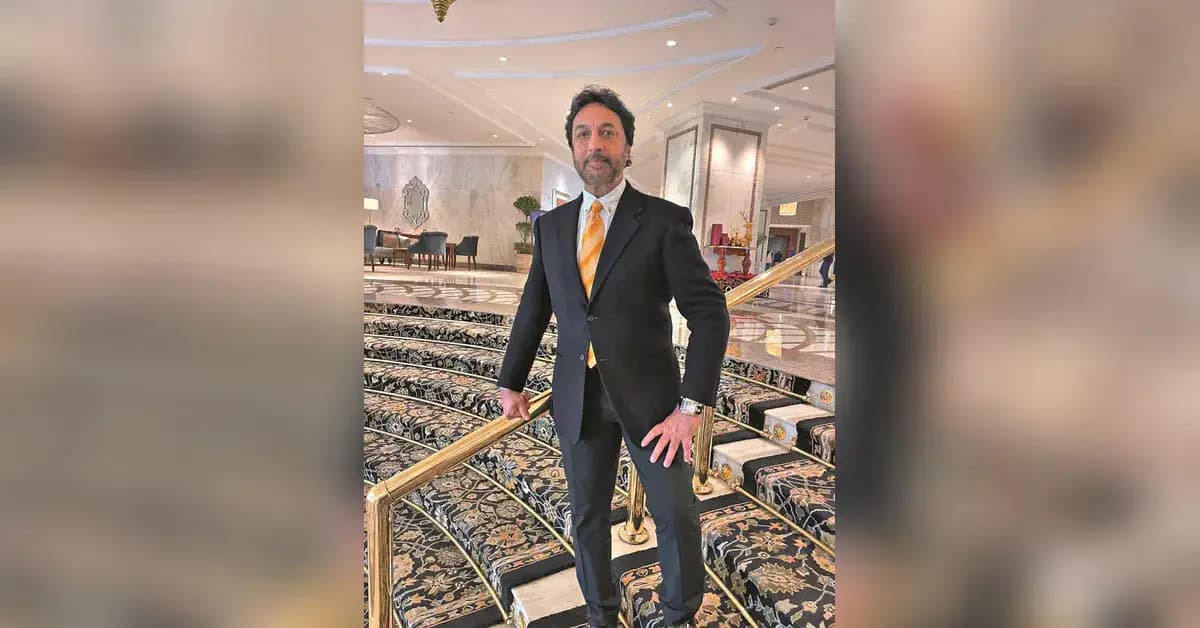
As reported by Business Standard, Sharma challenged the widely held belief that FII inflows will change the direction of the market, calling it 'just like any other old wives' tale' with no grounding in correlation statistics. He explained that FIIs have been selling over the last couple of years, with mutual fund inflows providing an easy exit for FIIs. Sharma emphasized that buying always equals selling, and the belief that FII inflows will benefit the market is simply not supported by any correlation statistics. He noted that the market has peaked in terms of its return potential, with the 'lake of returns' theory suggesting limited prospects for significant returns in the near term.
According to Business Standard reports, Sharma expressed optimism about the AI infrastructure boom and its impact on Indian companies. He highlighted that hyperscalers are generating 18-21% internal rate of return (IRR) on average, with companies supplying hardware, infrastructure, and data-centre plumbing having order books sold out for the next two years. Sharma noted that AI is already embedded in our lives and within two years, it is difficult to imagine a business that can function without it. He emphasized that the people driving this boom are among the best management teams in the world, with the AI capex cycle expected to continue for several years due to the unbelievable value creation on capital investment.