According to reports from The Times of India, Zee News, Business Standard, ETAuto, The Economic Times, and Devdiscourse, India's automotive sector faces a trade challenge with exports of approximately USD 24 billion in FY2026 against imports of around USD 25.4 billion, resulting in a trade deficit of approximately USD 1.4 billion. Speaking at the ACMA 66th Annual Session, Hyundai Motor India MD and CEO Tarun Garg emphasized that India has demonstrated resilience and built a strong manufacturing base, but the industry must now focus on moving from resilience to global leadership. As reported by The Times of India, Garg noted that "The concern goes beyond the deficit. Our exports remain concentrated in relatively mature technologies, while our imports are led by advanced, higher-value technologies which may well define the future." The challenge extends beyond the deficit size, requiring India to build the technology, manufacturing capabilities, employment opportunities and global competitiveness needed to support the country's vision of Viksit Bharat by 2047.
As reported by Zee News, Business Standard, ETAuto, The Economic Times, Devdiscourse, and The Times of India, Garg has specifically called for India to become self-reliant in EV battery cells as part of his broader technology development priorities. He stressed the need to build domestic capabilities in semiconductors, EV battery cells, rare-earth magnets, power electronics, and other critical technologies to reduce import dependence and strengthen self-reliance. Garg outlined four priorities for the auto-component industry: mastering critical technologies, engineering costs, compounding learning and building export competitiveness. According to The Times of India, Garg emphasized that "We need to invest even more in R&D and innovation, because technology ownership is essential for strategic independence." He identified semiconductor chips, EV battery cells, power electronics and rare-earth magnets among the critical technologies where India needs to strengthen domestic capabilities. Garg urged auto-component makers to focus on developing domestic technology capabilities and increase investments in research and innovation.
According to The Times of India, The Economic Times, and The Times of India, Garg highlighted the dramatic evolution of the automotive industry over the past three decades. "Three decades ago, vehicles were predominantly mechanical systems. They have now evolved into intelligent, connected and increasingly software-defined mobility solutions, while customer expectations around quality, safety, reliability and performance have risen sharply," he explained. This technological transformation has created new opportunities and challenges for India's automotive sector. As reported by The Times of India, Garg emphasized that "India has the required scale, engineering talent and cost competitiveness to build this capability." He called for the industry to progress from exporting conventional components to "exporting advanced technologies, engineering capability and innovation." The evolution from mechanical systems to software-defined mobility solutions requires India to develop "value excellence" as its distinctive global strength, defined as "making advanced technology affordable while maintaining global standards of quality, performance and safety."
As reported by Zee News, Business Standard, ETAuto, The Economic Times, Devdiscourse, and The Times of India, Garg called for a shift from the current 'Make in India' approach to 'Design in India, Engineer in India and Create in India' strategy. He urged industry leaders to localize critical imports, create Indian patents, enter global markets and integrate AI across their operations. Garg emphasized that India should build a distinct global advantage by combining its scale, engineering talent and cost competitiveness to deliver high-quality, affordable technologies, supporting India's vision of Viksit Bharat by 2047. According to The Times of India, Maruti Suzuki India MD & CEO Hisashi Takeuchi also identified "deep localisation" as critical to insulating the industry from global disruptions. According to The Economic Times, he called for the country to advance "from Make in India to Design in India, Engineer in India and Create in India" and urged industry stakeholders to commit to five actions -- mastering one critical technology, localising one imported component, creating one Indian patent, entering one global market and integrating AI into each function.
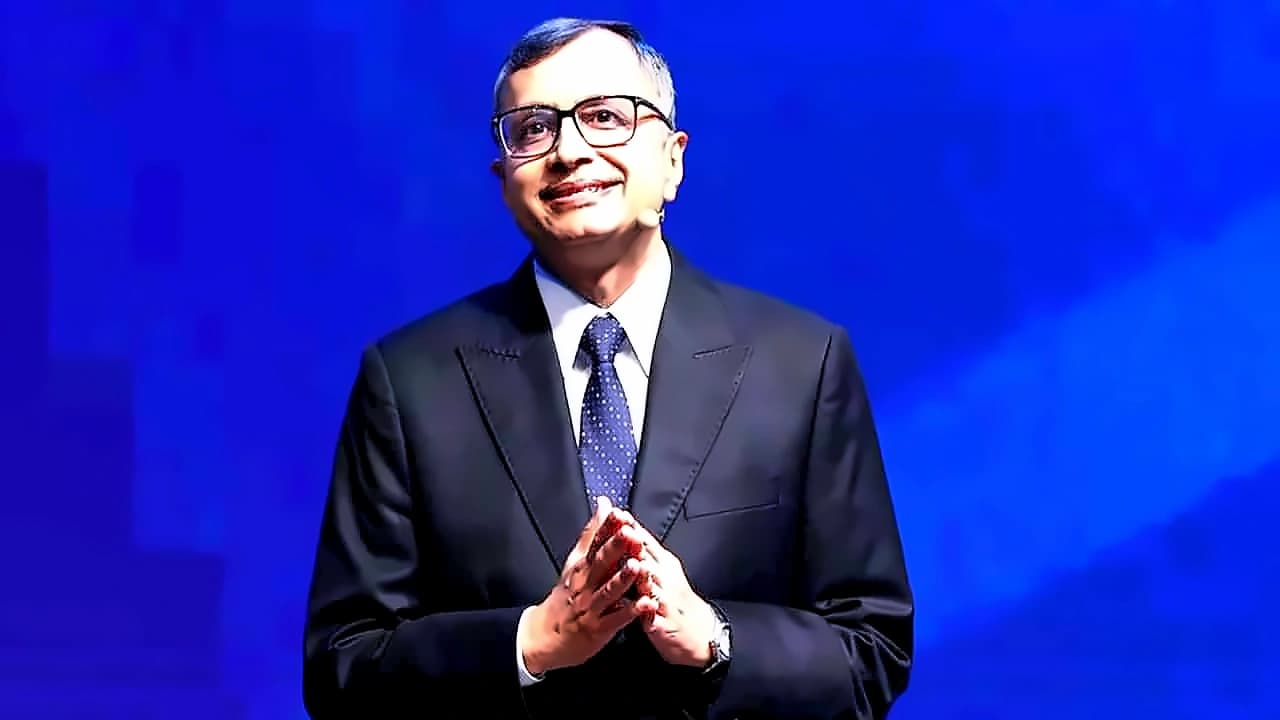
According to Business Standard, ETAuto, The Economic Times, Devdiscourse, and The Times of India, Garg emphasized that "The government on its part needs to provide consistent long-term policy that supports scale and accelerates the development of technologies and components." He called on automakers to build more long-term technology partnerships with suppliers, while urging component manufacturers to step up investments in research and development, design and intellectual property. Garg outlined four pillars for building India's distinctive capability of 'value excellence' -- mastering technology, engineering cost, compounding learning and building export competitiveness. As reported by The Times of India, he drew a parallel with UPI, stating "The automotive industry can follow a similar path by mastering critical technologies, engineering them for affordability, continuously improving them and taking Indian innovation to global markets." He called on different stakeholders to play a greater role in this transition, with OEMs building deeper technology partnerships with suppliers, suppliers increasing R&D investments, academia strengthening applied research, and startups bringing greater speed and innovation.