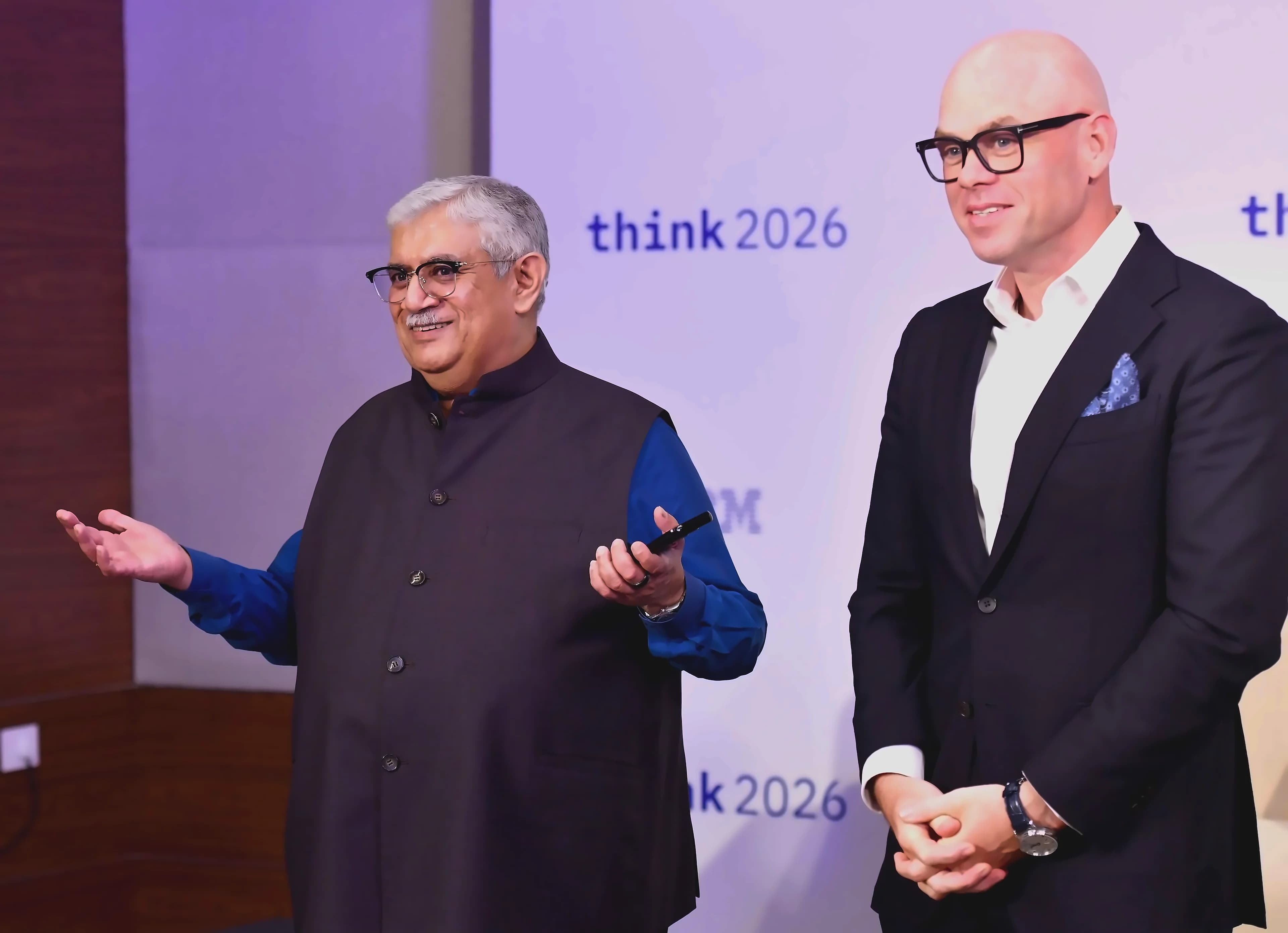
IBM India and South Asia Managing Director Sandip Patel advocated for vigilance over artificial pausing of AI technology during an interview with PTI on Tuesday. According to reports from Business Standard, Patel emphasized that "I don't think any form of technology needs to be artificially paused. I think we just have to be vigilant and think ahead to see how do we work with it so that innovation isn't stifled but we are building the right kind of governance and usage around it." He stressed that AI should be viewed as "augmented" rather than artificial intelligence, requiring ongoing human oversight as intelligence continues to be built into technology. Speaking at a conference later, Patel emphasized that "eternal vigilance" is crucial, noting that "the regulations cannot be the only solution" and that "having the right checks and balances, and accountability would be key."
Patel highlighted India's role as a global innovation hub for IBM, noting that "Innovations from India can be scaled and applied anywhere in the world." As reported by Business Standard, he pointed to UPI as an example of successful Indian innovation that has global applicability. The IBM India Managing Director cited the company's "very privileged" role in creating YONO, the digital platform run by SBI, describing it as "a fairly unique proposition that has emerged from India and can be applied around the world." He emphasized that "IBM India has always been a critical part of global operations, not only because the company continues to participate in the growth market here, but also because it is a 'hotbed of innovation'". Speaking at a conference, Patel noted that "AI should be seen as 'augmented' and not artificial intelligence" and that "the advent of every technology has changed the nature of work."
According to Business Standard reports, Patel identified several real risks associated with autonomous AI agents, including threats from bad actors who will get worse, rogue AI agents, and vulnerabilities in open source technology which comprises about 90 percent of an enterprise's technology footprint. He noted that some level of human oversight is always necessary as more intelligence gets built into technology. Regarding job impacts, Patel stated that "the question should not be about what is going to happen to jobs. It is what is the skilling imperative, that's important today." He recalled his own experience as a chartered accountant, transitioning from manually ticking audit entries to analytics that drove greater value for clients, noting that "some jobs will go away, as is the case with any technology, but new jobs and capabilities will also be created."
IBM has announced Bharat Core, a set of India-specific connectors and tools built on its Sovereign Core platform. As reported by Business Standard, Bharat Core includes 20 to 25 different tools and connectors that enable connection to India-specific capabilities like Aadhaar. Patel explained that "Bharat Core sits on top of Sovereign Core as a set of connectors and tools.. 20 to 25 different tools and connectors that enable us to connect sovereign core to India-specific capabilities like Aadhaar and so on." He emphasized that "sovereign core, but with India specific components becomes very real" and noted that "sovereignty has moved beyond data residency to operational and technological sovereignty." Patel called this "something which is truly groundbreaking for India because sovereign...and what I refer to as now 'digital swaraj' is becoming real."
IBM will release a white paper on a 'reference architecture' for a sovereign AI stack built with the Andhra Pradesh government and partners BharatGen and NxtGen. According to Business Standard, "we've actually created a working reference architecture that enables a sovereign AI stack, which can be used by any state government, any central, any government entity, or for clients, both in India and anywhere around the world." Patel noted that while supply chains are stretched globally, the impact hasn't been seen as critically in core technology in India, though the company continues to monitor these developments. Speaking at a conference, he emphasized that "the promise of AI is 'exciting,' but the vulnerabilities it opens up, can make its prospects frightening."