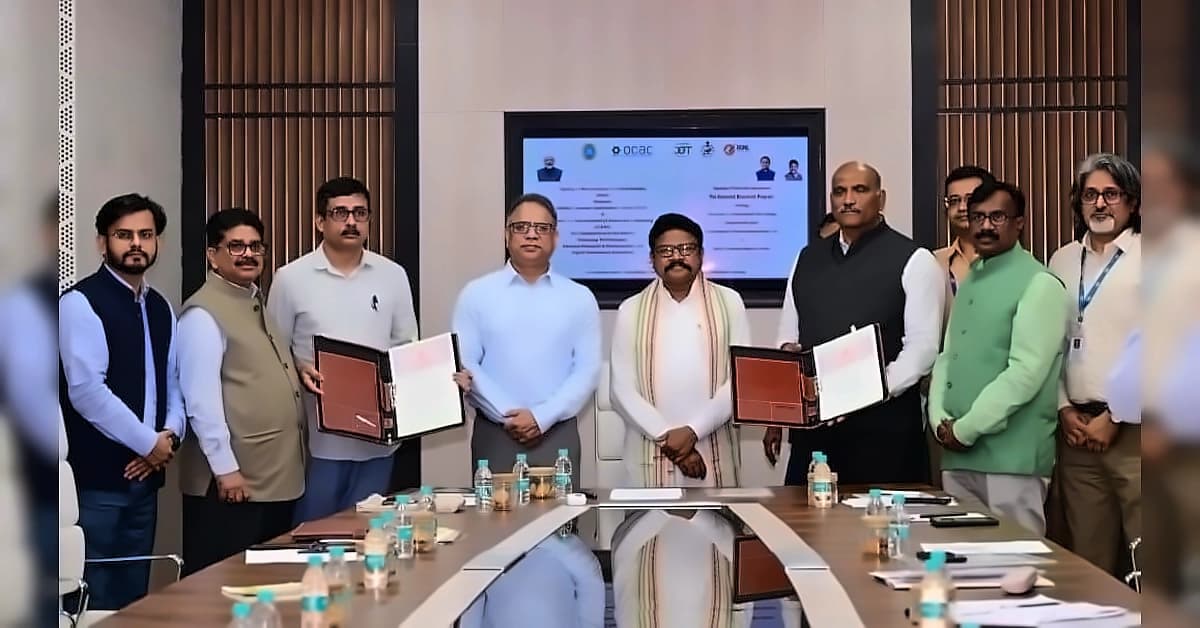
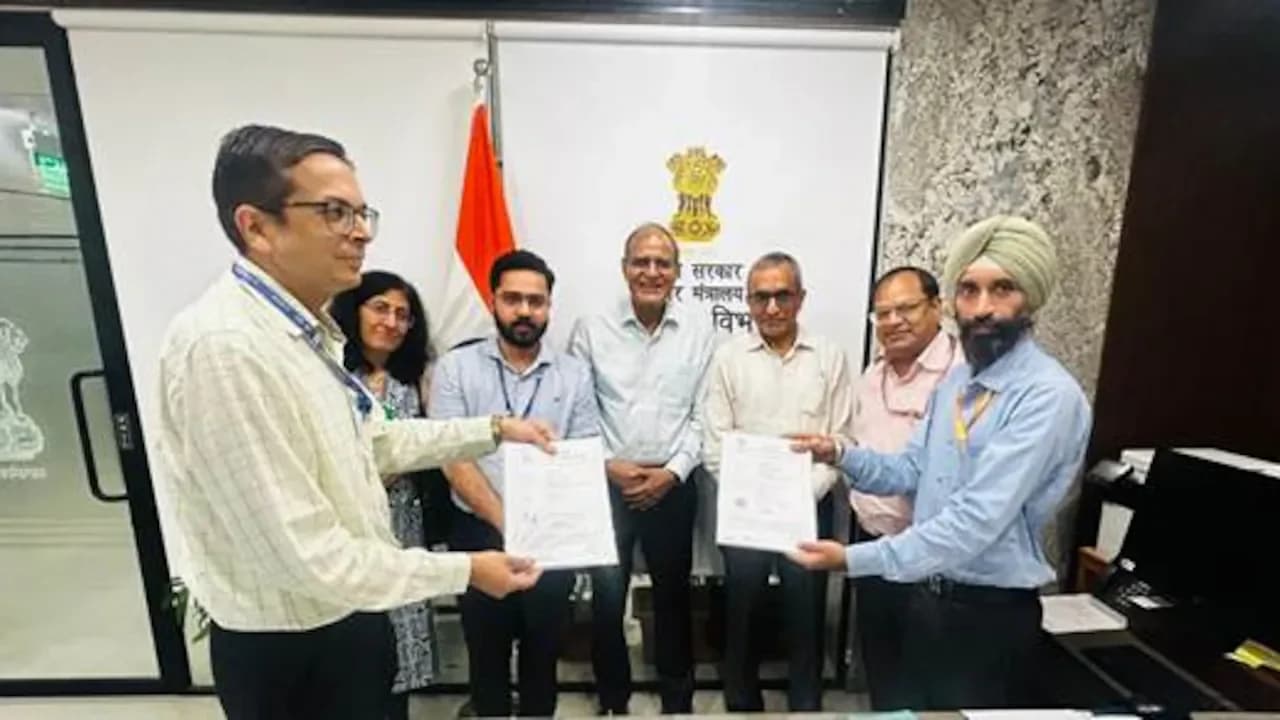
The Department of Telecommunications (DoT) and the Centre for Development of Telematics (C-DOT) have officially signed a five-year agreement to establish an indigenous end-to-end optical network testbed at C-DOT's New Delhi campus. The agreement was signed on 27th August 2026 by representatives of DoT and C-DOT in the presence of Sh. Alok Shukla, Advisor (Technology), DoT; Dr. Rajkumar Upadhyay, CEO, C-DOT and Sh. Atul Kumar Singh, DDG (Networks & Technologies), DoT. This facility will provide Indian startups, telecom companies, researchers and industry players with a dedicated platform to develop, test and validate optical communication products before commercial deployment, functioning as a critical real-world environment to accelerate the development, testing, and commercialization of optical communication solutions.
The testbed will integrate C-DOT's optical core, optical access and Quantum Security technologies, along with advanced third-party testing and measurement equipment from trusted vendors. As reported by NDTV Profit, the platform will function as a shared national resource for innovation, testing, validation, skill development and commercialisation in next-generation optical communications. The facility will enable companies to assess product performance, interoperability and real-world deployment scenarios, helping bridge the gap between laboratory-stage innovation and commercial readiness. By combining C-DOT's mature, field-ready products across optical core, access, and Quantum Security technologies, the test bed will function as a catalyst for the Indian telecom ecosystem and address key gaps in the development cycle of telecom technologies moving solutions from laboratory development to testing in network environments that more closely resemble real-world deployments.
The project will be implemented in two phases over five years. The first two years will focus on establishing the physical and technical infrastructure, including optical core and access network components, quantum security technologies and specialised testing equipment. The remaining three years will concentrate on operations, maintenance and technical support, ensuring continued assistance for startups, researchers and other ecosystem users. As reported by NDTV Profit, educational outreach programmes will also form part of the second phase, with the initiative primarily bridging the gap between lab-stage innovation and market readiness to further accelerate the development and deployment of home-grown optical communication technologies. The facility is expected to allow developers to test interoperability, performance and network-level deployment scenarios before taking products to market, particularly benefiting smaller technology companies that may not have access to large-scale network environments for validation.
The initiative is aligned with the government's Aatmanirbhar Bharat vision and efforts to strengthen domestic telecom capabilities. The fully funded project by DoT will provide hands-on training and exposure to next-generation optical networking technologies for students, researchers and telecom professionals. By offering access to advanced infrastructure, the facility is expected to support skills development while helping Indian innovators validate technologies under practical conditions, further advancing the vision of "Aatmanirbhar Bharat" and strengthening India's capabilities in next-generation communication infrastructure. C-DOT, as a premier telecom technology research and development center, has consistently been at the forefront of developing indigenous, secure, standards-compliant and deployment-ready telecom technologies aligned with national priorities of technological self-reliance and secure digital infrastructure.
The test bed sits within a broader push for indigenous telecom research, supported by the Telecom Technology Development Fund (TTDF) scheme which has approved about 136 R&D projects worth nearly ₹543 crore for indigenous telecom research as of mid-2026. India has also built an indigenous 5G test bed, developed by a consortium of eight academic institutions led by IIT Madras and funded by DoT, allowing Indian academia and industry to validate their 5G products and prototypes. The optical network test bed is expected to play a similar role for optical networking technologies, from access networks to the high-capacity backbone. C-DOT's optical and gigabit passive optical network systems form the backbone of the BharatNet rural broadband programme, the world's largest rural broadband connectivity programme, which aims to connect about 2.64 lakh gram panchayats using optical fibre connectivity. Beyond product testing, the facility is expected to be used for training and capacity building in optical networking, with students, researchers, startups and telecom professionals gaining practical exposure to optical network technologies and testing processes.