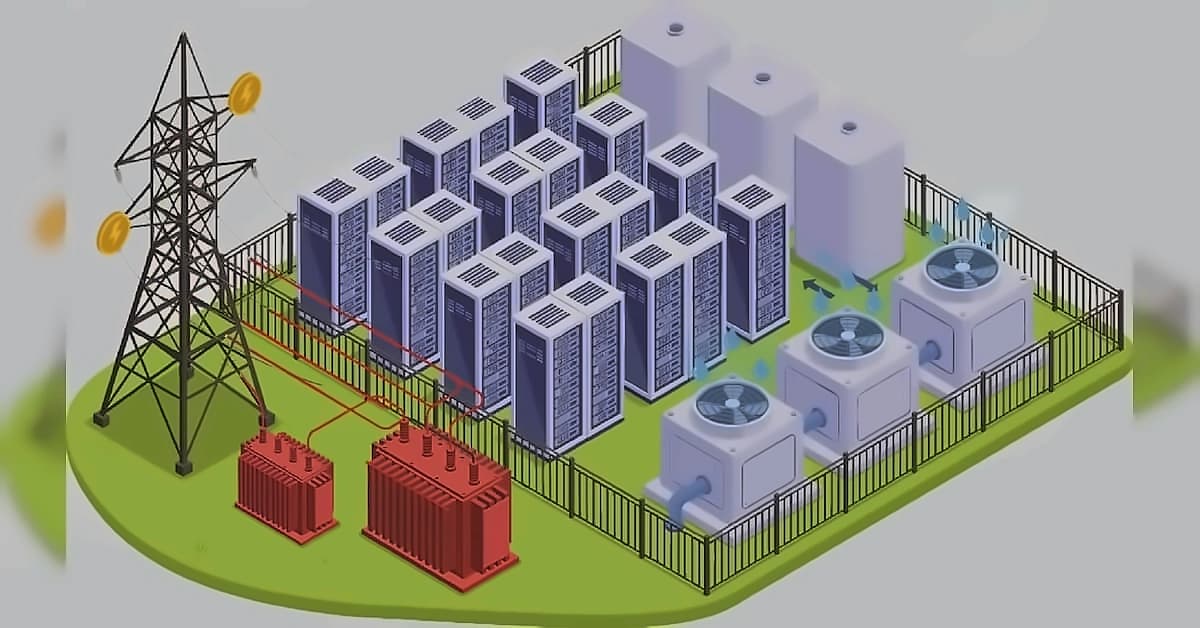
Alibaba Group Holding Ltd. is accelerating its international data centre expansion as part of its aggressive AI infrastructure buildout. According to Business Standard, the company will set up its first cloud regions in Turkey, Finland and the Netherlands over the next 12 months, as announced by Alibaba executive Li Feifei at the company's flagship Apsara conference in Hangzhou. The expansion will also include Malaysia, Germany, the United Arab Emirates, France and Hong Kong, significantly boosting Alibaba's ability to provide localized cloud and AI services. This global ambition aligns with Chinese President Xi Jinping's vision to share the country's advances with the world, coming just days before Xi embarks on his first state visit to the US in over a decade, with AI at the top of his agenda.
Alibaba Group Holding Ltd. has unveiled the Zhenwu V900 accelerator, which the company claims is China's most powerful AI chip. According to reports from CNBC TV18, Lookonchain, Business Standard, and NDTV, this new accelerator from Alibaba's T-Head division can triple the performance of its predecessor and can be combined in clusters of up to 500,000 units to power frontier-model training. The Zhenwu V900 delivers 3 times the performance of the M890, with a single cluster scalable to up to 500,000 cards. CEO Eddie Wu announced the launch as part of the company's aggressive AI expansion strategy, with the company planning to update its AI chip lineup every year following this latest release. As reported by NDTV, T-Head has delivered 560,000 units of the Zhenwu product family and its processors have been deployed by more than 400 external customers.
At the Yunqi Conference, Alibaba CEO Wu Yongming unveiled the company's next-phase AI roadmap, revealing ambitious plans for machine intelligence development. The Qwen team plans to train a new model with 5 trillion to 10 trillion parameters, representing a significant advancement in AI model complexity. As reported by Lookonchain, Business Standard, and NDTV, Qwen is exploring Recursive Self-Improvement (RSI), which enables the model to identify its own shortcomings based on real task feedback, design experiments, construct data, and continue training. The new generation of models will focus on enhancing capabilities for complex long-horizon tasks, while advancing multimodal models that integrate understanding and generation. This pace of development contrasts with recent warnings from top AI labs in the US, after Anthropic PBC CEO Dario Amodei urged a slower pace of development to better handle AI risks. Wu declared that "Last year, we asserted that the more capable AI becomes, the more powerful humanity will be. Today, I remain steadfast in that conviction."
Alibaba has set an ambitious target of 20 gigawatts of data centre capacity for its Alibaba Cloud service globally by 2032, as reported by CNBC TV18, Business Standard, and NDTV. This expansion is driven by expectations of exponentially rising demand for AI services. The company is one of the biggest AI spenders among leading Chinese players, having committed to spending more than $53 billion over three years to expand its AI capabilities. Alibaba raised approximately $10.2 billion from a follow-on share offering in Hong Kong in August to support these investments. The 20-gigawatt blueprint while giant for a Chinese company, is relatively smaller than some of the world's more ambitious buildouts, with SoftBank Group Corp. envisioning a 10-gigawatt-scale computing centre in Ohio alone. Citigroup estimates could drive more than $160 billion of external revenue for the fast-growing Alibaba Cloud division, as reported by NDTV.
Alibaba's announcement coincided with a broader rally in global AI stocks, as reported by CNBC TV18, Business Standard, and NDTV. Alibaba's shares leapt more than 5% in Hong Kong, while WeChat operator Tencent Holdings Ltd. surged more than 7%. The positive market reaction came as global AI stocks rallied on early signs of success for Meta Platforms Inc.'s new personal agent, reviving investor optimism after recent market uncertainty. Alibaba's event comes ahead of a summit between US President Donald Trump and Chinese counterpart Xi Jinping, where AI matters are expected to figure prominently, with top-level US executives like Nvidia boss Jensen Huang and Microsoft Corp.'s Satya Nadella attending a White House state dinner. Talks got underway this week between US Treasury Secretary Scott Bessent and Chinese Vice Premier He Lifeng, where the two sides agreed to set up a dialog on AI aimed at reaching a common understanding on goals and threats.
CEO Wu Yongming estimates that the total thinking capacity generated by machines today is less than 3% of humans, and could exceed human levels by 1,000 times in the future. He noted that current AI coding is still similar to the 'electric light in 1882'—it mainly replaces existing work, while new products truly belonging to the machine intelligence era have not yet emerged. In the future, complex tasks may be split into tens of millions of subtasks, assigned to millions of Agents for continuous execution. To support this scale of computing demand, Alibaba is strengthening its chip and cloud infrastructure, with the company planning to operate over 20GW of global data centers by 2032. The company also plans to list T-Head to tap interest in the white-hot AI accelerator market, as reported by Bloomberg News. Alibaba's executives have indicated that annualized revenue from AI-related products is expected to reach $10 billion in the current quarter, with the company aiming to quintuple annual cloud and AI revenue to $100 billion in five years. The company should be able to recover its overall investment within a three-year period, Wu's team has said.