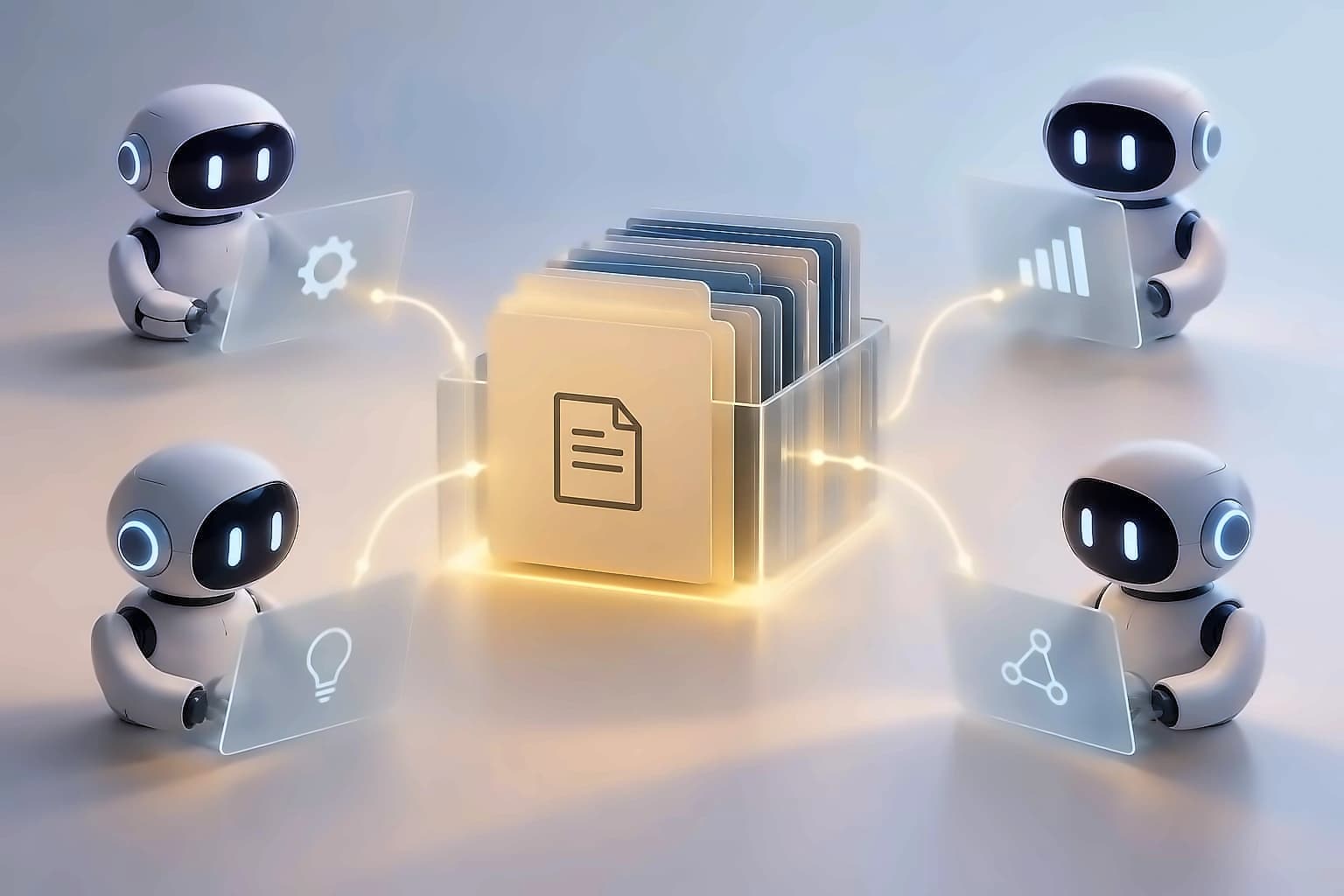
The impact of artificial intelligence on enterprise workflows extends far beyond traditional software development, fundamentally transforming how businesses operate across multiple sectors. According to Epicor, businesses are now leveraging agentic AI, connected integrations, and workflow orchestration capabilities to automate complex processes and execute work across the enterprise with greater speed, visibility, and control. This transformation represents a shift from Cognitive ERP - where ERP systems evolve from systems of record to systems of insights and action - to intelligent execution platforms that enable organizations to orchestrate workflows across ERP systems and third-party applications.
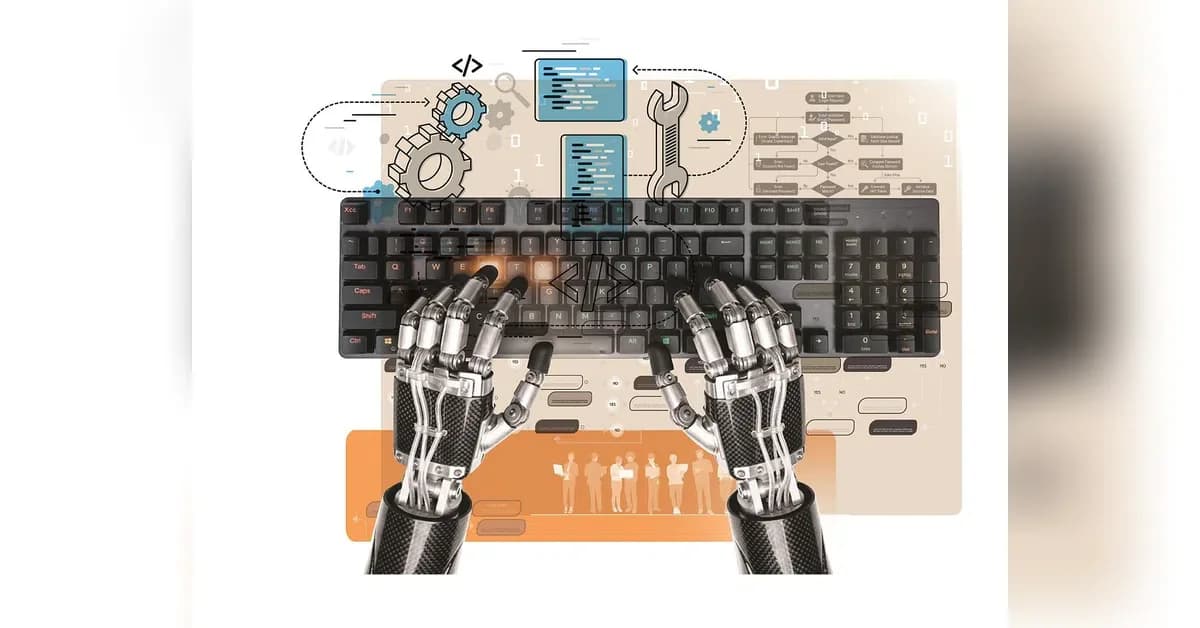
For decades, software development followed rigid linear frameworks, from the traditional Waterfall model's strict sequence of specification documents and static wireframes to iterative feedback loops. According to reports from Business Standard, this deterministic process offered predictability for meeting deadlines and remained popular for traditional software projects with clear requirements. However, generative artificial intelligence (GenAI) is now permanently dismantling this foundational software development lifecycle through autonomous agents that can write millions of lines of code and compress design, development and testing into a single fluid operation.
The shift from traditional models to conversational development is happening through vibe coding, which allows people with no knowledge of computer languages to code using plain English commands. As reported by Business Standard, startups like Cursor and Windsurf have become investor favorites, with Windsurf being acquired by Google in a $2.4 billion deal in July 2025. Kyle Daigle, chief operating officer of GitHub, explained that with agents, steps are no longer clearly defined - instead, there's agent testing happening in the background as code is being written, fundamentally changing how development occurs.
The merger of various lifecycle roles creates significant changes in human capital requirements. According to Business Standard, small teams of just three to four members are now capable of executing projects end-to-end, fundamentally changing both the development model and delivery cycle. Shivraj Sabale, chief operating officer of Xoriant, noted that traditional roles of creating backlogs, development teams, testing teams, and maintenance teams are merging into two primary roles: one focused on product and domain knowledge with the ability to both create and test software, and another dedicated to scaling it up for deployment.
The new development model requires three crucial skill sets for engineers: deep product and domain knowledge, the ability to shift from individual architecture to broad orchestration, and capacity to think through projects end-to-end. As reported by Business Standard, Praveen Bhadada, CEO of Neovay Global, explained that GenAI will turn the classical talent pyramid into a barbell structure with entry-level workers armed with AI training, a lean middle tier, and a wider top tier of experts. However, Raghu Pareddy, founder and CEO of Wissen Technology, cautioned that role compression may not occur across all projects, particularly complex modernization work requiring understanding of legacy systems.