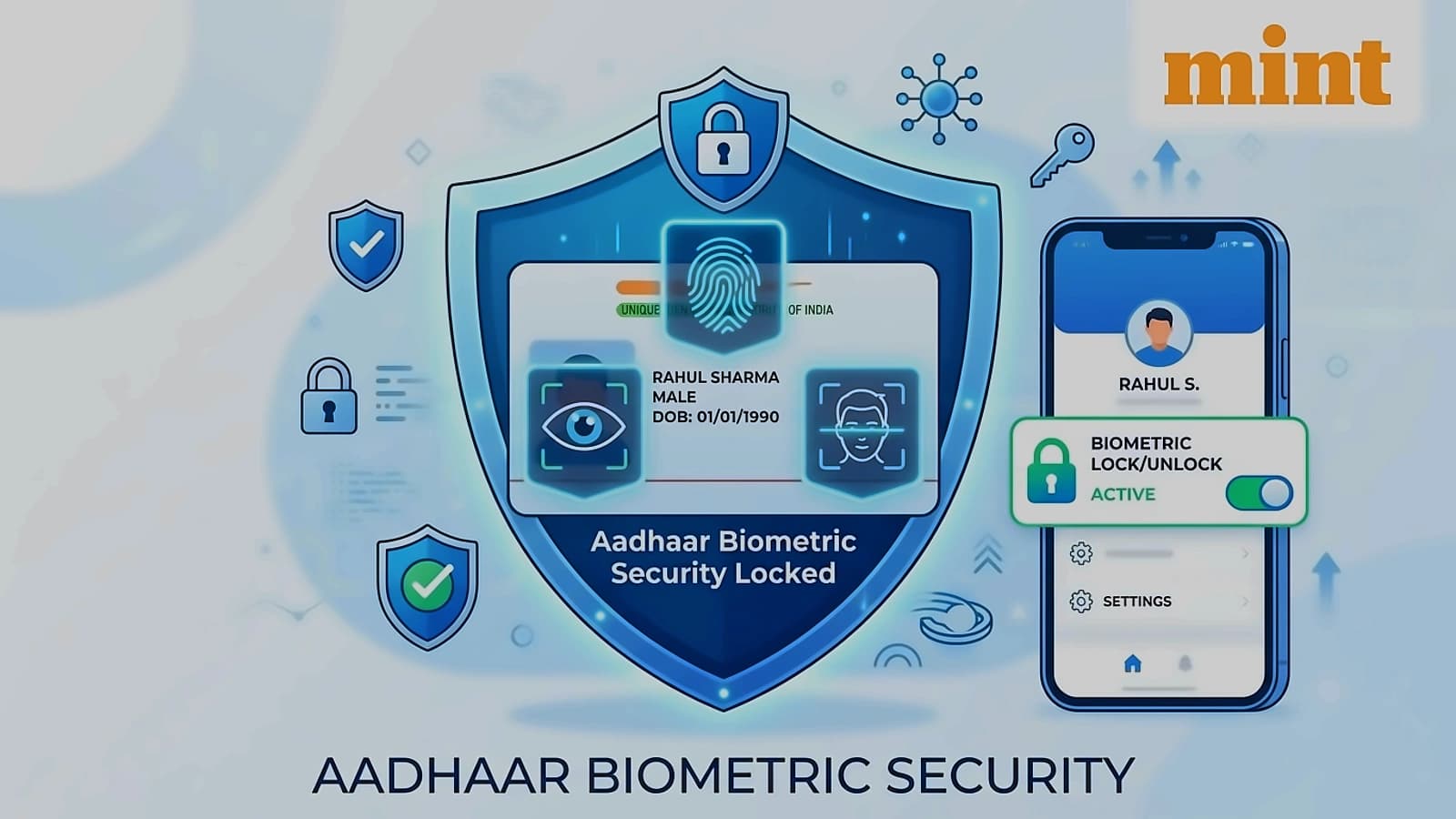
The Aadhaar app has crossed the significant milestone of 5 crore downloads, reflecting the growing preference among residents for accessing digital identity services through their smartphones. Developed by the Unique Identification Authority of India (UIDAI), the app is increasingly serving as a digital interface for Aadhaar holders, offering services such as mobile number, address and email updates, biometric lock and unlock, and e-Aadhaar downloads. The milestone marks a significant expansion of the Aadhaar app's role as a digital interface between residents and UIDAI, enabling Aadhaar number holders to access a growing range of services from their smartphones.
The app has demonstrated strong and sustained usage since its launch, with more than 60 lakh people updating their mobile number using the Aadhaar app, according to the IT Ministry statement. Additionally, over 15 lakh address updates and more than 23 lakh email updates were completed through the Aadhaar app. These services include mobile number update, address update, email update, biometric lock/unlock and e-Aadhaar download capabilities, supporting the Digital India initiative by providing secure, paperless verification methods. The growing use of these facilities reflects a shift towards digital-first Aadhaar services, allowing residents to complete several identity-related processes without visiting an Aadhaar centre.
The growing adoption of these services reflects the increasing preference among residents for availing Aadhaar-related services digitally, without the need to visit an Aadhaar centre, as reported by the IT Ministry. The Aadhaar app is designed around the principle of 'Show, Share and Verify', giving Aadhaar number holders greater control over how their Aadhaar information is used while enabling convenient identity verification through their smartphones. This approach enables secure, consent-based, and paperless verification through Aadhaar offline mechanisms, empowering both service providers and people alike. The app's growing adoption is part of the government's broader Digital India agenda, with a focus on making public digital services more accessible, secure and resident-centric.
Alongside the growth of the Aadhaar app, UIDAI continues to expand the ecosystem for secure and convenient offline verification, with more than 200 entities now onboarded as Offline Verification Seeking Entities (OVSEs) since its rollout in January, according to the IT Ministry statement. These entities will now be able to verify identity information without requiring real-time connectivity to UIDAI's central database through Aadhaar offline verification methods such as QR code-based verification and secure digitally signed documents. The onboarding of these OVSE partners reflects growing confidence in Aadhaar-enabled, privacy-first digital verification frameworks that prioritise user control while ensuring ease of access.
This approach brings a strong resident-centric focus, ensuring that Aadhaar number holders can share only the minimum necessary data, thereby enhancing privacy and building trust through transparent and consent-driven interactions, as stated by the IT Ministry. The initiatives are aligned with the Government's Digital India vision and the broader objective of improving ease of living through secure, accessible and technology-enabled public services. The simplified verification journey builds trust through transparent and consent-driven interactions, prioritising user control while ensuring ease of access for all stakeholders. Through mechanisms such as QR code-based verification and secure digitally signed documents, OVSEs can verify identity information while limiting data sharing to what is necessary, strengthening privacy, user consent and convenience in Aadhaar-based verification.