Apple's App Store ecosystem achieved a historic milestone in 2025, facilitating over $1.4 trillion in developer billings and sales, according to a new study by economists at Analysis Group. As reported by Business Standard, this represents a near-tripling of the ecosystem's size since 2019, with the independent report showing that economic activity from the digital storefront has more than doubled since 2019. The study found that for more than 90% of the billings and sales facilitated by the App Store ecosystem, developers did not pay any commission to Apple, highlighting the platform's revenue-sharing structure. Apple collected commissions on less than 10% of the $1.4 trillion the App Store generated, according to the Analysis Group study. However, the company's commission structure varies by region - 30% on digital goods and services, or 15% for developers in its Small Business and partner programmes, with that taxed slice worth $149 billion in 2025. The commission-free majority applies to physical goods and services such as rides, retail orders, and food delivery, while digital goods like game currency and streaming subscriptions are taxed.
In 2025, more than 40 of the top 100 apps on the storefront featured consumer-facing AI capabilities, and those apps recorded billing growth at four times the rate of other top 100 apps, according to Apple. The integration of artificial intelligence is becoming increasingly integral across app categories, with health and fitness apps delivering personalized recommendations using on-device intelligence, photo and video-editing apps featuring AI-powered creative features, and productivity tools leveraging cloud-based AI models for automation. Apple has been actively enabling this shift through its developer tools and frameworks, including the Foundation Models framework that gives developers access to on-device large language models and Xcode's AI coding capabilities with agentic coding in Xcode 26. The Apple Meet with Apple Experts programme has been providing direct developer support globally as these tools evolve. Developers are also using Apple's AI tools to build apps, with technologies such as the Foundation Models framework letting developers use Apple Intelligence's on-device large language model in their apps while preserving privacy, working offline, and providing AI inference at no cost.
According to the Analysis Group study, sales of physical goods and services accounted for $1.1 trillion, while digital goods and services totalled $149 billion. The growth rates across different revenue streams were impressive, with digital goods and services growing 2.4x, physical goods and services rising 2.8x, and in-app advertising revenue increasing 2.9x since 2019. General retail dominated the physical goods segment at $673 billion (47% of total), followed by food delivery and pickup at $120 billion, travel at $165 billion, grocery at $98 billion, ride hailing at $64 billion, and digital payment services at $16 billion. In-app advertising revenue from ads placed by developers in their apps was $151 billion. The App Store reached over 850 million average weekly users spanning 175 countries and regions, helping developers grow their businesses and reach new customers globally.
The Analysis Group study reveals that China accounted for the largest share at $562 billion, followed by the U.S. at $453 billion, Europe at $184 billion, and Japan at $52 billion of the total $1.4 trillion. Billings and sales more than doubled in China over the past six years and more than tripled in both the United States and Europe, demonstrating the platform's global expansion success. Apple's developer ecosystem continues to expand with Apple Developer Centers hosting thousands of developers across facilities in the US, China, India, and Singapore in 2025, with a new Apple Developer Center opening later this year in Berlin. Apple also operates nearly 20 Apple Developer Academies across Brazil, Indonesia, Italy, Saudi Arabia, South Korea, and the US, with dozens of additional Apple Foundation Programs equipping the next generation of developers. Retail remained the largest category across all markets, while spending patterns varied by region - travel ranked as the second-largest category in markets including the U.S., Europe, Japan, Australia, New Zealand, and Brazil, while in Korea, food delivery and pickup was the second-largest category.
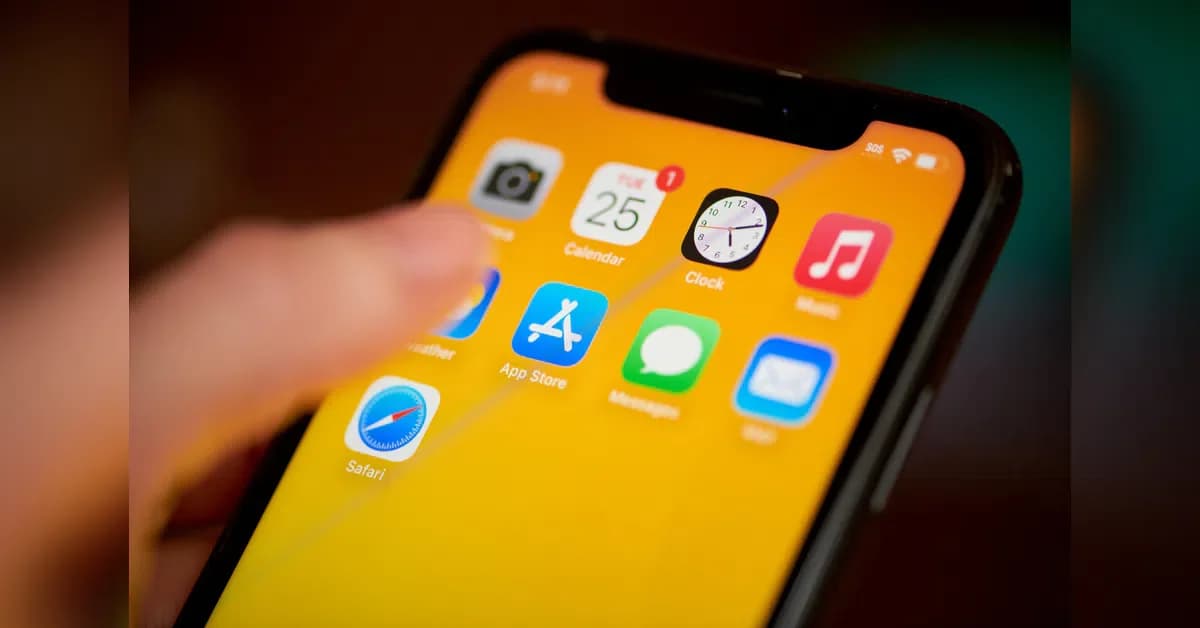
The App Store's $1.4 trillion milestone represents a significant portion of Apple's overall business performance, with Apple's Services segment accounting for $109.1 billion of the company's $416.1 billion in total revenue in fiscal 2025, making it the second largest business behind the iPhone's $209.5 billion. As reported by Yahoo Finance, Apple doesn't break out App Store revenue separately, instead counting it toward its Services segment. CEO Tim Cook highlighted the milestone, stating that "Developers are the heartbeat of the App Store, and this year's incredible milestone is a testament to their boundless creativity." However, global regulators are increasingly scrutinizing Apple's App Store practices. The European Union imposed a €500 million fine in 2025 for blocking developers from steering customers to cheaper payment outside the App Store, followed by a rebuilt EU fee system with charges that can reach 20%. The United States allows developers to link to outside payment pages free of commission since April 2025, while courts determine reasonable fees. India's Competition Commission found in 2024 that Apple abused its dominant position, with Apple agreeing on June 3, 2026 to share India-specific financials by June 25, potentially limiting any fine to India revenue rather than the feared $38 billion based on global turnover. The timing of the App Store announcement, coinciding with regulatory challenges, highlights the strategic importance of the platform's growth narrative amid mounting scrutiny.