With the 31 July deadline for filing income tax returns approaching, taxpayers still have the crucial flexibility to change their tax regime while filing their ITR, regardless of the regime used by their employer for TDS. According to Mint, salaried taxpayers can choose a different tax regime while filing their ITR, even if their employer calculated TDS under another regime. As explained by Nishant Shanker, Tax & Investments Expert at Navraj Global Advisors, "The tax regime selected by the employer for TDS purposes is only for withholding tax. The taxpayer is free to choose the more beneficial regime while filing the ITR. The final tax liability is determined based on the option exercised in the return." However, rules differ significantly for those with business income, who face stricter provisions and cannot switch freely between regimes.
With the income tax return filing season underway, taxpayers face a crucial decision between the new and old tax regimes for FY 2025-26 (Assessment Year 2026-27). According to reports from Mint, the new tax regime remains the default option and offers wider tax slabs, a higher standard deduction of ₹75,000, and a rebate that makes income up to ₹12 lakh effectively tax-free, subject to conditions. The old regime continues to provide several deductions and exemptions, making it beneficial for taxpayers with substantial tax-saving investments and eligible deductions. Recent data reveals that over 576 Indians reported income above ₹100 crore in FY26 tax filings, representing a 4x jump in five years according to Ministry of Finance data.
For individual taxpayers below 60 years of age during FY 2025-26, the new tax regime features six distinct slabs with varying tax rates. As reported by Mint, the structure includes nil tax on income up to ₹4 lakh, 5% on ₹4-8 lakh, 10% on ₹8-12 lakh, 15% on ₹12-16 lakh, 20% on ₹16-20 lakh, 25% on ₹20-24 lakh, and 30% on income above ₹24 lakh. The regime also includes a 4% health and education cess, which is added to the calculated tax liability. Recent analysis shows that many salaried taxpayers save ₹10,000–₹30,000 by switching from the old regime to the new regime, making the comparison particularly relevant for tax planning. However, taxpayers with business or professional income face restrictions and must follow specific opt-in or opt-out procedures, including filing Form 10-IEA wherever applicable.
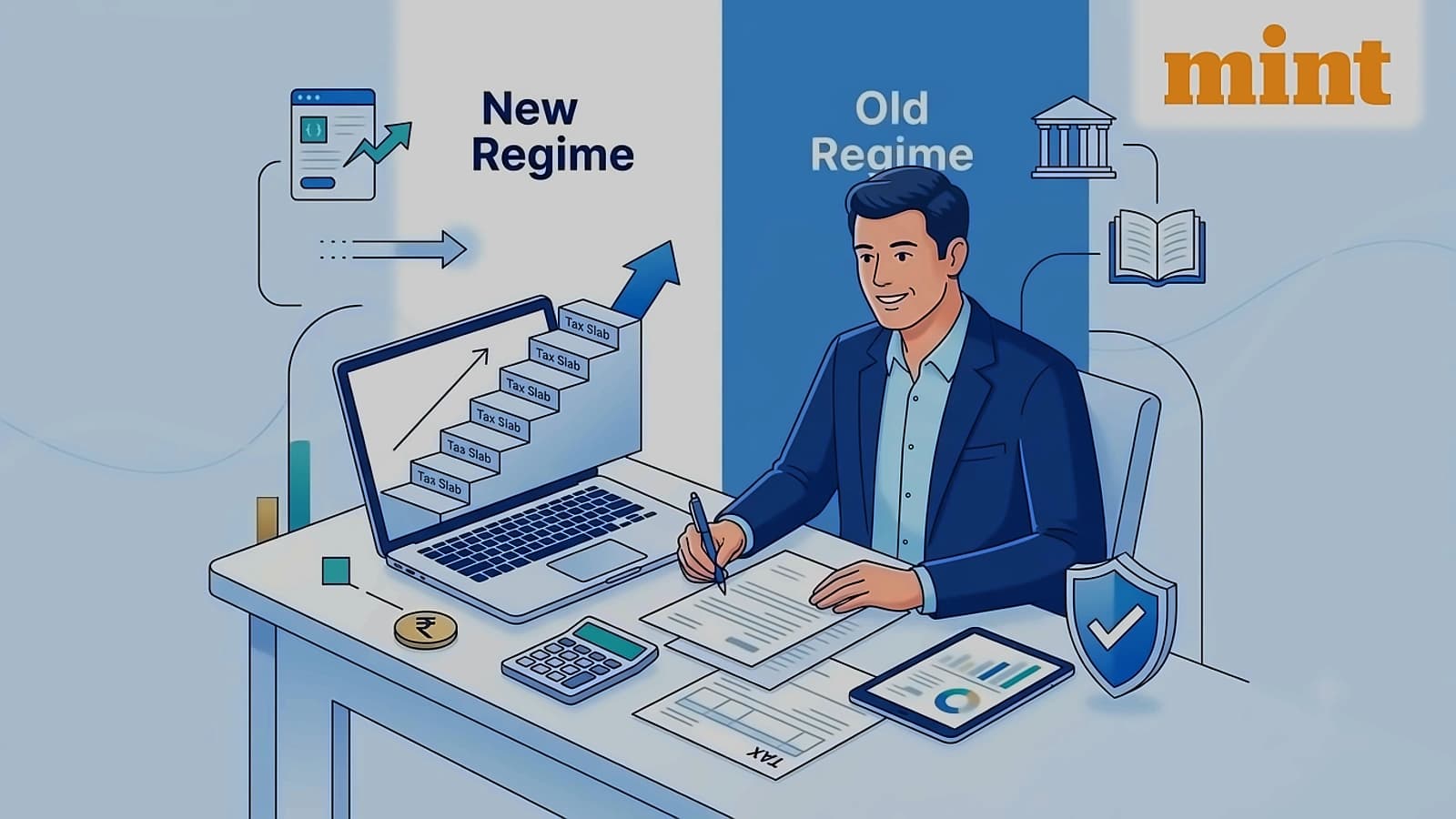
The old tax regime maintains a simplified three-slab structure with nil tax on income up to ₹2.5 lakh, 5% on ₹2.5-5 lakh, 20% on ₹5-10 lakh, and 30% on income above ₹10 lakh. According to Mint, this regime continues to offer several deductions and exemptions, making it particularly beneficial for taxpayers with substantial tax-saving investments and eligible deductions. The 4% health and education cess is also applicable to the old regime calculations. Recent data indicates that this regime has become increasingly relevant as India's ultra-high-income taxpayer count has grown nearly 4 times over the last five years, reflecting both rising business incomes and improved ITR compliance. However, taxpayers with business or professional income must follow specific procedures and cannot switch freely between regimes.
The final tax liability depends entirely on the regime selected in the ITR and the deductions claimed under that regime. As explained by Divnay Bhutra S, Tax Expert at ClearTax, "if the TDS deducted by the employer is higher than the final tax liability under the regime chosen in the ITR, the taxpayer may get a refund. If the final tax payable is higher, the taxpayer may need to pay the balance tax, and interest may also apply if there is outstanding tax." Taxpayers can switch regimes only if they file their return correctly and within the prescribed timelines, which is 31 July for ITR-1 and ITR-2 filers. Taxpayers filing a belated return cannot opt for the old tax regime and may lose the flexibility available to those filing original returns within the due date. The process involves selecting the preferred regime on the income tax e-filing portal, entering income details, claiming applicable deductions, and completing additional compliance requirements if necessary.