The Income Tax Appellate Tribunal (ITAT), Mumbai has allowed a taxpayer's appeal for statistical purposes in a significant tax dispute involving ₹60.08 lakh in additions. The tribunal noted that the Commissioner of Income Tax (Appeals), National Faceless Appeal Centre (NFAC) had not issued a fresh notice seeking further details from the taxpayer before making the appellate decision. As per The Times of India, the tribunal observed that "no fresh notice has been issued by Ld. CIT(A)/NFAC, calling on the details from the assessee" and that "the entire decision is based on the statement of facts furnished by the assessee along with Form 35." The tribunal remanded the matter to the Assessing Officer for reconsideration in accordance with law, taking into account the evidence furnished by the taxpayer. This procedural relief does not mean the taxpayer has won the tax dispute or that the exemption has been approved - the tax authorities will examine the case again.
The case involves two primary additions totaling ₹60.08 lakh that increased the taxpayer's taxable income. The first addition of ₹34,39,293 arose from the disallowance of an exemption claimed under Section 54F of the Income-tax Act, 1961, in respect of long-term capital gains from the sale of gold ornaments and investment in a residential property. The second addition of ₹25,68,850 was made under Section 68 in connection with cash deposits. The taxpayer had claimed a ₹34.39 lakh tax exemption on long-term capital gains from the sale of gold ornaments, which was rejected by the Income Tax Department. The dispute centers on whether the taxpayer properly established the source of the gold ornaments and whether the cash deposits were adequately explained. The case relates to financial year 2015-16 and assessment year 2016-17.
The taxpayer maintained that the 968 grams of gold ornaments came from his father and 310 grams from his mother, along with inheritance under a will from his grandmother. However, the CIT(A) found that documentary evidence had not been furnished to establish the genuineness of the gift transactions. The taxpayer had sold the gold and used the money to purchase a residential property. The taxpayer's grounds of appeal stated that the ornaments had come from his family, but the authorities questioned the supporting evidence relating to the gold ornaments. As per The Times of India, the taxpayer argued that receiving gold and jewellery from parents and grandparents is quite common in India, and historical records may not always be available, but emphasized that taxpayers should maintain gift declarations, family confirmations, inheritance records, jewellery valuation reports and sale invoices.
The cash deposits totalling ₹25,68,850 were treated as unexplained income under Section 68. Of this amount, ₹9,36,200 had been deposited in the taxpayer's own bank accounts, while ₹16,32,650 had been deposited in his wife's account. The taxpayer challenged the addition, arguing that his disclosed income and the cash available to him had not been properly considered. He cited a cash balance of ₹13,70,180 as of March 31, 2015, and referred to his regular income sources including director remuneration, remuneration and interest from partnership firms, income from other sources and capital gains. The taxpayer also disputed the addition relating to his wife's account, contending that the money belonged to her and should not have been treated as his income, citing her remuneration income, past savings, amounts received from relatives and friends on their marriage occasion, and household expense savings. He also argued that his wife was an independent taxpayer with her own sources of income.
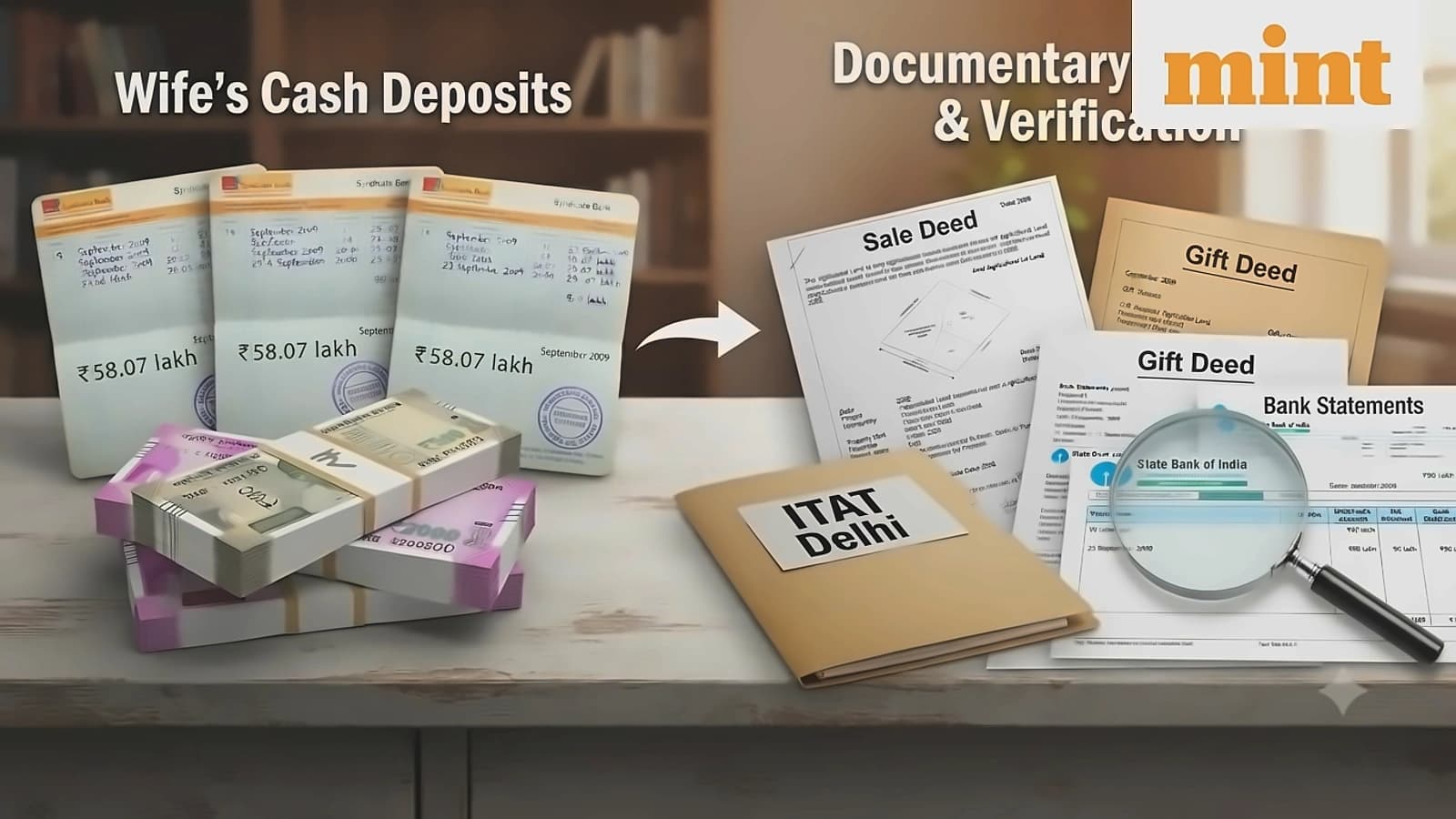
According to Sarthak Prashar, Director, Global People Solutions, Grant Thornton Bharat, the ITAT's ruling is largely based on the fact that the taxpayer was not given adequate opportunity to substantiate his claims. As per The Times of India, Prashar explains that "from a taxpayer's perspective, if the absence of documentary evidence was the basis for rejecting the claims, a reasonable opportunity should have been given to furnish such evidence." He points out that receiving gold and jewellery from parents and grandparents is quite common in India, and historical records may not always be available. The expert advises that taxpayers should maintain gift declarations, family confirmations, inheritance records, jewellery valuation reports and sale invoices, and emphasizes that timely and complete responses to tax notices are equally important. Prashar notes that the relief granted by ITAT is procedural in nature and does not amount to a decision in favour of the taxpayer on merits, with the outcome ultimately depending on the evidence furnished by the taxpayer and its examination by the tax authorities. This procedural relief gives the taxpayer another chance to explain where the gold came from, how the sale money was used to purchase the house and where the cash deposits came from.