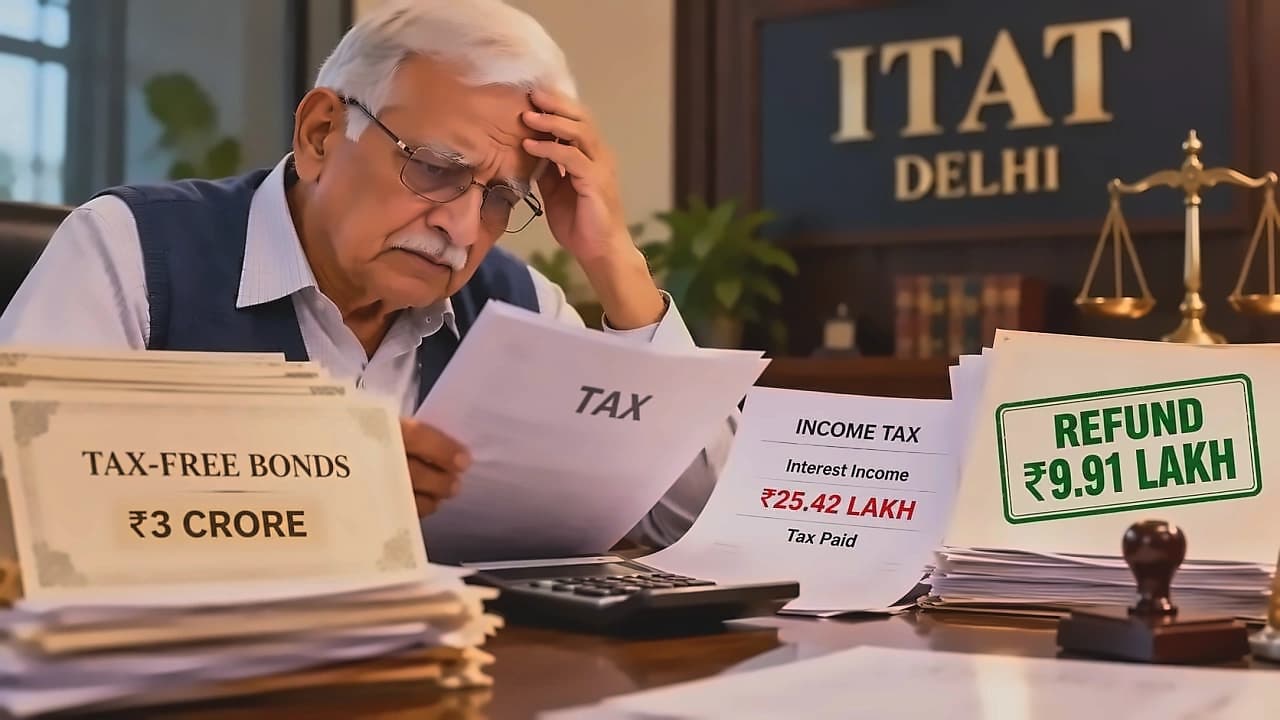
A senior citizen living in Gurugram invested ₹3 crore in two government tax-free bonds in 2013, but mistakenly paid ₹9.91 lakh in income tax on exempt interest earnings. According to reports from The Times of India, the man earned ₹25.42 lakh in interest from his tax-free bonds - ₹16.96 lakh from IFCL bonds and ₹8.46 lakh from REC bonds - but treated this as taxable income from other sources while filing his return for AY 2022-23. The error was discovered only after the deadline for filing a revised ITR had passed.
The Income Tax Appellate Tribunal (ITAT) Delhi ruled in favor of the senior citizen on September 23, 2026, directing the assessing officer to treat the ₹25.42 lakh interest as exempt income under Section 10(15)(iv)(h). As reported by The Times of India, the tribunal observed that the rectification request was aimed at correcting an error apparent from the existing record and did not amount to making a new claim. The ITAT held that the ruling in Goetze (India) Ltd. v. CIT, which the assessing officer had relied on, did not apply to the present case, as it only limits the assessing authority from entertaining fresh claims when not made in a valid return.
The ITAT directed the assessing officer to issue a refund of the excess tax of ₹9.91 lakh to the senior citizen, together with interest as admissible under the law. According to The Times of India, the tribunal noted that once the interest from these bonds was accepted as tax-exempt, the assessing officer was required to issue the refund. The ruling was based on the fact that interest from IIFCL and REC tax-free bonds is exempt under Section 10(15)(iv)(h) of the Income-tax Act, and the amount could not be taxed in view of Article 265 of the Constitution of India.
Chartered Accountant Ashish Niraj, Partner at A S N & Company, explained that Section 10(15)(iv)(h) provides complete exemption from income tax on interest income from tax-free bonds issued by specified public sector companies, including NHAI, REC, IIFCL and IRFC. As reported by The Times of India, Niraj noted that despite the complete exemption, the senior citizen inadvertently treated the exempt interest as taxable income and ended up paying additional tax. He emphasized that a simple clerical mistake should not result in tax liability when the underlying income is itself exempt from tax.