Senior citizens enjoy several tax benefits under the income tax rules, but simply because a bank has deducted tax at source (TDS) on interest income does not necessarily mean that a senior citizen is exempt from filing an Income Tax Return (ITR). According to reports from Mint, the requirement to file an ITR depends on several factors, including the taxpayer's total income, age, residential status and the nature of income earned during the financial year. Under the old tax regime, the basic exemption limit is ₹2.5 lakh for individuals below 60 years of age, while for resident senior citizens aged 60 to 80 years, the limit is ₹3 lakh, and for resident super senior citizens aged 80 years and above, it is ₹5 lakh.
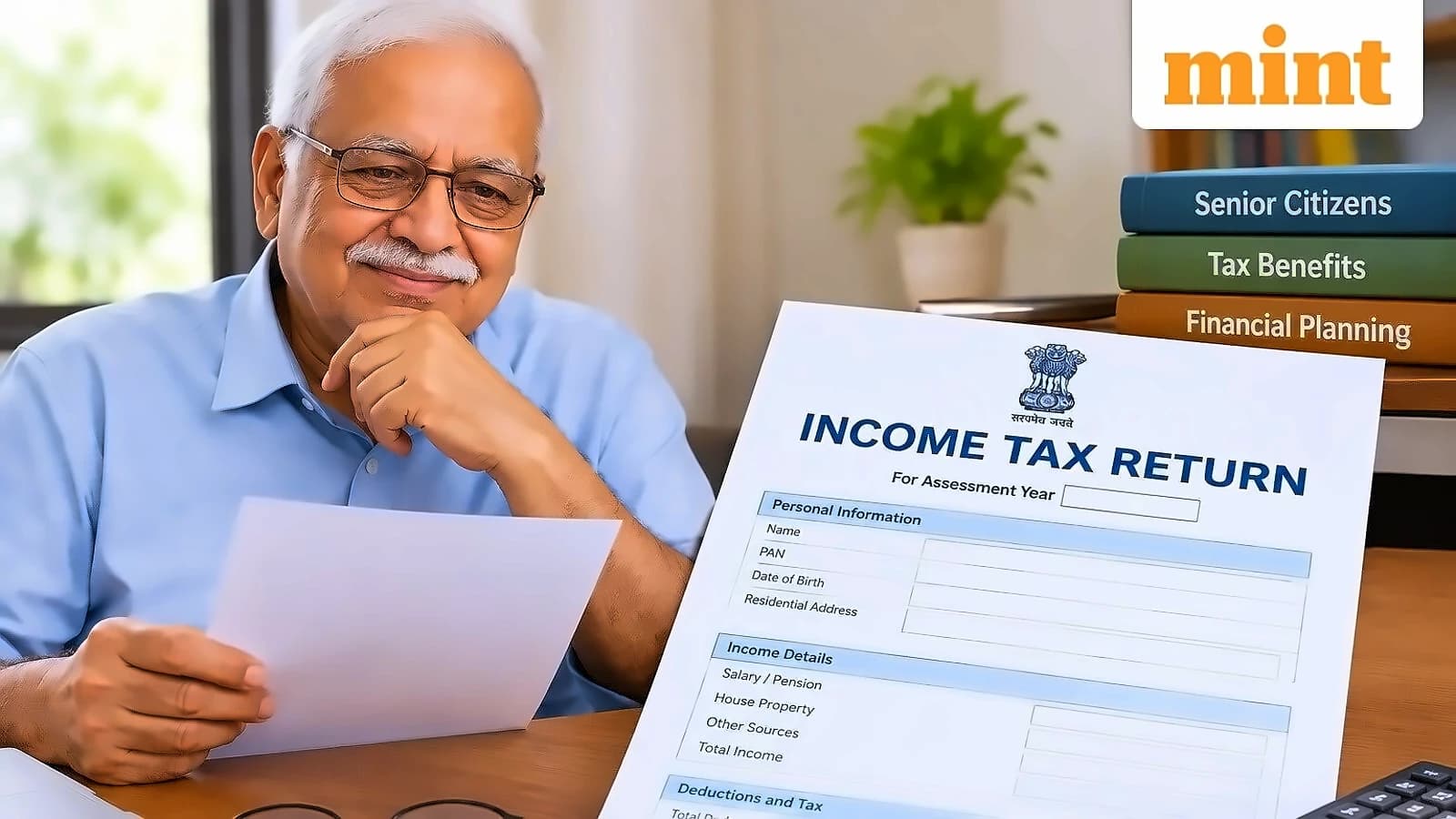
The income-tax law provides a specific relaxation for certain resident senior citizens aged 75 or older under Section 393 of the Income-tax Act, 2025. As reported by Mint, eligible senior citizens can avoid filing an ITR if they satisfy all prescribed conditions. The exemption requires the individual to be a resident senior citizen aged 75 years or above, with income consisting of pension income and interest income received or receivable from an account maintained with the same specified bank from which the pension is being received. The senior citizen must also submit the prescribed declaration, Form No. 125, to the specified bank.
The specified bank is required to calculate the senior citizen's tax liability after considering applicable deductions, rebate and other relevant provisions, then deduct the tax payable where applicable. According to Mint, if prescribed conditions are satisfied and the bank has deducted the applicable tax, the eligible senior citizen does not have to separately file an ITR. This provision is intended to simplify tax compliance for qualifying elderly taxpayers whose income is limited to pension and interest from the specified bank.
This exemption is not available merely because a person has crossed the age of 75, as the source and nature of income, the bank from which the income is received and other specified requirements also matter. As reported by Mint, for example, an 82-year-old resident may receive a pension through one specified bank but earn interest from a fixed deposit maintained with another bank, making the exemption unavailable. Similarly, if the senior citizen has any other source of income apart from the specified pension and interest income, the conditions for the exemption may not be satisfied.
Being a senior citizen or even a super senior citizen does not automatically mean that an individual can stop filing an ITR. According to Mint, the special relaxation for taxpayers aged 75 years or above is conditional and requires meeting prescribed requirements relating to residency, pension, interest income, the specified bank and the required declaration. Senior citizens should not assume that TDS deducted by their bank is sufficient to eliminate their ITR filing obligation and should first check whether they qualify for the specific exemption and whether all conditions have been met.