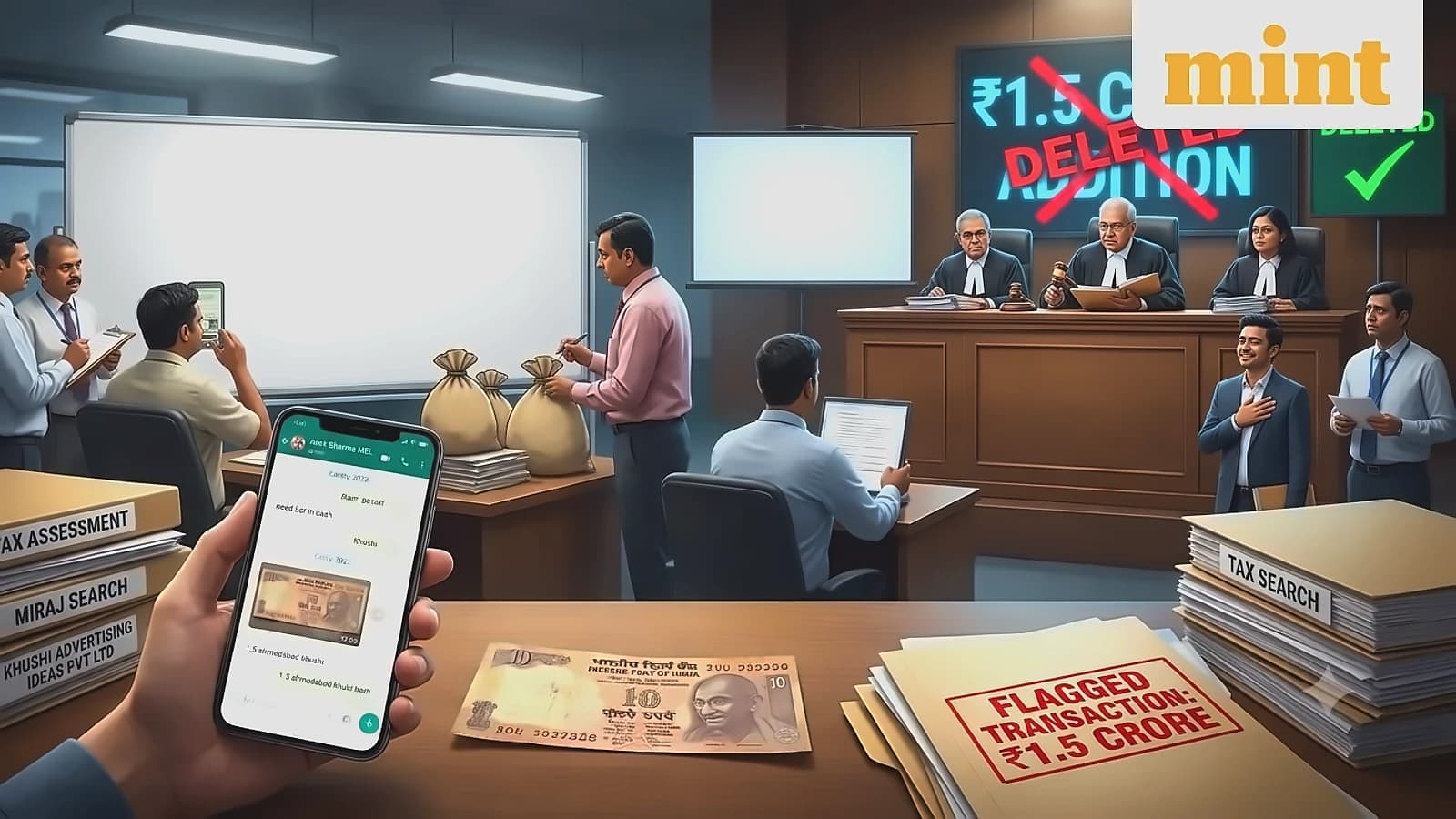
The Income Tax Appellate Tribunal (ITAT) Delhi has quashed a ₹20.68 lakh tax addition against a Delhi businessman in a ₹1.65 crore alleged bogus sales case. According to reports from Mint, the ruling was delivered on November 18, 2026 in the case of businessman Rajesh Gupta from Naya Bazar, Delhi. The case pertains to the assessment year 2013-14 and was reopened following information gathered during an Income Tax Department survey conducted at the premises of Ashok Kumar Gupta on November 30, 2018. The tribunal observed that the tax department had failed to meet its statutory obligations and conditions for reopening an assessment beyond the prescribed time limit, with the normal three-year limitation period expiring on March 31, 2017.
The case involved Rajesh Gupta, a businessman whose income tax assessment for financial year 2012-13 was reopened following information during an Income Tax Department survey. As reported by Mint, the Assessing Officer suspected that Rajesh had derived benefit from bogus sales entries amounting to ₹1.65 crore during FY13 and treated ₹20.68 lakh as 'unexplained business income', applying a 12.5% profit rate. Rajesh challenged this addition by arguing that sales were already reflected in his audited books, VAT returns, and profit and loss account, with his total reported income standing at ₹7.38 lakh and a gross profit margin of 0.7% on the transactions. The taxpayer maintained throughout that he had not actually received this sum in cash and consistently denied receiving the money during the proceedings.
According to Mint, the tribunal stated that the reassessment notice was issued beyond the normal three-year limitation period that had expired on March 31, 2017. As per Section 149 of the Income Tax Act, 1961, reopening a case beyond three years requires the department to satisfy additional statutory conditions, including evidence of escaped income of ₹50 lakh or more in circumstances applicable on a case-by-case basis. The ITAT Delhi observed that the department had failed to establish this requirement and categorically clarified that sales turnover cannot automatically be treated as escaped taxable income, as only the profit element represents business income. The tribunal questioned its reliance on general statements without affording Rajesh an opportunity to present his views, ruling that the reassessment proceedings lacked the necessary legal basis.
In a separate appeal relating to the same assessment year, the taxpayer contested additions made by the Income Tax Department during reassessment proceedings. As reported by The Times of India and Mint, the AO had identified cash deposits of ₹48.60 lakh in the taxpayer's bank account, along with time deposits totalling ₹13 lakh. Since the taxpayer had not filed an income tax return for assessment year 2016-17, the AO completed the reassessment on March 21, 2024, assessing his total income at ₹87.48 lakh. The taxpayer maintained that he owned 4.86 acres of agricultural land which he had leased to two individuals for cultivation, growing sunflower seeds. The disputed amounts of ₹1.38 lakh and ₹1.20 lakh represented his one-third share of the produce proceeds transferred through banking channels. The ITAT observed that the ownership of the agricultural land, cultivation activities and receipt of the disputed amounts were not in question, and since the tax department had not furnished evidence to disprove the taxpayer's explanation, the tribunal directed the removal of both additions.
In a separate development, the ITAT also removed a separate addition of ₹3 lakh relating to a loan received from an individual. As reported by Mint, the taxpayer had submitted a bank statement and confirmation from the lender to substantiate the transaction. The tribunal observed that the AO had neither verified the lender's details nor produced evidence establishing that the loan represented unexplained money. It therefore directed the deletion of the ₹3 lakh addition as well, providing comprehensive relief to the elderly taxpayer across multiple disputed transactions.