The popular claim that 2-3% of Indians pay all of India's taxes fails to account for the actual composition of government receipts. According to the analysis, personal income tax represents only 21% of central government receipts, while corporation tax accounts for 18%, central GST share is 15%, excise duties contribute 6%, customs duties add 4%, non-tax revenue amounts to 10%, and borrowings comprise 24%. This breakdown reveals that the '100% of the country runs on personal income tax' claim is significantly below the reported 20% tax-to-GDP ratio. Recent reader responses to this analysis have largely agreed with the correction, though some have questioned the household math assumptions.
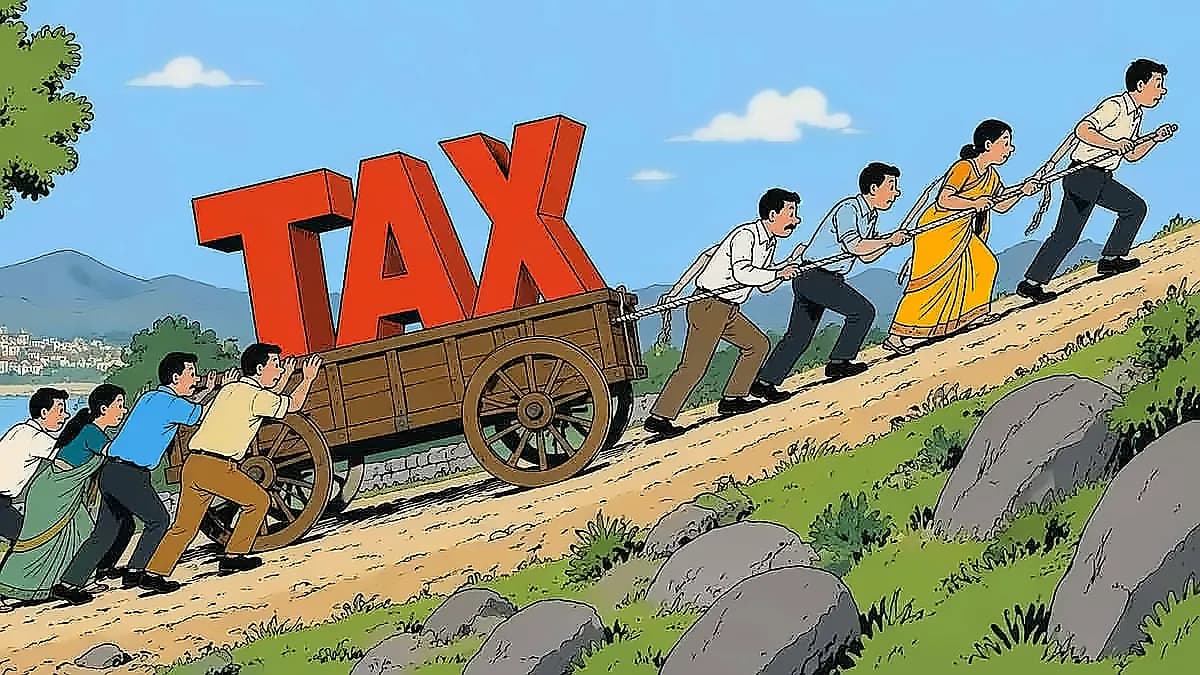
The actual income tax filing data shows that 9 crore returns were filed last year, with approximately two-thirds being zero tax returns, leaving 3 crore individuals who paid income tax. When divided by India's total population of 140 crore people, this calculation yields about 2% of individuals paying income tax. However, as reported in the analysis, this figure is misleading since income tax returns are filed by individuals but paid out of household earnings, with a standard family of four supporting the tax burden. Recent reader responses have challenged this methodology, with some arguing that dividing by the total population assumes each household has only one taxpayer, which may not be accurate given varying household sizes and income distributions.
The correct calculation should consider India's 30 crore households rather than the total population of 140 crore people. According to the analysis, this adjustment reveals that 10% of households pay income tax, with personal income tax representing about 14% of all government receipts when including state and local taxes. The report notes that GST affects everyone who purchases goods, from farmers to daily wage workers, making it a regressive tax that takes a larger share from smaller incomes than larger ones. Recent reader responses have highlighted the complexity of household taxation, with examples showing how families with multiple earning members can contribute significantly more than the 10% household rate suggests.
The analysis highlights that states' revenue sources include SGST, liquor excise, and stamp duty on property transactions, which are additional to central government receipts. Municipal-level taxes also contribute to the overall tax collection system. The report emphasizes that while the salaried class may perceive their tax burden as more visible and unavoidable, this perception doesn't align with the actual tax collection data and the regressive nature of indirect taxes on lower-income households. Recent reader discussions have focused on the regressive nature of taxation, with some pointing out that higher earners contribute disproportionately more in total taxes despite earning only a fraction of the income of those in the top brackets.