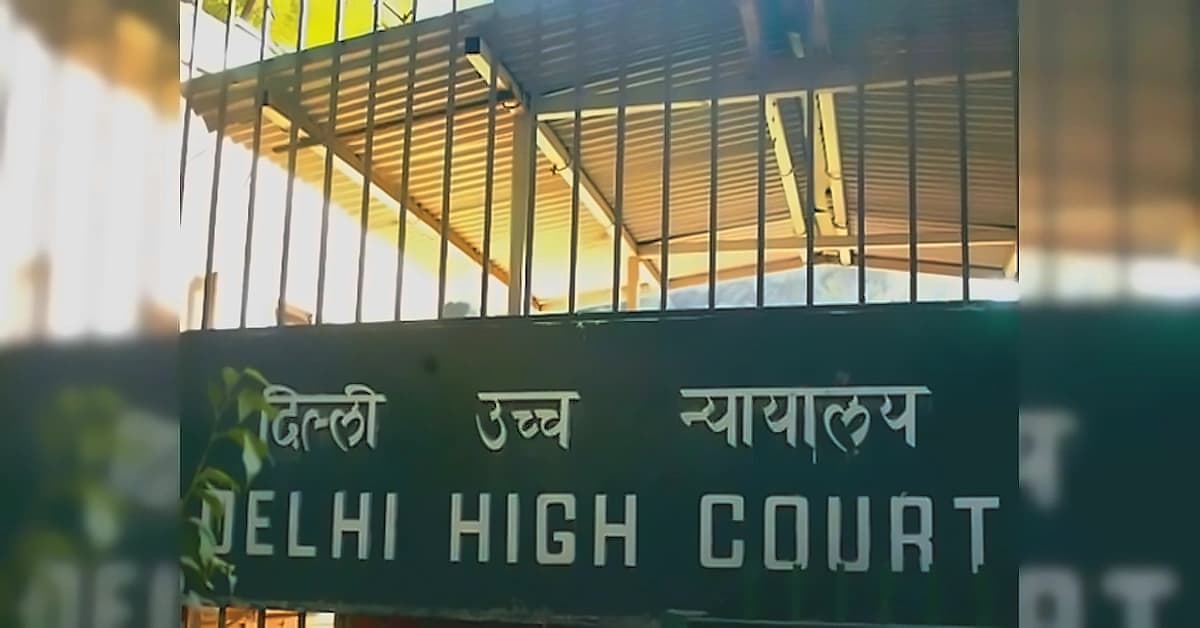
The Delhi High Court will hear on July 16 a petition challenging whether allowances paid to Supreme Court and High Court judges can be taxed under the new income-tax regime. According to reports from Bar and Bench, a Bench of Justices Dinesh Mehta and Rajneesh Kumar Gupta on Tuesday adjourned the matter after Delhi High Court Bar Association (DHCBA) President N Hariharan requested Senior Advocate Sachit Jolly, appearing for the petitioner, not to press the case during the lawyers' strike. The court passed no interim order during the hearing. During Tuesday's hearing, Hariharan appealed to Jolly to defer the hearing in view of the DHCBA's decision to abstain from work in protest against the recent proposal to increase the pecuniary jurisdiction of district courts in Delhi. "Please don't abandon the cause, because this is going to create issues within the Bar. We are with folded hands making a request to you. It is in your interest," Hariharan said, while Jolly responded that he was appearing pro bono and urged Hariharan to understand the urgent nature of the judges' salary threat.
The petition, filed by the Delhi Tax Bar Association (DTBA), challenges a September 12, 2025, office memorandum issued by the Central Board of Direct Taxes (CBDT). As reported by Bar and Bench, the memorandum states that the tax benefit relating to certain judicial allowances is available only under the old tax regime. The dispute centres on Section 22D of the High Court Judges Act, 1954, and Section 23D of the Supreme Court Judges Act, 1958, which state that rent-free accommodation, conveyance facilities, sumptuary allowance and leave travel concession provided to judges are excluded while computing salary income. The controversy arose when a High Court judge highlighted an issue to the CBDT on August 12, 2025, stating that the current systems for tax deduction, including Form 16 and online returns, do not accommodate these statutory exclusions under the new tax regime. The petition concerns Section 22D of the High Court Judges Act, 1954 and corresponding Section 23D of the Supreme Court Judges Act, 1958, which state that rent-free official accommodation, conveyance facilities, sumptuary allowance and leave travel concession provided to judges shall not be included while computing their income under the head "salaries."

According to the petition reported by Bar and Bench, the issue surfaced after a High Court judge informed the CBDT that income-tax return utilities and TDS forms under the new regime did not provide a mechanism to claim these statutory exclusions. The CBDT maintained that allowing the exclusions under the new regime, which already offers lower tax rates, would amount to granting judges a double benefit. The DTBA contended that the CBDT had wrongly treated the statutory exclusion as a tax exemption and argued that the allowances covered under Sections 22D and 23D never form part of taxable salary and therefore cannot be denied under the new regime. The association also argued that the memorandum violates Articles 125 and 221 of the Constitution, which protect judges' allowances from being altered to their disadvantage after appointment. The CBDT maintained that benefits under Section 22D remain applicable only within the old regime, arguing that allowing further exemptions under the new regime would provide judges with a "double benefit" due to lower rates and higher rebates.
The petition seeks to quash the CBDT memorandum and direct changes to tax forms to enable judges to report the exclusions. As reported by Bar and Bench, it also seeks interim relief, including an extension of the July 31 deadline for filing income-tax returns for assessment year 2026-27. During Tuesday's hearing, Jolly suggested that judges be allowed to disclose the amounts as 'receipts not in the nature of income' until the case is decided. However, following the DHCBA president's request to respect the ongoing strike, Jolly agreed not to press for interim relief. The association also claimed the memorandum violates Articles 125 and 221 of the Constitution, which protect judges' allowances from being altered to their disadvantage after appointment. The DTBA has sought the quashing of the memorandum and modification of form 24Q, form 16, ITR-1 and ITR-4 to enable judges to report the exclusions. An interim application has also been filed to extend the July 31 deadline for filing returns for the 2026-27 assessment year.