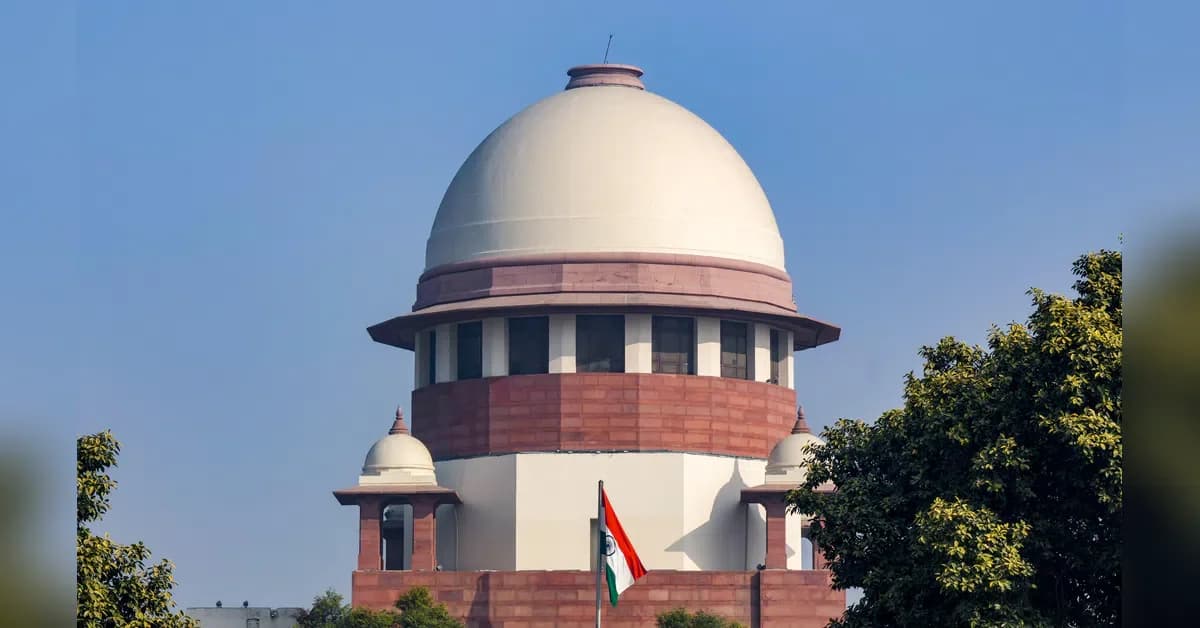
The Supreme Court on Tuesday reserved its judgment on a 27-year-old reference concerning the power of state legislatures to impose a surcharge, additional tax or cess on sales or purchases, calculated with reference to an existing sales or purchase tax. A seven-judge Constitution Bench headed by Chief Justice of India Justice Surya Kant is examining the issue referred to the court in 1999. According to reports from Business Standard, the case arose from a challenge to Section 5A of the Odisha Sales Tax Act, 1947, introduced in 1997, which imposed an additional tax of 10 per cent on dealers with annual turnover between ₹10 lakh and ₹1 crore and 15 per cent on those with turnover above ₹1 crore. The Constitution Bench comprises Chief Justice Surya Kant, Justice KV Viswanathan, Justice SV Bhatti, Justice Joymalya Bagchi, Justice NV Anjaria, and Justice V Mohana.
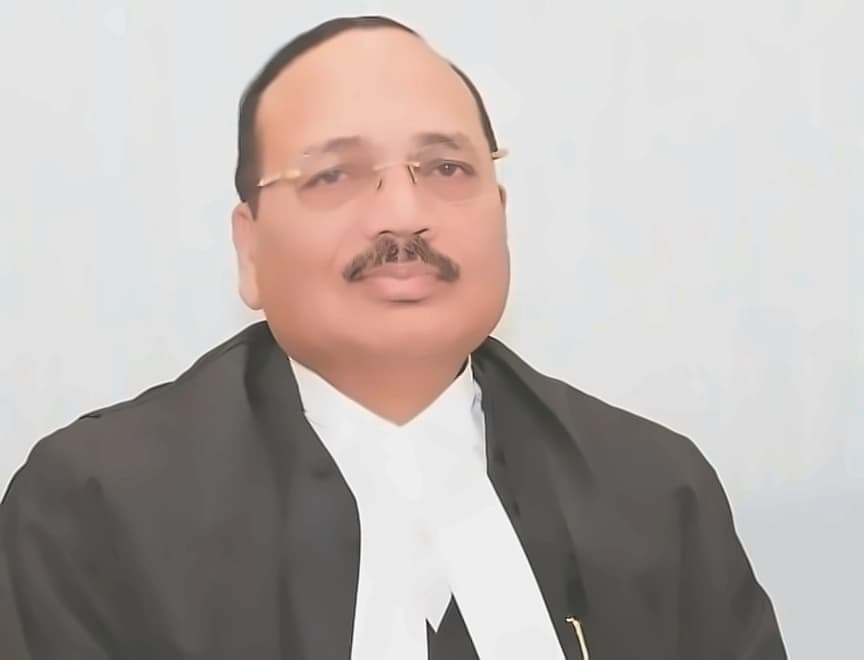
The reference follows differing rulings on the legislative competence of states to impose additional levies. In Hoechst Pharmaceuticals v State of Bihar, the Supreme Court had upheld a surcharge under the Bihar Finance Act as a sales tax falling under Entry 54 of the State List. However, in India Cement v State of Tamil Nadu, a seven-judge Bench had struck down a cess and surcharge linked to mining royalty, holding that states could not legislate beyond their assigned fields. A five-judge Bench in S Kodar v State of Kerala upheld an additional sales tax under the Tamil Nadu Additional Sales Tax Act, 1970, rejecting the contention that the levy was a tax on income. The petitioner in Arjun Flour Mills contended that Hoechst Pharmaceuticals proceeded on a concession that the levy was relatable to Entry 54, and relied on the seven-judge bench decision in India Cement v State of Tamil Nadu.
Solicitor General Tushar Mehta, appearing for the Centre, told the Bench that there was broad consensus on the scope of the reference and said the issue may have limited practical relevance after the introduction of GST in 2017. According to Business Standard, Mehta stated that these questions may have become academic, with perhaps not even three-digit cases pending. He also flagged the Centre's reservations about India Cement but said it was not pressing that issue in the present proceedings. Chief Justice Kant observed that India Cement was no longer good law and that Kodar had subsequently been cited with approval. Mehta submitted that the question of law for adjudication was "whether the imposition of a surcharge, additional tax, levy, or cess on sale or purchase, which is calculated on the basis of a validly levied sales or purchase tax, is beyond the competence of the State legislature, and any other issues that may arise during the course of the hearing."
The 1999 reference consequently asked whether a levy on sales or purchases, calculated on the basis of a validly levied sales or purchase tax, could fall outside Entry 54 of the State List (state taxation powers on specific goods) and encroach upon Entry 82 of the Union List (empowers Parliament to levy taxes on income other than agricultural income). Justice Joymalya Bagchi observed that legislative competence must be determined by the nature of the tax, rather than merely by describing it as an additional tax. He noted that Kodar had been cited with approval in Mineral Area Development Authority v Steel Authority of India, where a nine-judge Bench affirmed state powers to levy taxes on mineral rights. However, both counsels expressed reservation regarding Justice Bagchi's view that legislative competence is to be decided on the basis of the nature of tax, rather than the basis of additional tax.