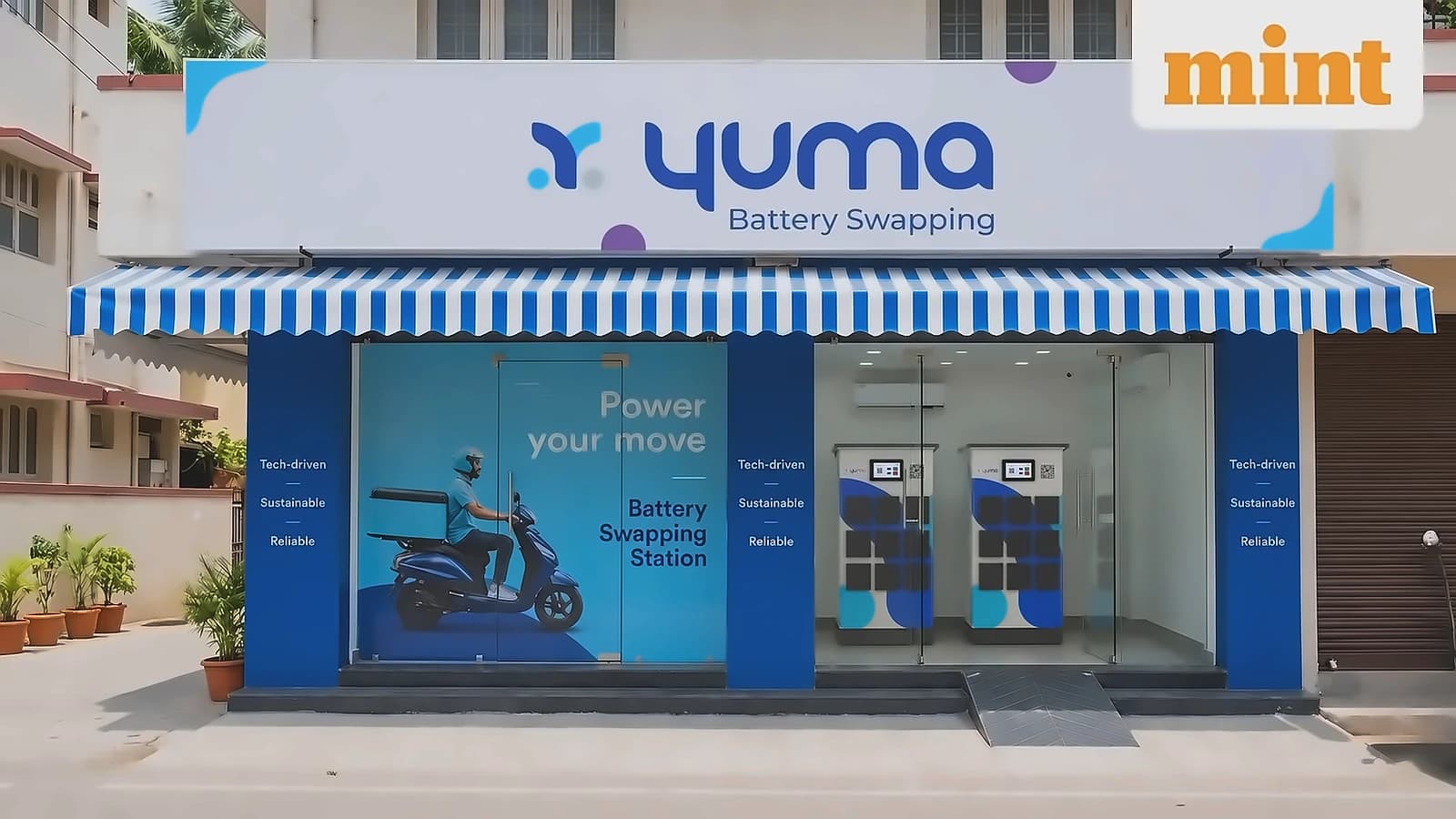
Yulu, the electric mobility-as-a-service platform, has successfully raised $93 million in its Series C funding round to accelerate its growth trajectory. According to reports from Mint, the funding comprises $57.5 million in equity led by GEF Capital Partners and $30 million in debt from two European lenders. The company plans to quadruple its fleet from 50,000 to 200,000 EVs over the next two years, with a portion of vehicles purchased through equity funding while the rest will be acquired through debt or leasing arrangements. As reported by Mint, securing this Series C capital represents validation of the company's business model, execution capability, and platform maturity built over the years.
As reported by Mint, Yulu is positioning itself as a vertically integrated electric vehicle ecosystem spanning purpose-built hardware, proprietary technology, and expansive energy infrastructure. The company has established strategic partnerships with Bajaj Auto and Magna International Inc to capture accelerating demand for sustainable urban logistics. Additionally, Yulu plans to enter adjacent intra-city mobility verticals with the launch of Yulu Express - a full-sized, high-payload electric scooter built for e-commerce logistics, bike taxis, and express parcel delivery. According to Mint, around one-third of its planned 200,000-vehicle fleet is expected to comprise the new model. The company currently operates across 12 primary metros including Bengaluru, Mumbai, Delhi-NCR, and Hyderabad, alongside eight franchise-operated regional markets, with plans to expand presence to about 20 cities over the next year. As reported by Mint, the company will choose new cities based on delivery-density data from quick-commerce partners and bike taxis, with the goal of being live in 20 cities through a combination of company-owned and franchises within 12 months.
According to Mint, Yulu ended FY25 with revenue of $28.6 million versus $14.8 million in the prior fiscal year, while trimming its loss to $14.9 million from $17.3 million in FY24. The company has maintained positive EBITDA since April 2025 and operates with resilient unit economics. The company's fleet currently covers 2.5 million zero-emission kilometres and facilitates more than 750,000 doorstep deliveries every day, with vehicles supporting more than 15% of quick-commerce deliveries across India's top four metropolitan centres. The company's full-stack operational architecture drives asset utilization across its current fleet of around 50,000 vehicles. As reported by Mint, the company plans to achieve profit after tax before heading for public markets, with the goal to reach ₹1,200-1,500 crore in revenue to achieve a ₹1,000 crore valuation.
As reported by Mint, Yulu's Co-founder & CEO Amit Gupta stated that securing this Series C capital validates the company's business model and execution capability. The company is positioned to remain the definitive backbone of India's urban hyperlocal mobility economy while transitioning seamlessly toward public markets. Enhanced profitability metrics through growth and operating leverage are expected to drive public market readiness in the coming years, with the company scaling its fleet fourfold over the next few quarters and launching high-capacity vehicle form factors to capture the accelerating demand for sustainable urban logistics. The MaaS segment spans last-mile delivery, employee transportation, urban commuting, EV rentals and fleet electrification, with other notable players including Zypp Electric, Alt Mobility, and SmartE in the competitive landscape. According to Mint, the company's fundamental strategies remain consistent across new business lines, with Yulu Express targeting gig workers while maintaining the same customer acquisition cost (CAC) model that leads to zero CAC business.