Canadian auto parts giant Magna International has increased its investment in Yuma Energy to $87 million total, raising its stake from the 51% it held when the joint venture was formed. According to TechCrunch, Magna invested $35 million in the latest round, with Yulu's 49% stake being diluted as a result. The battery-swapping joint venture was formed when automotive supplier Magna and mobility-as-a-service startup Yulu entered into a partnership to create Yuma Energy. At launch, the two companies collectively invested $77 million to establish the venture, with Magna committing $25 million to Yulu and $52 million to the battery-swapping joint venture in 2022.
According to TechCrunch, Yuma Energy has completed more than 60 million swaps to date and now has approximately 100,000 batteries deployed across its network. The company currently operates more than 400 stations with over 2,500 charging units, processing 1.8-2 million swaps monthly. The firm ended the financial year in March 2026 with about ₹1 billion (about $10.5 million) in revenue. As reported by TechCrunch, Yuma is targeting those high-mileage riders, arguing that swapping is more practical than fast charging - a battery can be exchanged in under two minutes compared to a 20-30 minute fast charge that takes a rider off the road.
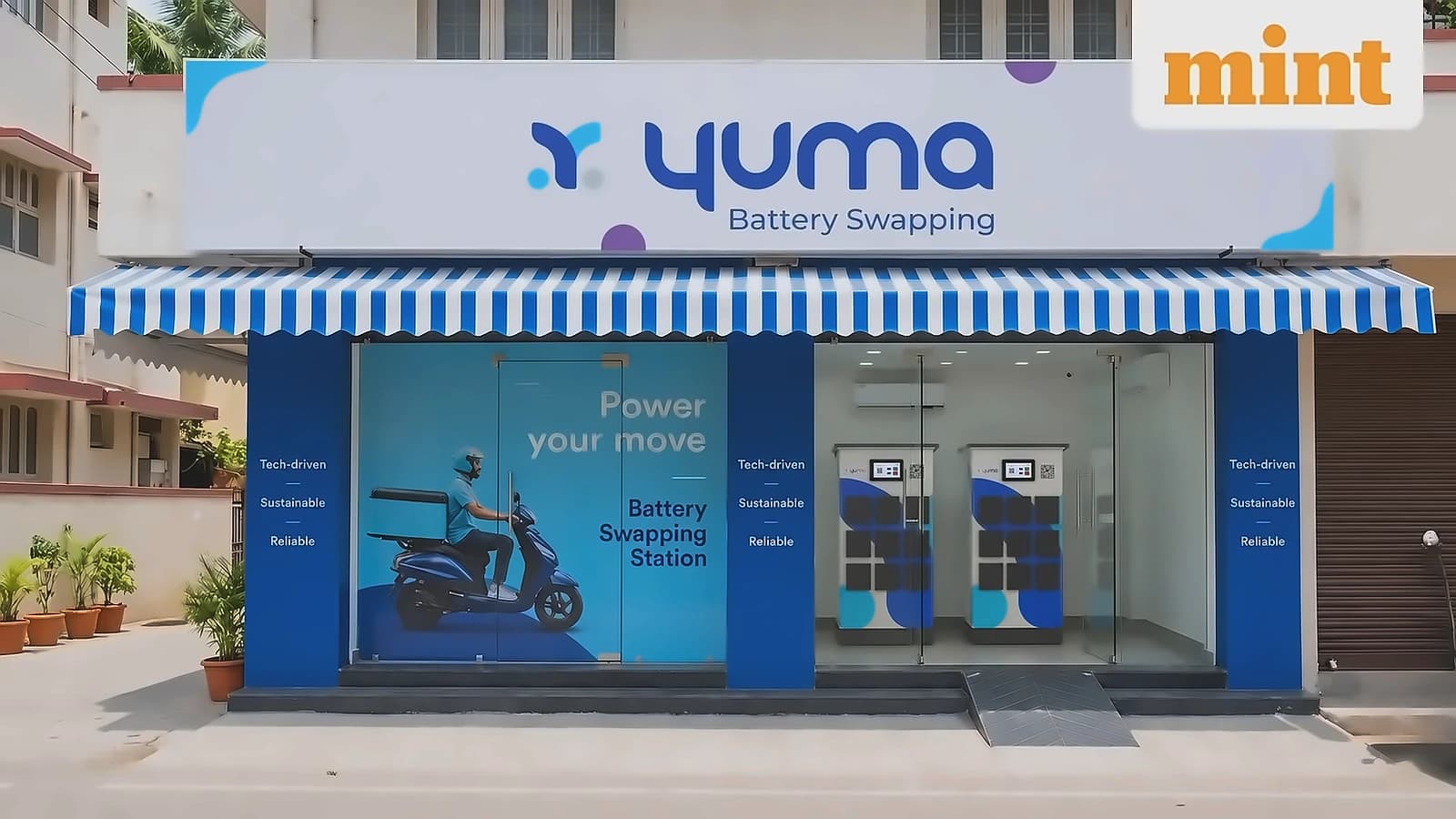
As reported by TechCrunch, 70% of the fresh capital will be allocated toward adding battery units across Yuma's existing network of 400-plus touchpoints spanning Bengaluru, Hyderabad, Mumbai and the National Capital Region. The remaining 30% will fund the physical and electrical infrastructure needed to enter new cities. The company currently operates approximately 100,000 batteries across 2,500 charging units at 400 stations, with TechCrunch confirming that the business is capital-intensive as Yuma must keep its batteries and swapping infrastructure ready before enough riders arrive to fully utilize them.
According to TechCrunch, Magna believes the battery-swapping model could work at scale in India, where millions of two- and three-wheelers and a fast-growing delivery economy create different economics. Yuma managing director Muthu Subramanian estimates that only about 10% to 15% of vehicles used by gig workers in India are electric today, leaving considerable room for operators such as Yuma if more riders switch from gasoline-powered vehicles. The company targets EBITDA break-even within the next two quarters, with some older swapping stations already EBITDA-positive, though Yuma is not profitable yet overall. As reported by TechCrunch, the firm is targeting high-mileage riders where EVs make absolute sense in terms of cost of ownership due to high runtime on a daily basis.
According to Tracxn data cited by Mint, energy storage technology has attracted significant investor interest, raising $270 million across 74 deals in 2025 compared to $305 million across 37 deals so far this year. The sector peaked in 2024 with $429 million raised across 80 deals. Notable funding rounds this year include River Mobility's $120 million equity and debt raise, Simple Energy's $26 million Series B round, Ather Energy's $136 million qualified institutional placement, and Exponent Energy's $21 million round. Yulu and Yuma are Magna's only startup investments in India, with Magna confirming this to TechCrunch.