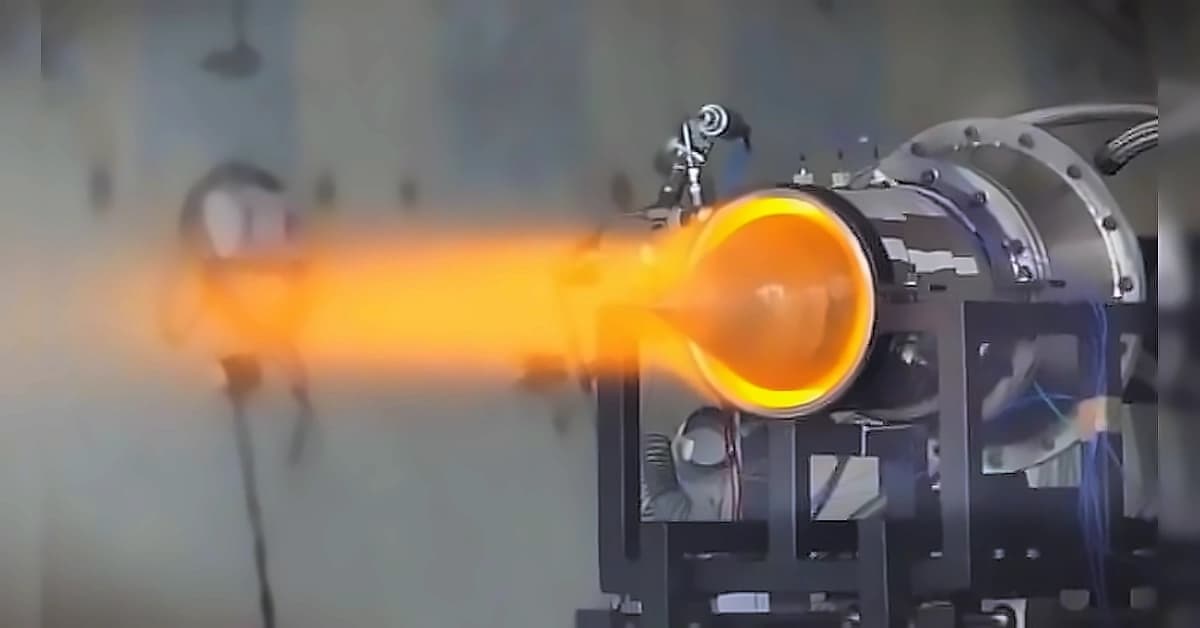
Delhi-based defence startup D-Propulse has achieved a significant milestone in India's defence technology development by successfully conducting a ground test of its indigenous air-breathing Rotating Detonation Engine (RDE) at a Defence Research and Development Organisation (DRDO) facility in Hyderabad on 21-22 July. The company fired an RDE that produced 5 kilonewtons (5,000 newtons) of thrust—the force that propels drones and missiles forward. According to founder Saurav Jha, the demonstration achieved stable 5 kN thrust, validating the technology at Technology Readiness Level (TRL)-5, which signifies validation in a relevant operational environment. This achievement represents a landmark development as no entity has publicly demonstrated a 5 kN class continuous-thrust air-breathing RDE integrated with an expansion aerospike on a government-certified test facility. As per D-Propulse, the demonstration marks the transition from laboratory-scale validation to an integrated prototype, with the prototype developed as the proof motor of a flight-capable design.
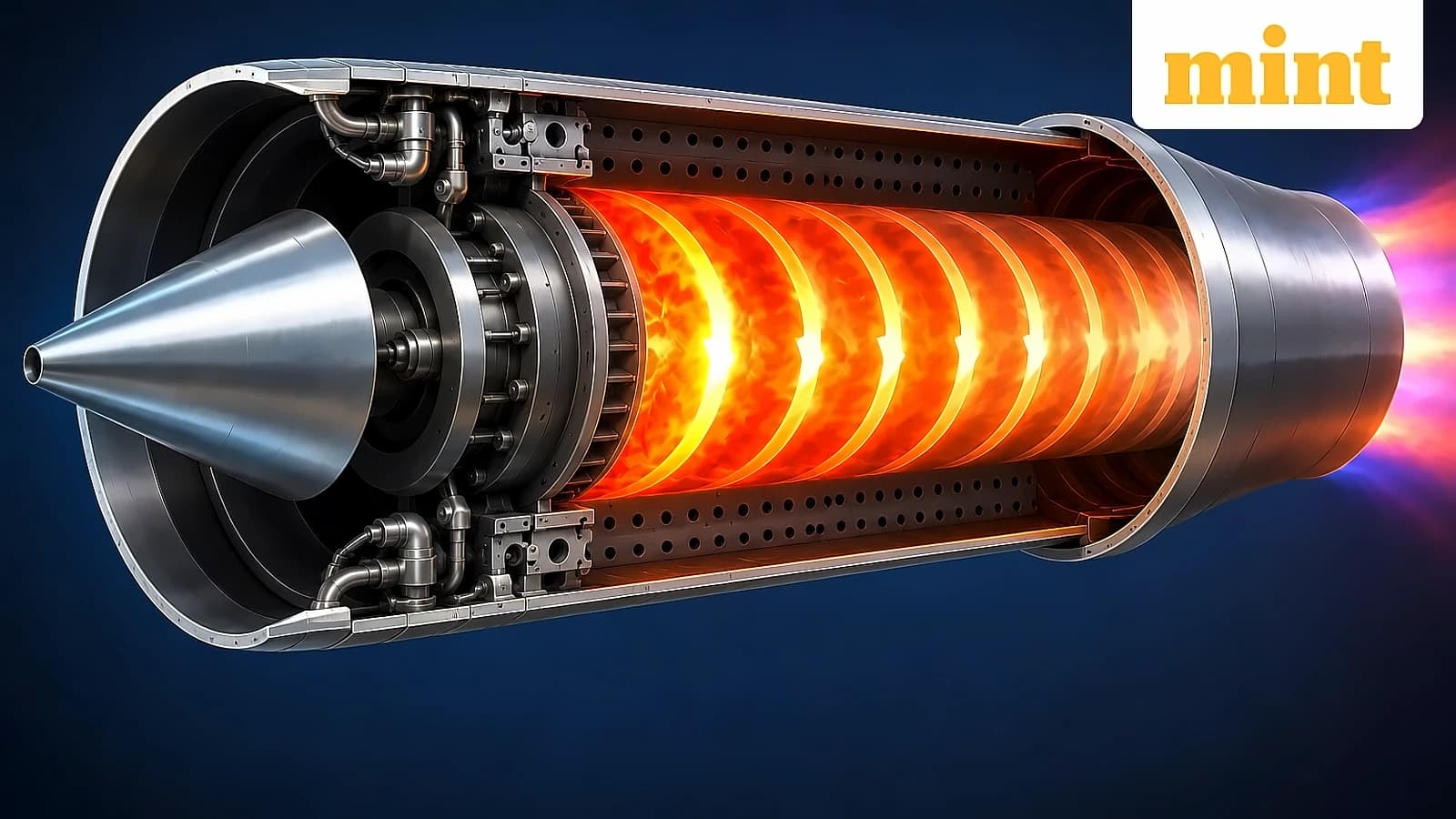
The development addresses India's strategic autonomy in defence technology, as dependence on foreign engine suppliers extends beyond procurement to maintenance, spare parts and upgrades throughout a platform's lifecycle. According to former DRDO scientist Ravi Kumar Gupta, propulsion technology represents one of the most strategic defence technologies, as countries dependent on others for aircraft engines also depend on them for maintenance and upgrades throughout the platform's life. An RDE is a next-generation jet engine that uses controlled explosions to produce more thrust while using less fuel, making it 15-25% more efficient than today's jet engines, ramjets or scramjets. Unlike conventional jet engines, Rotating Detonation Engines use pressure-gain combustion, improving thermodynamic efficiency while eliminating moving parts inside the combustor, resulting in a simpler engine architecture. According to Dr. V. Ramanujachari, CTO of D-Propulse, the technology offers 15-25% higher thermodynamic efficiency than conventional air-breathing propulsion systems and can be manufactured through precision machining rather than complex turbine assemblies, reducing production costs and lead times. The campaign also demonstrated sustained multi-second pressure-gain combustion, validating continuous engine operation under test conditions and advancing the technology towards flight qualification.
D-Propulse plans to conduct its first flight test by December 2027, followed by military user trials by December 2029. The company, founded by Jha and former DRDO scientist Dr. V. Ramanujachari, raised ₹25 crore from Indian Angel Network last year to commercialise the technology. Ramanujachari, one of the pioneers of RDE technology in India, serves as the company's CTO. According to Mint, investors indicate that commercial adoption remains at least two years away, though subsystems such as fuel injectors and turbopumps are likely to be commercialised much earlier. The latest demonstration marks the transition from laboratory-scale validation to an integrated prototype, with the prototype developed as the proof motor of a flight-capable design. As per Jha, this represents the first successful demonstration of an indigenous Rotating Detonation Engine at this thrust class in India, with the next milestone being to make the engine flight-ready by December 2027.
The successful TRL-5 validation marks an important step in strengthening India's indigenous propulsion ecosystem and expanding domestic capabilities in next-generation air-breathing propulsion. The campaign also demonstrated sustained multi-second pressure-gain combustion, validating continuous engine operation under test conditions and advancing the technology towards flight qualification. D-Propulse is developing the technology for future defence applications, including cruise missiles, target drones and high-speed unmanned aerial vehicles (UAVs). According to Kartik Bommakanti, senior fellow for defence and national security at ORF, the achievement will introduce more competition, likely strengthening the defence sector by bringing costs down and potentially making India self-reliant in RDE technology. Former DRDO chief V.K. Saraswat, who joined D-Propulse as chairman in June, expects more institutions and research centres to enter the rotating detonation engine space, similar to the success seen in spacetech with Skyroot. Dr. Vijay Kumar Saraswat, Former DRDO Chief and Ex-Member NITI Aayog, who is also the Chairman of D-Propulse, described the successful demonstration as an encouraging milestone in advancing India's indigenous capabilities in next-generation air-breathing propulsion.