India's thermal power story is getting a second wind.
This isn't a retreat from renewables—solar and wind additions continue at around 50 GW annually—but a recognition that baseload power remains essential when the sun doesn't shine and the wind doesn't blow.
For equipment manufacturers, this revised estimate extends the runway for orders. But here's the thing: planning estimates don't automatically translate into signed contracts. The opportunity depends on these plans converting into approved projects, and that's where the real competition begins.
BHEL vs L&T: The Heavyweight Battle
Bharat Heavy Electricals remains the incumbent giant. Its sets account for 54% of India's installed thermal capacity, and it generated 56.56% of the country's coal and lignite power in FY26. The order book stands at Rs 2.39 lakh crore as of March 2026, giving it roughly seven years of revenue cover. Other +2
But size comes with baggage. BHEL's FY26 EBITDA margin was 9.11%, and its return on capital employed (ROCE) was 9.7%. That's well below peers. Why?
Inventories alone absorbed Rs 3,402 crore in FY26, and the cash conversion cycle stretches to 106 days. Annual Report +2
Larsen & Toubro is the challenger. Its CarbonLite Solutions business has an order book of about Rs 62,000 crore and a pipeline of Rs 70,000 crore for the remaining nine months of FY27. It's winning ultra-supercritical projects too, including the Lara Stage-III (2x800 MW) and Chandrapura (2x800 MW) awards. Transcript +2
But L&T faces its own bottleneck. Both projects are stuck at Limited Notice to Proceed (LNTP) stage, waiting for environmental clearances. Until those come through, full execution—and the associated advances—can't begin. With CarbonLite's EBITDA margin slipping to 7.8% in Q1 FY27, delays hurt. Other +2
Thermax: Quality Over Quantity
Thermax is playing a different game. It's deliberately avoiding large civil EPC projects, focusing instead on equipment supply—specifically supercritical boilers.
The strategy shows in the numbers. Thermax's ROCE is 18.7%, higher than both BHEL and L&T. But Q1 FY27 was a reality check—profit fell 86% due to steel price pressure and a Rs 91 crore cost overrun on a legacy project. Order booking grew just 2% to Rs 2,809 crore, though the order balance rose 23% to Rs 14,045 crore. Investor Presentation +2
Management says it's being patient on order quality, waiting for advances before booking large orders. That protects margins but creates timing mismatches—revenue recognition lags order wins. Transcript
Power Mech Projects: Climbing the Value Chain
Power Mech Projects is making the most interesting transition.
This shift changes everything. BOP EPC means taking on procurement, interface, and schedule risk that pure construction packages don't carry. But it also captures more value per project. Management sees two to three more BOP opportunities worth Rs 7,500-10,000 crore. Transcript
The financials reflect this evolution. Power Mech's ROCE is 21.55%, the highest among the group. But working capital is tightening—net current asset days rose to 151 in FY26 from 128, mainly due to delayed water-works bill certification. The cash conversion cycle is 38 days, supported by supplier credit and letter-of-credit funding. Transcript +1
The Rs 970 crore Vedanta Power O&M contract adds stability. O&M contributes 30-35% of revenue with margins around 18%, requiring little working capital. It's a buffer against EPC volatility. Transcript +1
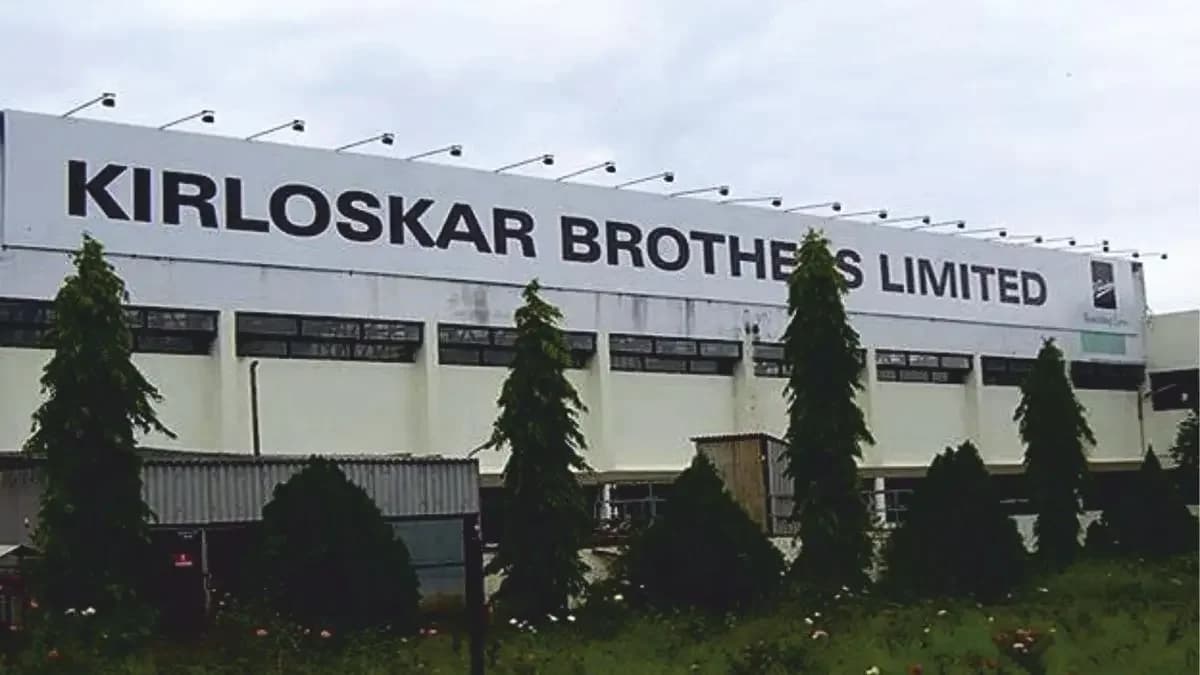
Kirloskar Brothers: Niche Player in a Big Pond
Kirloskar Brothers operates in a different orbit. It's a product-led company—projects are just 3% of revenue—specializing in pumps, including concrete volute pumps for thermal cooling water.
Thermal is a modest part of the business. The power order book is Rs 5,992 crore out of a total Rs 23,754 crore, and it's largely nuclear. I couldn't verify the Rs 214 crore Adani Power order mentioned in your query—the filings don't show it. Other +1
Profit pressure tells the story. FY26 EBITDA margin was 13.7%, down from 15.2% in FY25. The UK subsidiary (SPP) faced margin pressure due to energy policy uncertainty and lower services revenue. Foundry disruptions cut castings output to 200-300 per day from 700, costing about Rs 50 crore in revenue. Investor Presentation +3
Management says the foundry is improving and orders should execute faster. But with thermal as a small slice, even strong pump demand won't move the needle dramatically at group level. Transcript
The Real Competitive Moats
So who has the edge? It depends on what you value.
BHEL's integrated EPC capability is a double-edged sword. It can bid for entire power islands, which Thermax and Kirloskar can't. But that integration brings execution risk, liquidated damages, and capital intensity that drag down returns. Annual Report
L&T's Hazira complex and joint ventures with Mitsubishi Heavy Industries give it the technology to bid on ultra-supercritical BTG packages. But environmental clearances are now the critical path, and delays can stall revenue conversion. Annual Report +3
Thermax's focus on equipment supply over civil EPC mitigates execution risk and supports higher ROCE. But it sacrifices scale, and order booking growth has been modest. Investor Presentation
Power Mech's transition to integrated BOP EPC positions it higher in the value chain, with O&M providing earnings stability. But working capital will intensify as contract sizes grow. Transcript +1
Kirloskar's niche in specialized pumps offers life-cycle cost advantages, but its thermal exposure is too small to drive significant growth. Transcript +1
The Bottom Line
India's thermal power expansion is real, but the spoils won't be shared equally. BHEL has the scale but struggles with returns. L&T has the technology but faces clearance bottlenecks. Thermax has the margins but lacks volume. Power Mech is climbing the ladder but must manage working capital. Kirloskar has the niche but not the exposure.
The CEA's revised estimate extends the opportunity, but execution—getting projects cleared, built, and paid for—will separate winners from also-rans. In this game, the biggest order book doesn't always win. The best returns go to those who manage risk as carefully as they manage growth.