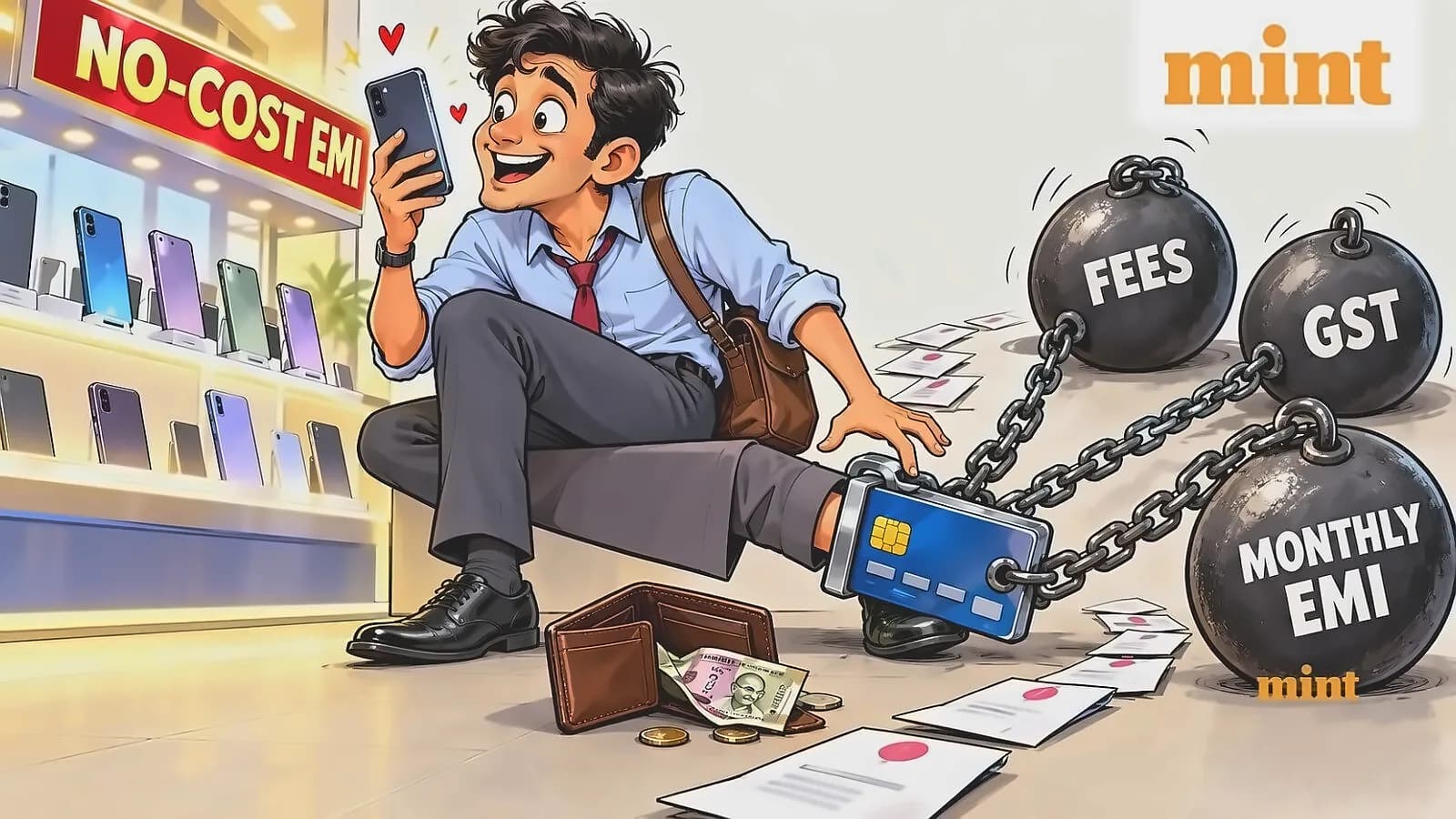
A Rs 60,000 phone may appear more affordable when offered as a zero-cost EMI option, allowing customers to pay Rs 10,000 monthly for six months instead of the full amount upfront. According to reports from The Economic Times, zero-cost EMI typically doesn't mean banks are providing loans without charging interest. Instead, the seller or phone manufacturer provides an upfront discount equal to or close to the interest amount, making the transaction appear interest-free to buyers.
Several hidden costs can increase the final purchase amount beyond the advertised Rs 60,000. As reported by The Economic Times, banks may charge processing fees for converting purchases into EMI, with fees varying from one bank and offer to another. For example, a Rs 299 processing fee on a Rs 60,000 phone would increase the total cost above the original price. Additionally, GST may apply to the interest component charged by banks, with the merchant discount covering the interest but not necessarily the tax on that interest.
A critical consideration involves comparing discounts available for upfront payment versus EMI options. According to the report, if customers making full payment receive an instant discount of Rs 4,000, bringing the phone price down to Rs 56,000, choosing zero-cost EMI on the original Rs 60,000 price would effectively cost an additional Rs 4,000. This difference becomes particularly important during online sales when multiple discounts are offered simultaneously.
Despite hidden costs, zero-cost EMI can still provide value for specific situations. As reported by The Economic Times, the option becomes useful when customers need the phone immediately but prefer to spread payments over time, helping manage monthly budgets. The approach can also be reasonable when the total EMI cost is genuinely little different from the upfront purchase price. However, customers should avoid using EMI as a reason to purchase more expensive phones than they can comfortably afford, as monthly payments can become difficult when combined with existing home loans, car loans, or other credit card payments.