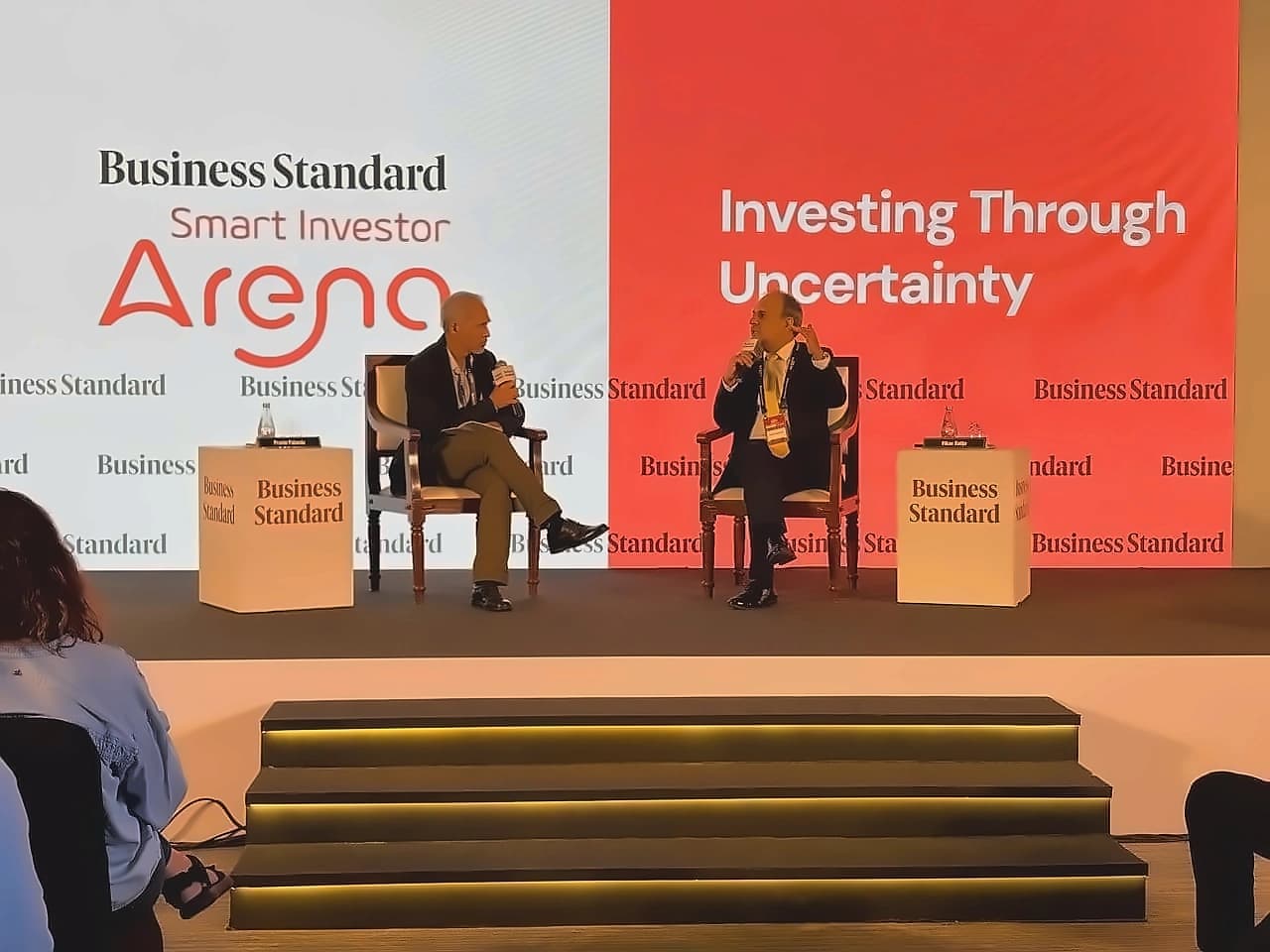
Fund managers at the Business Standard BFSI Insight Summit 2026 have flagged significant concerns about AI stock valuations and potential bubble formation amid the current market volatility. Harish Krishnan, CIO of Equity at Aditya Birla Sun Life AMC, noted that while AI represents genuine technological shift, investments would need to translate into meaningful economic benefits over the next 12-18 months to justify current expectations. He cautioned that investors chasing the AI trade could face disappointment if companies failed to deliver meaningful applications and benefits, referencing the dot-com bubble images of overcapacity that serve as fresh warnings. R Sivakumar, CIO of Axis AMC, was more categorical about risks, pointing to excess capital flowing into a narrow set of sectors and concerns over AI's economics, stating there is overcapacity and too much technology transformation. However, Shankar Sharma, GQuant Investech Founder, provided a more nuanced view, stating that AI is not a bubble yet, at least not yet, citing that AI companies are not free-cash-flow negative but rather have investment opportunities that require capital raising beyond their balance sheets' capacity. He warned that the sector would remain volatile despite the current opportunities for major tech firms.
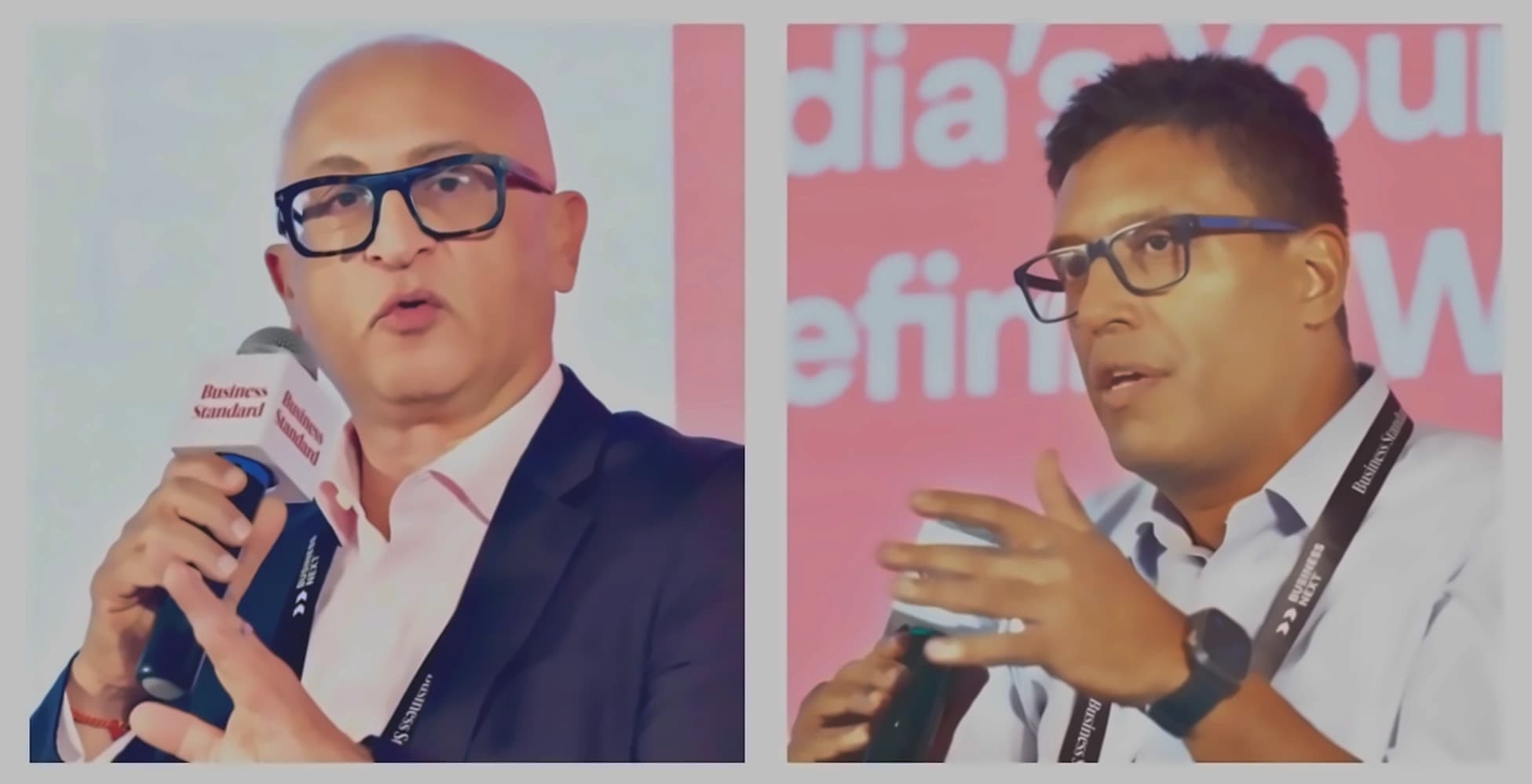
The prolonged period of market volatility has created significant frustration, particularly among investors who entered the markets during the post-pandemic rally. According to Business Standard, Nimesh Chandan, CIO of Bajaj Asset Management, noted that this has come after four years where spectacular money was made. Everybody was making money almost every month. So, these past two years, there has been a lot of dejection and frustration. The panellists emphasized that fear can distort decisions, with investors potentially selling during downturns and returning only after prices have risen, effectively doing the opposite of what would be beneficial. R Sivakumar, CIO of Axis AMC, highlighted how the number of demat accounts had risen from around 50 million to 1.5 billion, while mutual fund investors had increased from approximately 25 million to 60 million. Many of these investors had experienced years of rising markets before encountering a prolonged period of weaker performance, leading them to judge the entire market by the performance of the Nifty even when other market segments are behaving differently.
Leading mutual fund executives at the summit emphasized the importance of sector rotation based on fundamentals rather than recent returns. Harish Krishnan's approach considers four factors: A sector's share of corporate profits, its market capitalisation relative to its profit contribution, investor ownership levels and the source of recent returns. Using this framework, he identified technology, consumer businesses (including staples), private-sector banks and insurance companies as offering opportunities after periods of weak performance. By contrast, he expressed caution about capital markets, defence and capital goods, where elevated expectations may already be reflected in share prices. Taher Badshah, president and CIO of Invesco Mutual Fund, advocated for investment choice across midcap, smallcap and largecap stocks, warning that decision-making at a broader index level will lead to wrong outcomes. He emphasized the importance of buying cheap and selling from the expensive, blending value propositions with growth stories that continue on their growth path.
The summit challenged the tendency to treat equity as the default investment destination, with experts advocating for diversification across asset classes and geographies. R Sivakumar argued that Indian bonds offered attractive opportunities at prevailing yields, with the 10-year government bond yield around 7.5 per cent and the 30-year yield approaching 8 per cent. S Naren similarly emphasized that debt had been overlooked in the rush towards equities, urging investors to think in terms of asset allocation rather than choosing one asset class over another. Krishnan recommended limiting overseas investments to around 10 per cent of portfolio, maintaining a strong allocation to India while acknowledging that overseas exposure could provide access to industries and technologies unavailable domestically. Chandan emphasized diversification beyond international equities to commodities, precious metals, real estate investment trusts and infrastructure investment trusts, with success depending on how effectively portfolios identify turning points and adjust allocations across asset classes.
Despite greater access to information, wealth management executives emphasized that the ability to remain disciplined through market volatility remains crucial. As reported by Business Standard, Sankaran Naren, executive director and CIO of ICICI Prudential AMC, urged investors to look beyond past performance and take a contrarian approach when warranted, stating that to make money in the long run, you have to actually bet against the money flow. The summit reinforced that the power of compounding is today's eighth wonder of the world, with experts urging investors to avoid taking punts rather than making informed investments, which is akin to gambling. Krishnan recommended establishing a clear investment process, using checklists to assess opportunities and considering both bullish and bearish scenarios before committing capital. The discussion ended with a common message that volatility and uneven market performance should not automatically prompt investors to abandon their investment strategy, with the challenge being to construct a portfolio capable of withstanding changing conditions and delivering sustainable outcomes over time.