At the Business Standard BFSI Insight Summit 2026, industry leaders revealed that digital platforms, innovative SIP products, investor education and AI tools could help expand India's mutual fund base to 200 million. Nilesh Naik, head of PhonePe Invest, said the industry needed to look beyond regulatory changes and focus on products that accommodate different income patterns and make investing more convenient. "I don't think 200 million is unachievable," Naik stated, emphasizing that the industry needs to think of features and products that can appeal to a wider customer base, including those whose earnings do not follow a regular monthly cycle. Gaurav Rastogi, founder and CEO of Kuvera, noted that India's relatively low investor penetration needed to be viewed in the context of its per capita income, with the next level of growth having to come with the country becoming richer, with the wealth going deeper into the country.
At the Business Standard BFSI Insight Summit 2026, mutual fund industry leaders stressed that the next phase of growth will depend on better investor outcomes rather than just expanding access. Gaurav Rastogi, founder and CEO of Kuvera, noted that while mutual fund investors have grown from around 10 million a decade ago to approximately 60-65 million currently, the industry must focus on improving investor outcomes, strengthening advisory services, and building investor confidence amid market volatility. Radhika Gupta, MD & CEO of Edelweiss Mutual Fund, emphasized that "Innovation doesn't mean complexity. Innovation means making things accessible for the consumer." The industry has continued to innovate with SIPs, gold ETFs, target-maturity funds and hybrid schemes addressing different investor needs, with monthly SIP contributions rising from less than ₹3,000 crore a decade ago to around ₹30,000-32,000 crore.
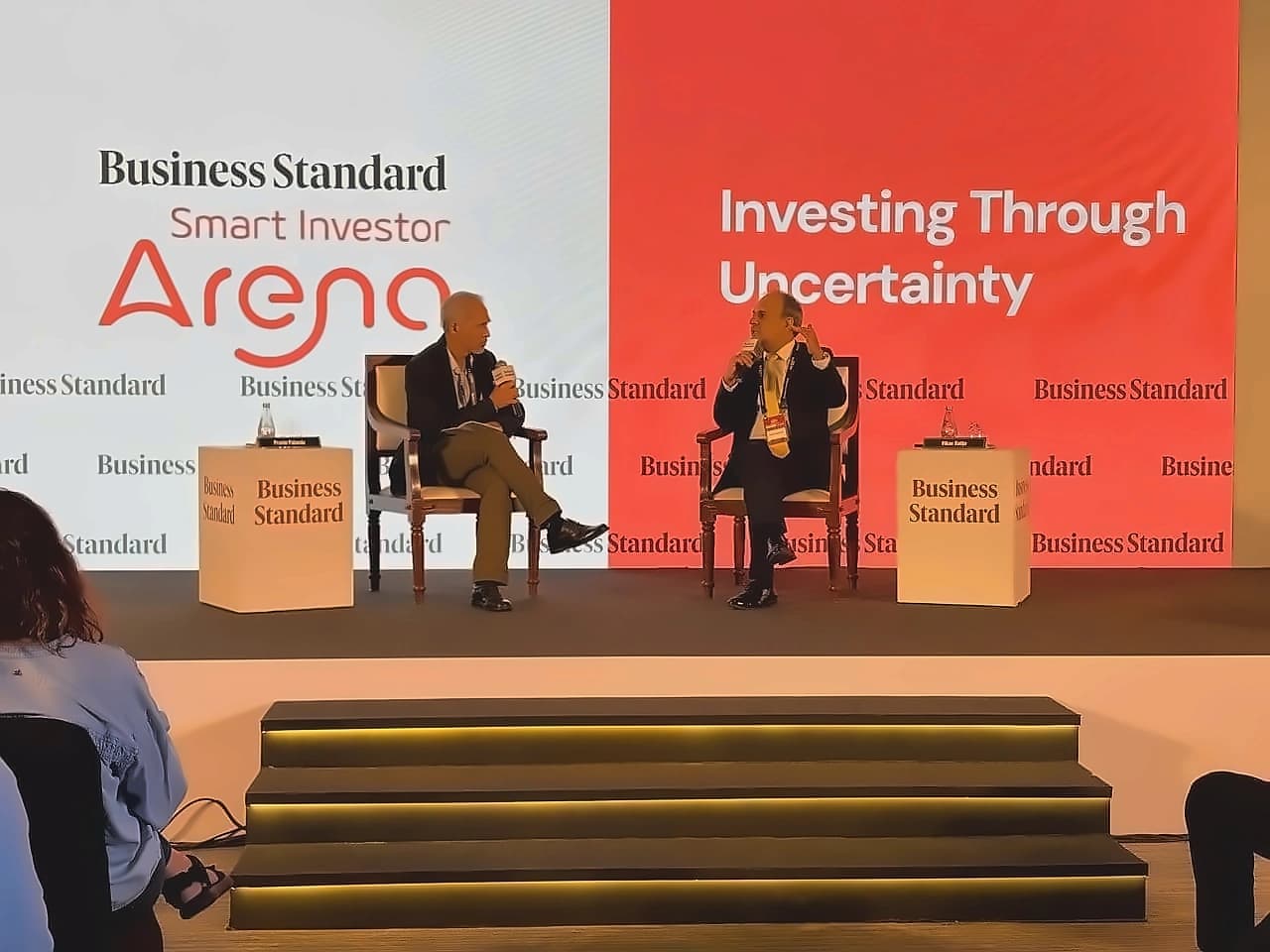
Specialised Investment Funds (SIFs) have achieved significant growth, with assets reaching around ₹36,000-37,000 crore after roughly a year, as reported by Business Standard. Gaurav Mehta, Head of SIF (Equity) at SBI Mutual Fund, highlighted that more than 150,000 investor folios have been created, demonstrating strong initial adoption despite being a relatively new category. The category offers equity, fixed-income, and hybrid strategies, allowing fund managers to use derivatives more flexibly than conventional mutual funds. Bhavesh Jain, President and Co-Head of Factor Investing at Edelweiss Mutual Fund, noted that these strategies can complement existing products by offering alternative ways to generate returns, with Edelweiss Mutual Fund's Altiva Hybrid Long Short Fund delivering a one-year return of around 9.5% compared to approximately 5.8% for arbitrage funds over the same period.
Technology and artificial intelligence are transforming asset management processes, with Jain stating that processes previously taking two to three hours can now be completed in minutes, allowing smaller teams to manage larger assets. Nilesh Naik, head of mutual funds at PhonePe, highlighted the potential of systematic investment plans (SIPs), which allow investors to contribute a fixed amount at regular intervals. PhonePe's daily SIP feature acquired around 500,000 customers within six months, demonstrating innovation aimed at self-employed workers with daily cash flows. Swapnil Bhaskar, MD & CEO of JioBlackRock Investment Advisors, said technology could help firms understand customer needs more deeply while lowering costs, making micro-investing commercially viable and extending access to a wider population. The panellists discussed how AI is increasingly becoming a tool for investors to validate financial decisions, with AI-based portfolio analysis attracting interest from investors seeking a second opinion.
The panellists discussed how artificial intelligence (AI) could change the relationship between investors and financial advisers. Rajiv Bajaj, chairman and managing director of Bajaj Capital, explained that AI was increasingly becoming a tool for investors to validate financial decisions, rather than simply replacing human advice. He said "Either AI could be your first point of reference, and you validate it with a human, or if your human adviser gives you a portfolio, you can double-check it." Bajaj added that investors should not blindly trust any adviser, regardless of how long they have worked together, and noted that AI-based portfolio analysis was attracting interest from investors seeking a second opinion, including those investing directly in mutual funds. Bajaj Capital recently launched WealthLens, an AI-based portfolio analysis product, which has seen encouraging traction with 85% of users coming through direct plans, suggesting that AI-based tools could help reach investors beyond traditional customer bases.
Financial educator Anant Ladha emphasized the importance of balanced investment approaches during the summit. According to Business Standard, Ladha advised against treating every investment option as either completely good or completely bad, recommending that investors explore new asset classes but take risks only when they can afford them and understand what they are investing in. He stressed that spending is not necessarily a problem, but the risk arises when expenses and debt become excessive, and never recommends taking loans against investments to meet daily expenses. On portfolio diversification, Ladha suggested investors may consider allocating 5-10% of funds to international markets, while noting that fixed deposits are not bad investments - what matters is proper asset allocation with different investments serving different purposes. Rastogi emphasized that platforms have a responsibility to help investors understand market behaviour through historical data and education, citing Kuvera's weekly newsletter which reaches around 150,000 readers as one way of explaining market performance across different periods.
The discussion highlighted the potential for digital platforms and traditional financial distributors to complement each other rather than compete for the same customers. Bajaj said fintech platforms had helped expand awareness and bring more investors into mutual funds, noting that "It's an era of cooperation" as the industry's growth created opportunities for both digital-first platforms and established wealth management firms. Naik defended PhonePe's decision to offer regular mutual fund plans, saying first-time retail investors often need assistance and handholding, with the regular-plan model allowing distributors to provide incidental advice while earning commissions from fund manufacturers. Bhaskar emphasized that technology should complement the work of distributors rather than replace it, with technology making it possible to understand regional preferences and customers' relationships with money. The panellists noted that as these investors accumulate wealth and approach milestones such as retirement, many could seek more comprehensive financial planning and advisory services, suggesting a natural evolution from digital access to professional wealth management.