India's **Chief Economic Advisor V Anantha Nageswaran has joined a growing list of voices questioning the euphoria surrounding artificial intelligence-linked stocks, calling current AI valuations a 'bubble' and arguing that the narrative around the technology has become exaggerated. Speaking in an exclusive interview with ANI, Nageswaran said there was 'no question' that AI-related stock prices and valuations have entered bubble territory, driven by overly optimistic assumptions about productivity gains and the future of work. The remarks come at a time when global investors have poured billions of dollars into AI-linked companies, propelling firms such as Nvidia and other semiconductor and infrastructure providers to record valuations. Nageswaran argued that much of the excitement is being driven by a narrative that may not fully reflect reality, stating that 'there is so much hype because they want to tell the capital contributors and the investors that this is going to be such a productivity bonanza, you won't need anybody to produce the output.' He cautioned that 'there is far too much fear and far little information about the AI threat' and suggested that meaningful assessments of AI's impact on jobs can only be made after the current wave of market excitement subsides.
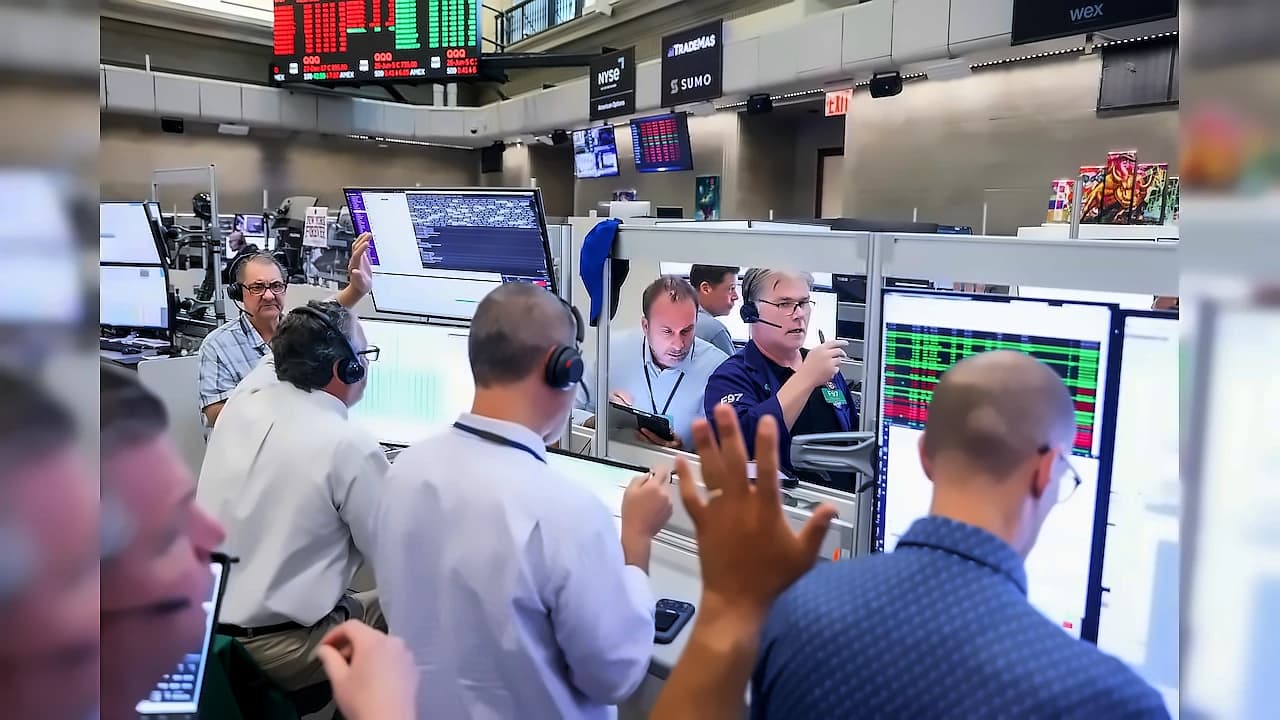
The S&P 500 Index experienced its second-biggest bottom-to-top intraday reversal at 3.4% since the Trump administration paused implementing sweeping additional tariffs on dozens of countries in April 2025, according to data compiled by Bloomberg. The benchmark index fell 0.3% after careening between an initial gain of 1% and a midday loss of 2.3%, pulling further from its all-time high set a week ago. The technology-heavy Nasdaq 100 Index dropped 1% after being down more than 4% during the session, while the Dow Jones Industrial Average added 86 points, or 0.2%. As reported by The Hindu BusinessLine, the market volatility was driven by sudden reversals in high-flying artificial intelligence stocks, with companies selling computer chips, memory and other building blocks of the AI boom breaking from early gains to losses. The S&P 500 slipped 19.08 points to 7,386.65, while the Dow Jones Industrial Average added 86.10 to 50,872.11, and the Nasdaq composite fell 250.84 to 25,678.82. Nancy Tengler, CEO and CIO of Laffer Tengler Investments, noted that "the NASDAQ may have delivered a good chunk of it in one session between Friday and today," referring to what she calls the "Summer Swoon."
Information technology stocks were among Tuesday's biggest laggards, with a basket of the so-called Magnificent Seven companies dropping 1.3%, led by losses in Microsoft Corp., Tesla Inc. and Apple Inc., according to NDTV. Micron Technology Inc. lost 1.4%, after going from a jump of 4% to a plummet of 10% before finishing with a drop of 1.4%. The selling gathered steam after President Donald Trump said the US must respond after blaming Iran for shooting down an American military helicopter. Despite the tech decline, an equal-weighted version of the S&P 500 rose 0.8%, signaling strength beyond chipmakers, while nine of the S&P 500's 11 sectors traded higher, led by defensive industries. Marvell Technology dropped 7.6% and Advanced Micro Devices sank 3% after both AI winners also erased early-morning gains. The computer memory company's stock has already tripled so far this year, raising criticism that it's gone too far, too fast. Following last week's industry-wide sell-off, the question is whether AI stocks broadly are heading for a long downturn or just needed a shake-out to get rid of excessive optimism. John Cunnison, chief investment officer at Baker Boyer Bank, noted that "exuberance has been building for months, pushing stocks to one record after the next, so anything perceived to be negative for equities — from higher inflation to even the potential for rate hikes — will knock the market off its footing after a historic run."
Jefferies strategist Christopher Wood has warned that the AI-driven stock rally may face a near-term correction amid rising bond yields, crowded positioning and upcoming mega IPOs. In his latest GREED & Fear note, Wood said there is still no evidence that AI-related capital expenditure is slowing. However, the combination of elevated valuations, concentrated positioning and looming liquidity demands has increased the risk of a near-term correction in the sector. "All instincts are that the risks have increased significantly for a near-term major reset in the AI trade in terms of a correction, if not yet the end of the story," Wood wrote. A survey of 16 Asia-focused investment funds found that 15 had the same three largest holdings: TSMC, Samsung Electronics and SK Hynix, with only one fund deviating by replacing one of those names with Alibaba. The concentration reflects the growing dominance of technology stocks in Asian markets, with the technology sector now accounting for nearly 48% of the MSCI Asia ex-Japan universe. Wood noted that "one-way positioning" has become a growing concern, particularly as retail investors increasingly use leveraged ETFs to amplify exposure to AI-related stocks. The strategist argued that pending mega IPOs will suck liquidity out of the recent winners, with many investors having accumulated large gains in AI-related stocks and potentially forced to rebalance portfolios to participate in marquee offerings. The caution comes despite continued strong spending on artificial intelligence, with major technology companies expected to spend hundreds of billions of dollars on AI infrastructure this year, while corporate demand for AI tools remains robust.
Looking ahead to Wednesday's report on consumer prices, economists project the inflation report will show an annual increase in consumer prices of 4.2% for May, compared with a 3.8% jump in April, as reported by NDTV. Concern about sticky inflation and pressure on the Federal Reserve to contain it briefly pushed the Cboe Volatility Index, or VIX, above 20, a level that signals concern among traders. Tim Chubb, chief investment officer at Girard, explained that "fears of another hot inflation print this week on the back of escalating Middle East tensions has revived fears that the threat of rate hikes may eat into Corporate America's profit margins, and thus, stock prices." The robust jobs data has put extra focus on the inflation figures as traders speculate the Fed's next move will be to hike interest rates, potentially impacting corporate America's profit margins and stock prices. The latest monthly updates on U.S. inflation will arrive later in the week, with one on consumer prices coming Wednesday and one on wholesale prices coming Thursday. Treasury yields eased Tuesday with the fade in oil prices, with the yield on the 10-year Treasury falling to 4.52% from 4.56% late Monday, though it's still well above its 3.97% level from before the war with Iran. The average long-term US mortgage rate recently hit its highest level in nine months, and high costs to borrow money could discourage the building of AI data centres that are fueling the US economy's growth. Oil prices pared their losses after President Donald Trump said Iran was responsible for downing an American military helicopter near the Strait of Hormuz and that the US "must" respond to the attack, with the unsteady oil prices creating both opportunities and challenges for market participants.
The S&P 500 remains in a short-term bearish trend despite today's gains, according to technical analysis from Investing.com. The index has fallen below its 21-day exponential moving average and broken below the most recent swing low formed on May 19 at 7,354. Given that we have now broken below that level and are holding beneath it, the path of least resistance remains to the downside. Unless the index can reclaim this level on a daily closing basis, we could see further weakness in the days ahead. In terms of downside targets, yesterday's low at 7,256 has been reclaimed for now, though that level remains the first downside target should selling pressure resume. Below that, 7,200 is a possible area of support, while the more significant support zone sits around 7,000, where the index previously encountered considerable resistance before finally breaking through that area in mid-April. The 200-day moving average is currently located around the 6,900 area, providing another longer-term level of potential support. On the upside, if resistance at 7,354 is reclaimed and the index moves back above the 7,400 area, the next upside objective is the 7,500 to 7,540 zone, where previous support and resistance levels were established. Beyond that, the all-time high stands at 7,632. Global equities found some breathing room in the first half of Thursday's session, with US futures, European stocks and gold all rebounding as oil prices retreated from its overnight highs. The softer tone in energy markets helped stabilise sentiment after a volatile week, although investors remain cautious about broader risk sentiment. As AI enthusiasm continues to drive stock prices higher, the question increasingly being asked by policymakers and market strategists is not whether artificial intelligence will transform industries, but whether investors have already priced in too much of that future.