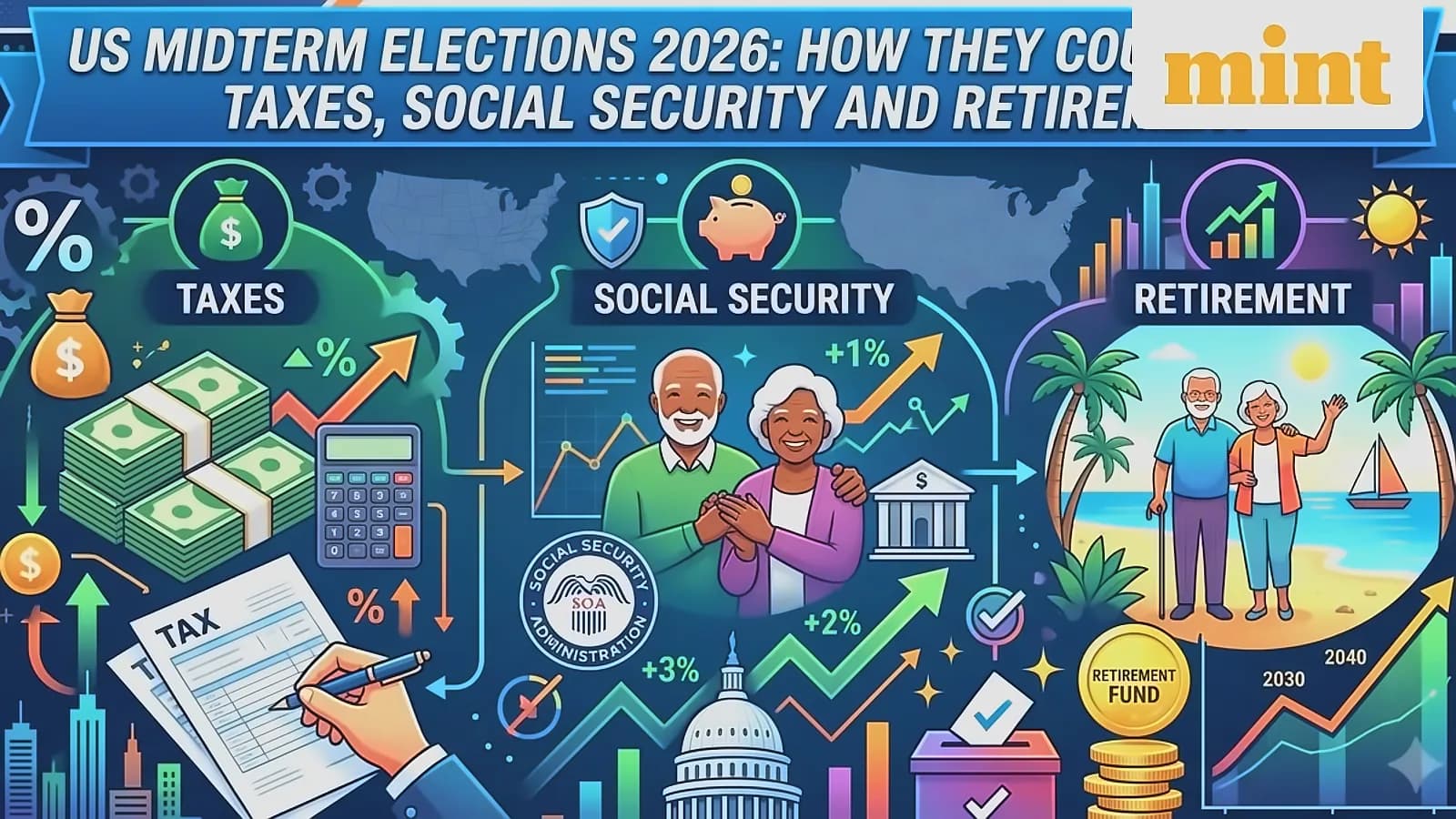
The 2026 US midterm elections are expected to influence legislative actions for the next two years, though immediate financial impacts on taxes, Social Security, and retirement may be limited. According to a recent Fidelity Investments report, a closely divided Congress could make major legislation harder to pass, automatically shifting focus towards executive actions and regulatory changes. Areas to watch include health savings accounts (HSAs), retirement account access, and financial services regulation. However, trade policy has emerged as a significant election driver, with 75% of registered voters saying tariffs will be important to their vote this November, according to a new Cato Institute/Morning Consult survey of 4,150 registered voters.
The 2026 midterm elections represent a potential turning point for trade policy, with 75% of registered voters indicating tariffs will be important to their vote this November. As per the Cato Institute/Morning Consult survey, 55% of voters who say tariffs are important plan to vote for Democratic congressional candidates, while 36% plan to vote Republican. Conversely, among those who say tariffs won't matter much, 61% plan to vote Republican and 22% plan to vote Democratic. 74% of voters believe Trump's tariffs have raised prices of things they buy at the store, with 53% saying tariffs have weakened the US economy. The survey found that 74% say Trump's tariffs have increased the prices of things they buy, including 84% of Democrats, 66% of Republicans, and 73% of independents who agree with this assessment.
Despite Trump's historically low approval ratings in the mid-30s, Democrats are positioned to outperform current forecasts in the 2026 midterm elections. According to political analysts, Democrats currently hold a 6-point lead in generic ballot polls, which historically translates to 21-63 seat gains for the out-party when they enjoy such a late-summer advantage. The Democrats start with five seats down (219-214) and need just three net wins to regain the House majority. With 381-395 districts considered safely Republican, only about 3-4 dozen districts remain truly competitive, where Democrats are expected to win nearly all contests. This represents a potential 25-30 seat gain that would amount to a decisive rebuke of the Trump administration.
The Trump administration's policies have created significant challenges across multiple sectors, with more than 4 million Americans losing their SNAP benefits in just the first year of the 'big, ugly bill'. According to recent reports, eight million Americans have lost their Affordable Care Act health care, while farmer bankruptcies are up almost 50%. The administration has also supported the largest cut to Medicaid in American history, with nearly every Republican backing these measures. These policy changes have contributed to economic concerns, with 62% of Americans reporting they've been worried at some point over the past year about being able to pay bills, including 26% who were worried and unable to pay their bills.
The One Big Beautiful Bill Act passed in 2025 has already established tax brackets, capital-gains brackets and a higher standard deduction, providing greater certainty for taxpayers in the near term. However, several provisions are set to expire between 2028 and 2029, including the expanded state and local tax (SALT) deduction, a $6,000 senior deduction, and exemption for some tipped income. CA Ruchika Bhagat, MD at Neeraj Bhagat & Co., emphasizes that 'the date that deserves genuine attention isn't this election — it's 2028–2029', representing the real planning horizon for taxpayers. Despite these expirations, the current tax framework provides stability that may overshadow immediate election uncertainties.
Social Security's finances face significant challenges, with projections indicating that the Old-Age and Survivors Insurance trust fund could begin to run out of money towards the end of 2032. According to Fidelity, possible reform proposals have included raising the benefit-receiving age, increasing the FICA tax threshold for higher earners, or reducing benefits. However, Bhagat expects limited immediate action, stating that 'Social Security reform remains politically difficult' and that 'Despite the trust fund's projected shortfall in the early 2030s, I don't expect lawmakers to act decisively in the immediate aftermath of this election'.