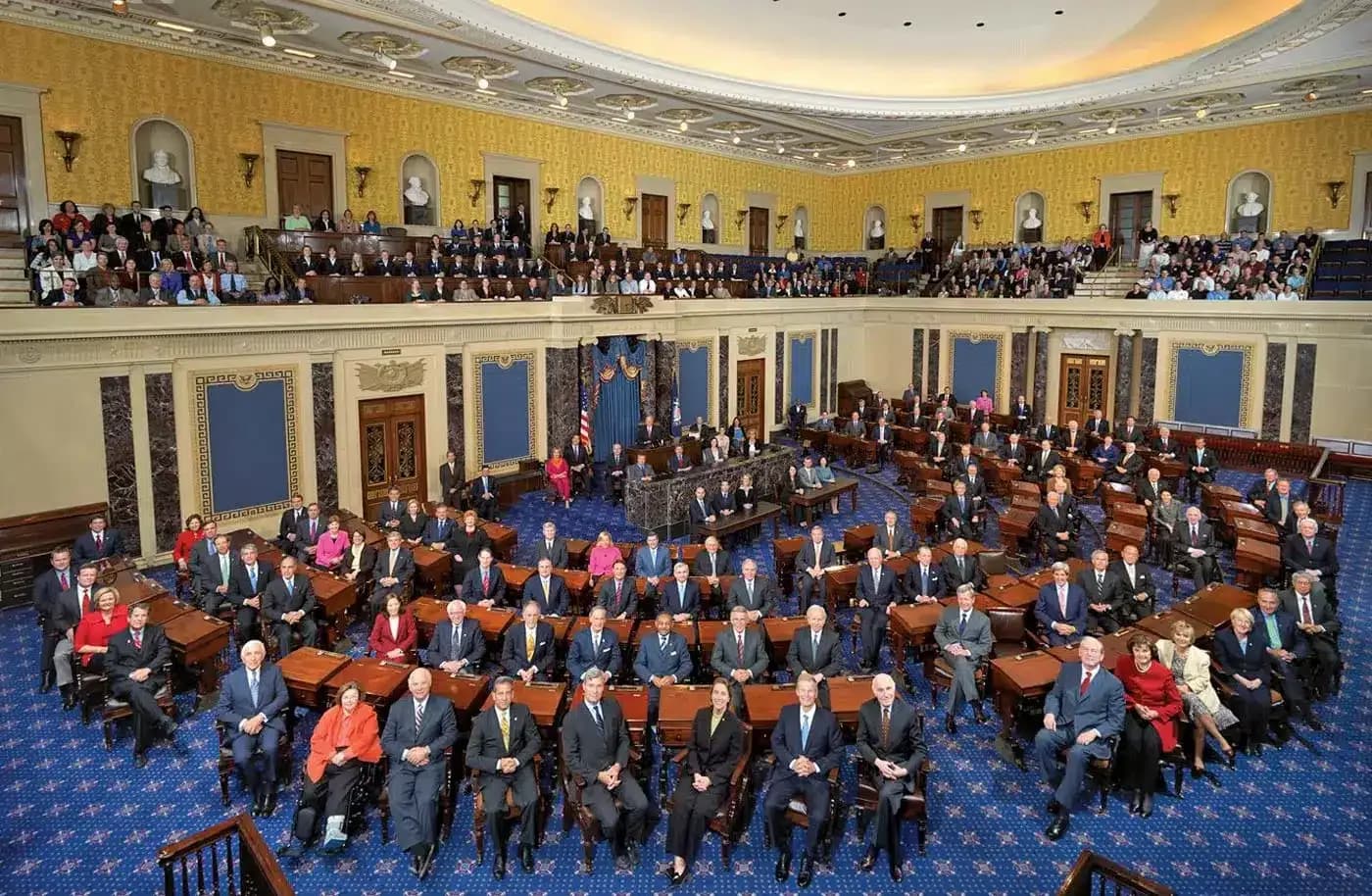
Prediction markets now give Democrats better than 7-in-10 odds of flipping the Senate, with Silver Bulletin via Newsweek reporting Democrats at 74.8% Senate odds as of the latest data. According to U.S. Bancorp research, a Republican president paired with a fully Democratic Congress has historically delivered just 1% below-average three-month stock returns, representing a significant shift from the typical pattern. CXO Advisory data shows that a Republican president with a Democratic Senate averaged only 3% annual S&P 500 returns versus an 8% all-years baseline. The party's average currently sits at 52.2 seats on data through October 8, with Polymarket pricing Democratic control at 63.5% and Kalshi via DeFiRate at 60.2%. Decision Desk HQ gives Democrats 56% odds with an expected 51 Democratic seats, while several key races remain tossups including Ohio (51% Democratic), Iowa (52%), Maine (54%), and Texas (57%).
According to The Financial Express, since 1957, nearly every US president has left the stock market in better shape than when they took office, with two notable exceptions tied to resignation and financial crisis. As reported by The Financial Express, midterm years have historically shown the largest average market pullbacks of any year within a four year presidential cycle, based on data spanning 1950 through 2025. However, these larger average declines have been followed by the strongest average rebounds over the subsequent twelve months, a pattern that complicates efforts to time market entries around political events. The upcoming 2026 US midterms on November 3 represent the next major political test, with Trump remaining president but control of Congress at stake, potentially affecting his policy agenda and financial markets.
As reported by The Financial Express, data since 1951 shows average annual S&P 500 returns of about 12% under Democratic presidents compared with about 8% under Republican presidents. According to The Financial Express, a split Congress, where each chamber is controlled by a different party, has produced the strongest average stock market returns of any Congressional configuration. Market strategists note that underlying economic fundamentals, including corporate earnings, Federal Reserve policy and inflation trends, tend to matter considerably more for long-term returns than which political party holds power in Washington. The past few years have demonstrated the power of politics to move markets, from Trump's election victory and tariff uncertainty to Middle East conflicts, with investors and traders having no shortage of political risks to navigate.
As reported by The Financial Express, Democrats are the favorites to flip the House with Nate Silver's FLIPR's Deluxe model showing Democrats' chances at up to 93% as of October 11. Polls indicate a Democratic lead of 9.5 points with 51.1% support for Democrats and 41.6% for Republicans. A Democratic sweep could affect the bond market more than equities, particularly if Democrats win both Houses or at least one House with a sizeable majority. According to The Financial Express, US Treasury yields are at multi-decade highs across different durations, and gridlock would likely push investors toward safe-haven assets, driving bond prices higher and yields lower. The likely setup is a Republican president facing a Democratic House and a Democratic Senate, creating potential for negotiations rather than immediate policy changes.
According to The Financial Express, market strategists generally caution against attempting to adjust portfolios based on anticipated election outcomes, instead favoring a consistent, diversified investment approach that allows returns to compound over longer periods regardless of short-term political developments. As reported by The Financial Express, specific sector expectations tied to election outcomes have frequently failed to materialize. Clean energy stocks did not see the anticipated boost following a change in presidential administration associated with environmental policy priorities, while coal related investments did not benefit as expected under an administration publicly supportive of the industry, with broader market indices outperforming both groups over the relevant periods. The upcoming midterms on November 3, 2026, raise important questions about what could change and how markets might respond, with historical data suggesting that while midterm cycles show larger average pullbacks, they are typically followed by the strongest average rebounds over subsequent twelve months.
According to The Financial Express, PIMCO's Libby Cantrill expects gridlock rather than sweeping policy change, whatever the election outcome. As reported by The Financial Express, Cantrill notes that "usually, the midterm election is a referendum on the party in power," with the House having a slim Republican majority and historically gaining 26 seats when the party not in power controls the chamber. The market base case suggests Democrats take the House while the Senate remains a toss-up, creating potential for negotiations rather than immediate policy changes. The outcome of House and Senate races, subsequent Federal Reserve policy decisions, and corporate earnings trends through year end may together shape near-term market direction more than the election result itself. For investors and traders navigating the 2026 US midterms, historical data suggests that while political risks can move markets, the strongest average rebounds typically follow midterm pullbacks, making a diversified approach more prudent than timing the market based on election outcomes.