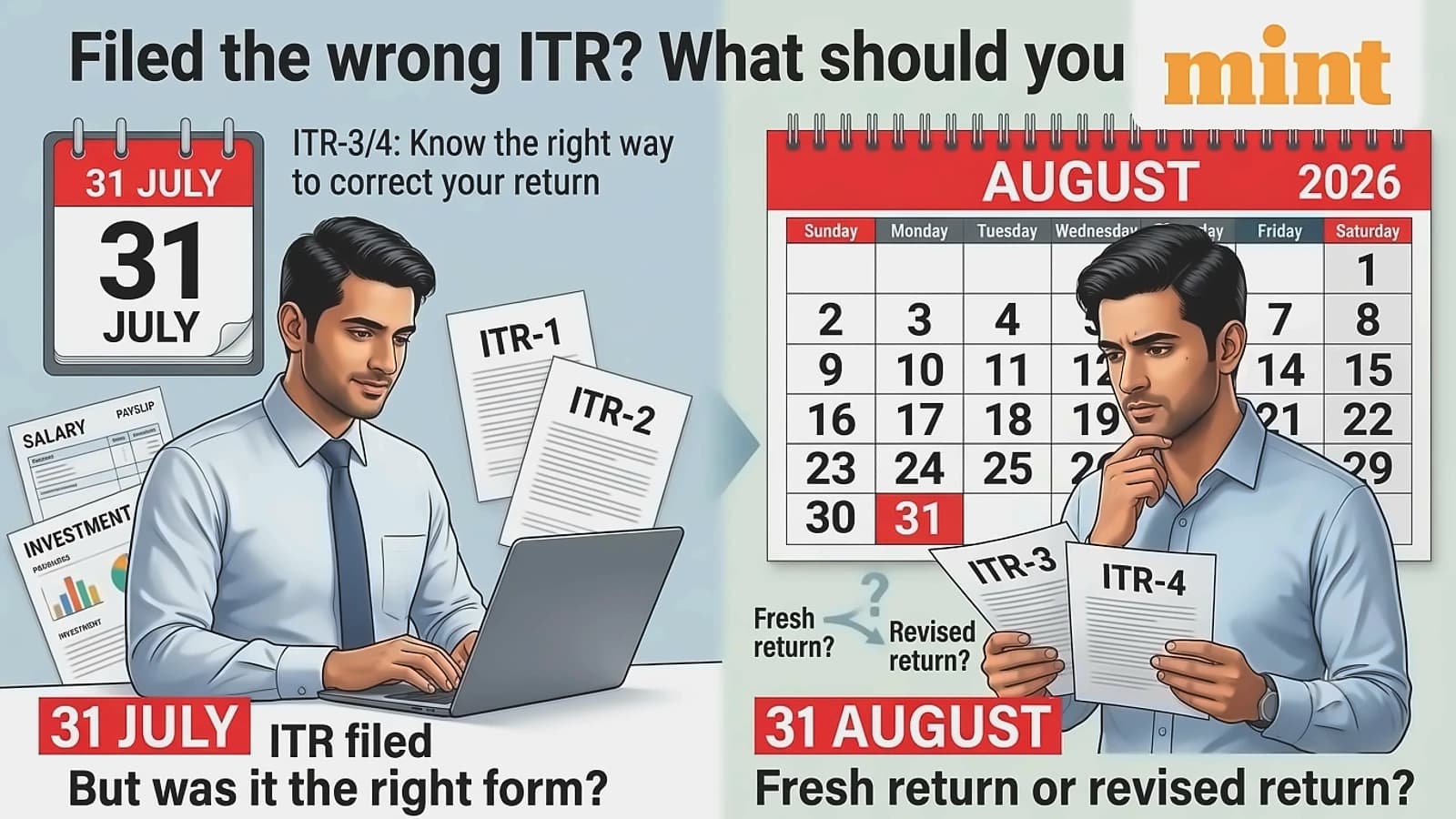
For FY26 (AY27), the deadline for individual taxpayers filing ITR is 31 July 2026, while those using ITR forms 3 and 4 have until 31 August 2026. According to reports from Mint, choosing the correct ITR form is crucial for smooth processing by the Income Tax Department. The forms include ITR-1 for salaried individuals with one house property, ITR-2 for individuals without business income, ITR-3 for individuals with business or professional income, and ITR-4 for taxpayers with presumptive income from business or profession.
As reported by Mint, taxpayers often make critical mistakes including using inappropriate forms, failing to e-verify returns within the 30-day deadline, and providing incorrect personal details such as name, address, and PAN number. The article emphasizes that wrong assessment year could trigger double taxation, while incorrect personal details can impact refund processes. Additionally, selecting the wrong tax regime can lead to unnecessary deductions, and failure to disclose all income sources may result in tax notices and penalties.
According to the report, taxpayers must use Form 26AS and Annual Information Statement (AIS) to ensure ITR details match both documents. These forms contain information about advance tax payments, Tax Collected at Source (TCS), and Tax Deducted at Source (TDS). For salaried taxpayers with multiple employers, Form 16 from all concerned parties is required when filing returns. The article notes that mismatches between documents could trigger tax demands and impact refund status.
As reported by Mint, taxpayers must pay advance tax within due dates through four installments - 15 June, 15 September, 15 December, and 15 March. The penalty for missing deadlines is 1% of the unpaid amount. The article emphasizes the importance of claiming exemptions under relevant sections such as 54, 54EC, and 54F for capital gains reinvestment, as forgetting to claim these benefits can result in missed tax benefits due to haste or oversight.
When filing ITR, one often-overlooked detail is disclosing meal card benefits like Sodexo, Pluxxe, and Zaggle that many salaried employees receive as part of their compensation. As per CA Abhishek Soni, CEO and Co-founder of Tax2win, taxpayers should disclose meal card benefits in their ITR even if they fall within tax-exempt limits, because these are treated as part of salary (perquisites). The current tax exemption is limited to ₹50 per meal under the old tax regime, but from April 1, 2026, meal vouchers of up to ₹200 per meal will be tax-exempt under both old and new tax regimes. Assuming two meals per working day and 22 working days a month, this could translate to an annual tax-free benefit of up to ₹1,05,600. Despite this tax advantage, the reporting requirement doesn't go away, as meal card benefits must still be disclosed in returns with exemptions claimed separately.