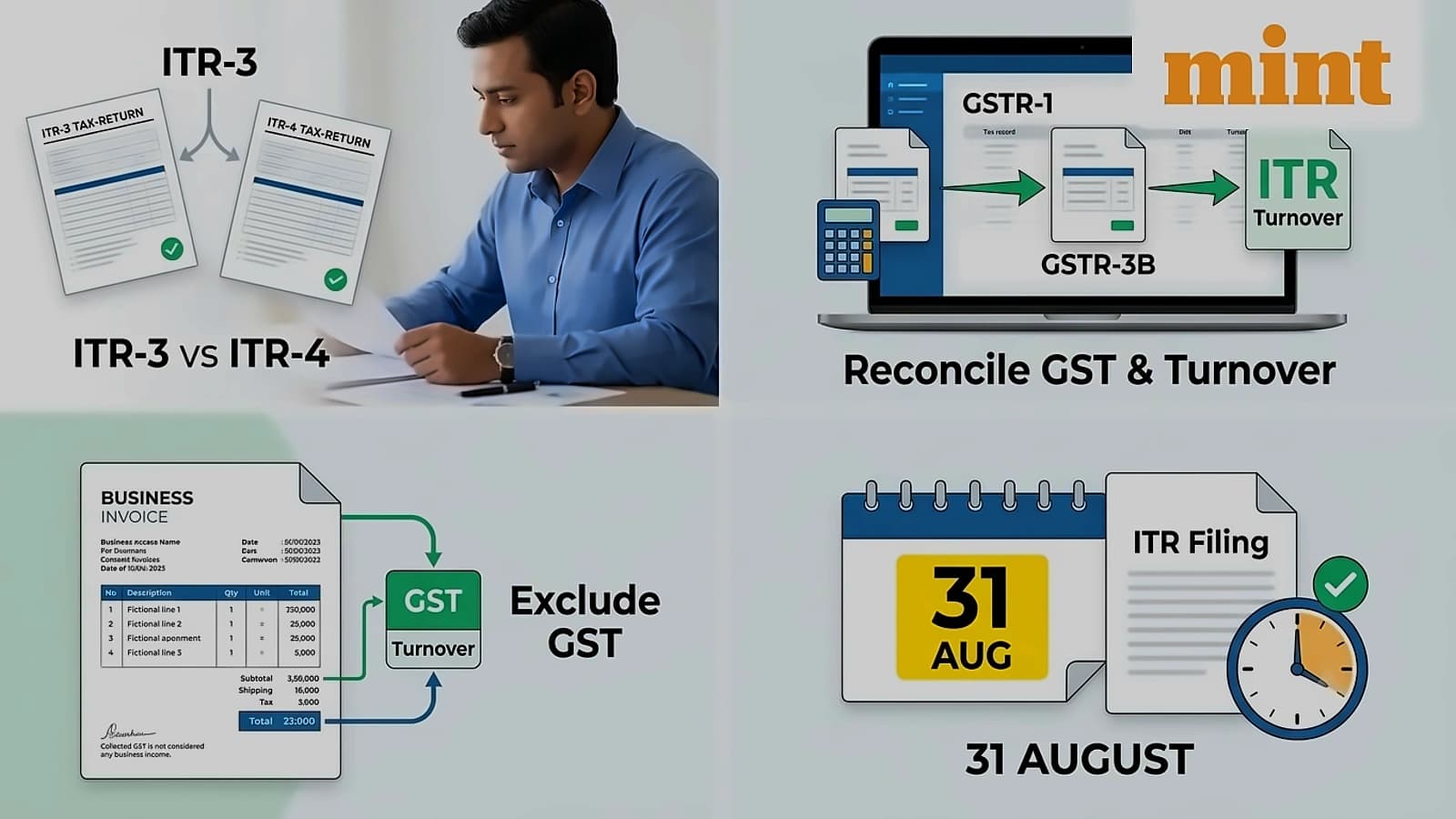
Before filing ITR for AY 2026-27, taxpayers must gather comprehensive documentation to ensure accurate tax compliance. According to recent guidance, the foundation of accurate tax filing lies in gathering the right paperwork before starting the process. Form 16 remains among the most important documents for salaried taxpayers, containing salary income details and deductions claimed through employers. Form 26AS provides critical information about tax collected at source (TCS) and helps verify taxes already credited to accounts. The Annual Information Statement (AIS) and Taxpayer Information Summary (TIS) help cross-check income disclosures and provide essential verification details. However, Form 16 only covers salary and TDS on it - it does not include other income sources like interest, dividends, capital gains, or freelance income that must be reported separately.
The document requirements vary significantly based on taxpayer categories. Salaried employees need monthly salary slips to reconcile income reported in Form 16 and identify discrepancies, along with interest certificates from savings accounts and fixed deposits. Business owners require comprehensive record-keeping including balance sheets summarizing revenue and expenses, GST returns and invoices for turnover reconciliation, and principal repayment certificates for property owners. Investors must maintain consolidated account statements for capital gains reporting and interest certificates from various financial instruments. Self-employed individuals need tax-saving investment receipts and deduction claims with proper supporting evidence. Freelance income, rent, and foreign RSUs must be disclosed as separate income sources, with rental income requiring specific computation rules and foreign assets requiring disclosure with steep penalties for non-compliance.
The Income Tax Department has released Excel utility forms for ITR-1 (Sahaj), ITR-2, ITR-3, and ITR-4 (Sugam) for AY 2026-27, allowing taxpayers to prepare returns offline before digital submission. Taxpayers have until 31 August 2026 to file their returns through the official e-filing portal, with the deadline extended by one month from the previous 31 July. To access ITR-1 filing, taxpayers must log in to the e-filing portal, select Assessment Year 2026-27 and Online filing mode, then navigate to the e-File - Income Tax Returns section. The process requires selecting the applicable ITR-1 form, entering personal information, and completing all sections including income details and deductions. For tax liability cases, taxpayers receive 'Pay Now' and 'Pay Later' options, while those with no tax liability proceed to the 'Preview and Submit Your Return' page for final validation.
Successful ITR filing requires mandatory e-verification through the e-Verify service, which is the easiest and most convenient method available. Taxpayers can choose from multiple verification options including Aadhaar OTP, bank account OTP, or mobile number OTP. For manual verification via ITR-V, taxpayers must send a signed physical copy to the Centralized Processing Center, Income Tax Department, Bengaluru 560500 within 30 days of uploading. Importantly, where returns are uploaded and e-verification/ITR-V is submitted within 30 days, the uploading date is considered the furnishing date. However, if verification is submitted after 30 days, the verification date becomes the furnishing date, with all late filing consequences applying as per the Income Tax Act. Returns not verified within the specified time limit are treated as invalid, making timely completion essential for proper tax compliance.
The Income Tax Department has introduced an online ITR Status service that allows taxpayers to track the progress of their filed income tax returns through two convenient access modes. According to reports from Mint, the facility is available to all taxpayers for returns filed against their Permanent Account Number (PAN), and can also be accessed by authorized signatories, e-Return Intermediaries (ERIs) and representative assessees for returns filed in those capacities.
Taxpayers whose PAN has become inoperative due to non-linking with Aadhaar may receive portal alerts while checking return status. According to Mint, the system informs such users that refunds cannot be issued while the PAN remains inoperative. The portal provides a 'Link Now' option allowing users to complete the PAN-Aadhaar linking process after paying the applicable fee, wherever required. Keeping PAN active and ensuring the return has been successfully verified are essential steps to avoid delays in processing or refund issuance. Taxpayers should maintain correct bank details to ensure timely processing of refunds and keep all documents organized for potential clarification requests from tax authorities.