Salaried individuals who rushed to file their tax returns ahead of the 31 July deadline may have accidentally used the wrong form. According to reports from Mint, certain hidden or overlooked income streams can make taxpayers ineligible to file simple forms such as ITR-1 or ITR-2. The error typically occurs when individuals with certain income types, such as freelancing, consultancy, commission, or brokerage income, mistakenly file these simpler forms instead of the required ITR-3 or ITR-4. As the August 31 deadline approaches, thousands of founders and independent professionals face the same challenge of choosing between ITR-3 or ITR-4 forms, with the Income Tax Department leaving no room for guesswork.
As reported by Mint, certain types of income can trigger the requirement to file ITR-3 or ITR-4 even if primary income comes from salary. These include income earned from services (freelancing or consultancy), commission, brokerage income, side businesses, intraday trading, F&O trading, income earned as a partner in a firm, or remuneration and interest earned as a partner in a firm. ITR-4 is specifically required only if the taxpayer has opted for presumptive taxation under sections 44AD, 44ADA or 44AE, with total income limit of ₹50 lakh. According to the latest guidance, ITR-4 (Sugam) is designed specifically for micro-businesses and independent professionals under ₹50 lakhs, allowing them to declare a flat percentage of revenue as profit rather than showing detailed expenses.
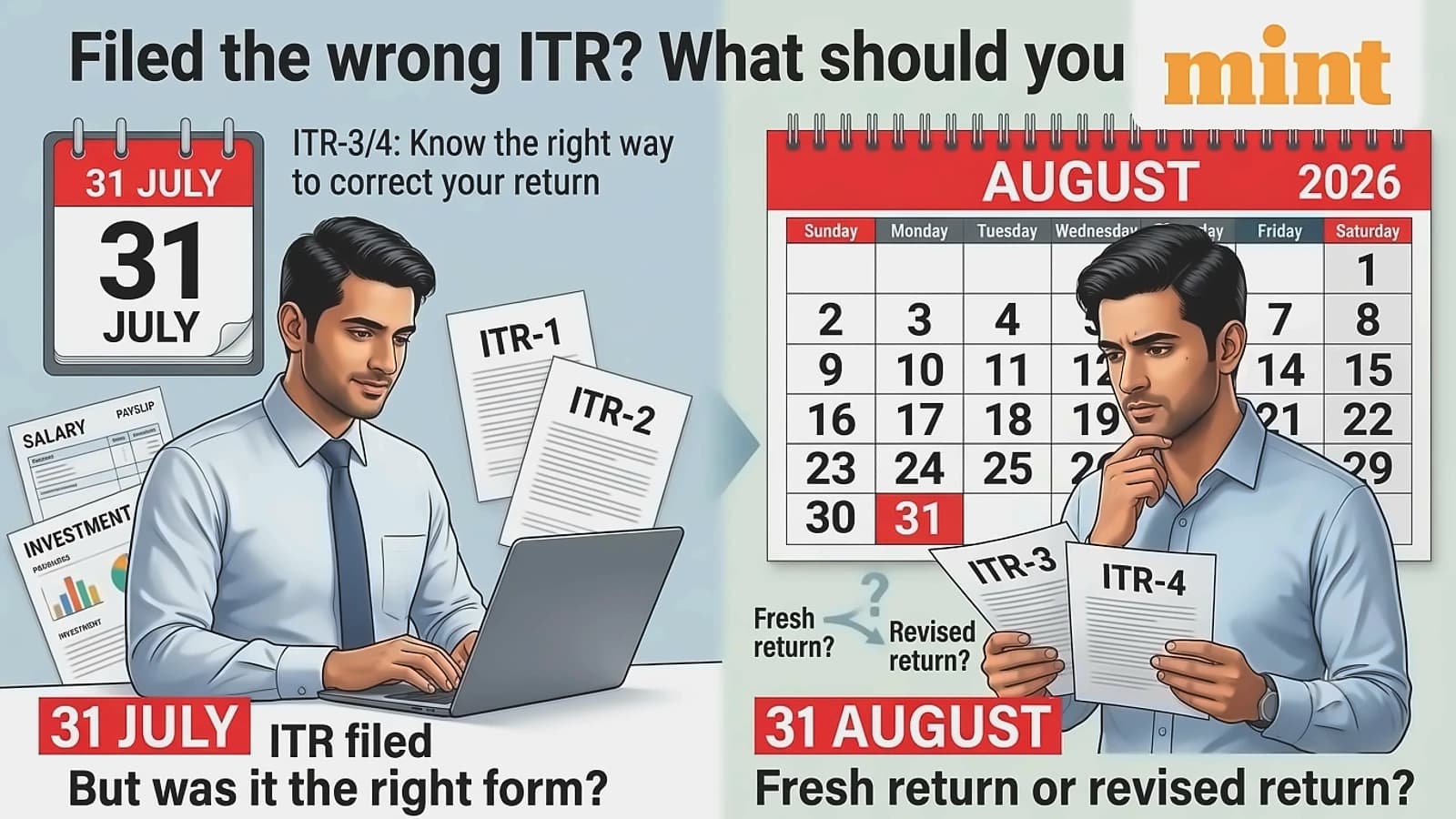
According to Siddharth Maurya, Founder and Managing Director of Vibhavangal Anukulkara, taxpayers with incorrectly filed returns should not file a new original return. As reported by Mint, if the earlier return is unverified, taxpayers can use the discard option on the portal to file the correct form by 31 August, provided the return status is 'Unverified' or 'Pending for verification' and ITR-V has not been sent to CPC. The discard option is permanent, requiring taxpayers to prepare corrections before taking this step. For founders and independent professionals, the ITR-4 (Sugam) form offers a stress-free tax season option if their margins are naturally high and they qualify for the presumptive taxation limits. For taxpayers with verified returns, the only option is to file a revised return under Section 139(5) of the Income Tax Act.
As reported by Mint, taxpayers should file a revised return of ITR-3 or ITR-4 by 31 August or later for AY 2026-27. The revised return must be filed on or before 31 March 2027, or before completion of assessment, whichever is earlier. When revising, taxpayers must select Section 139(5), provide acknowledgement number and filing date of the original return, and disclose entire income rather than omitted amounts. Additional self-assessment tax and interest must be paid, with the revised return requiring verification within 30 days. The government has made it clear that extensions are a thing of the past, with August 31 being the absolute finish line for businesses whose annual turnover does not cross the mandatory tax audit threshold.