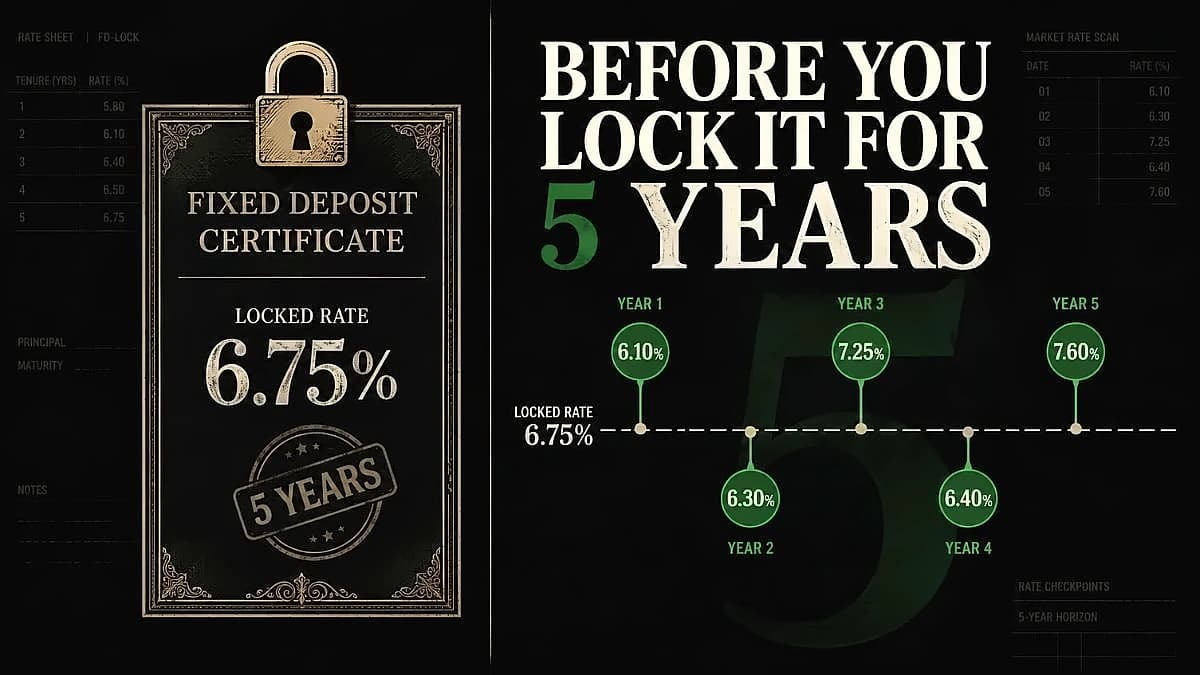
As of May 2026, major banks in India are offering interest rates up to 7% for general depositors, with senior citizens usually receiving an additional 50 basis points. According to reports from Mint, public sector banks such as State Bank of India (SBI) offers an interest rate of up to 6.05% for general investors and 7.05% for senior citizens on callable deposits up to ₹3 crore. Other major lenders including Bank of Baroda, Punjab National Bank, HDFC Bank, IndusInd Bank and ICICI Bank are offering approximately 6.25%–7% for regular customers and 6.95%–7.5% for senior citizens on three-year deposits.
For tax-saving FDs, SBI offers an interest rate of 6% for general depositors and 6.75%–6.90% for senior citizens. As reported by Mint, other private lenders such as ICICI Bank, HDFC Bank, and Axis Bank offer interest rates ranging from 6.25%–6.60% for general customers and between 6.75%–7.20% for senior citizens. While these rates are comparable to standard deposits, the interest earned on tax-saving FDs is fully taxable as per the investor's income slab. However, debt funds offer better tax efficiency for retirees, with long-term capital gains taxed at 20% with indexation benefits for investments held over three years, compared to FD interest being taxed annually as per the investor's tax slab.
Regular FDs have a flexible lock-in period ranging from 7 days to 10 years, during which premature withdrawal is permitted with a penalty of 0.5% to 1% on the interest rate. According to Mint, some banks offer non-callable FDs that provide higher interest rates but do not allow premature withdrawal except in exceptional circumstances. In contrast, tax-saving FDs have a mandatory lock-in period of 5 years during which premature withdrawal is not permitted at all. Debt funds generally offer higher liquidity than FDs, with withdrawals processed within a day or two without penalties, though they may be subject to exit loads within a short period after purchase.
Under Section 80TTB, senior citizens can claim a maximum deduction of ₹50,000 on interest income from savings accounts or deposits under the old regime. As reported by Mint, tax-saving FDs allow investors to claim deductions of up to ₹1.5 lakh per financial year under Section 80C of the Income Tax Act. However, investors must note that the interest earned on tax-saving FDs is taxable, unlike the exemption available to senior citizens on regular FD interest income. Debt funds offer better tax efficiency for retirees, with long-term capital gains taxed at 20% with indexation benefits for investments held over three years, compared to FD interest being taxed annually as per the investor's tax slab.
According to Mint, tax-saving FDs do not allow loans or overdraft facilities during the mandatory five-year lock-in period, limiting liquidity access. In contrast, regular FDs generally offer the option to avail loans or overdrafts against the deposit, providing easier access to funds without breaking the investment. For retirees, debt funds offer greater flexibility with various types including liquid funds, short-term funds, and corporate bond funds, allowing diversification based on risk tolerance and income needs. Debt funds also provide better inflation protection, with some debt funds offering returns that keep pace with inflation, particularly when invested over the long term, unlike FD returns that remain flat and may fall short if inflation rises.