The global interest rate landscape has experienced a significant shift as major central banks implement contrasting monetary policies. The Federal Reserve raised rates by 25 basis points to 3.75%-4% on September 16, marking its first increase since July 2023, while the Bank of Japan lifted its policy rate to 1.25% - its highest level since 1995. This divergence reflects different inflation outlooks and economic conditions across regions, with the Fed citing inflation that remains "too high and has been for too long" as justification for removing accommodation. The RBI halted inflation-indexed bonds (IIBs) issuance after 2014, transitioning to CPI-linked forms in 2013-14, as the central bank officially adopted CPI headline inflation as the primary monetary policy anchor while stopping focus on WPI for rate adjustments.
Fixed deposit rates are not determined solely by the RBI repo rate, as commonly believed. According to recent reports, banks employ four key factors to price their fixed deposits, with the central bank's policy rate representing only one component of the overall rate-setting mechanism. This understanding challenges the conventional wisdom that FD rates move in lockstep with the RBI repo rate, particularly as global central banks implement varying monetary policies. The Government of India is not issuing any fresh, dedicated sovereign IIBs in the domestic debt market as of 2026, relying instead on traditional floating-rate and fixed-rate bonds alongside SGBs for specialized retail categories.
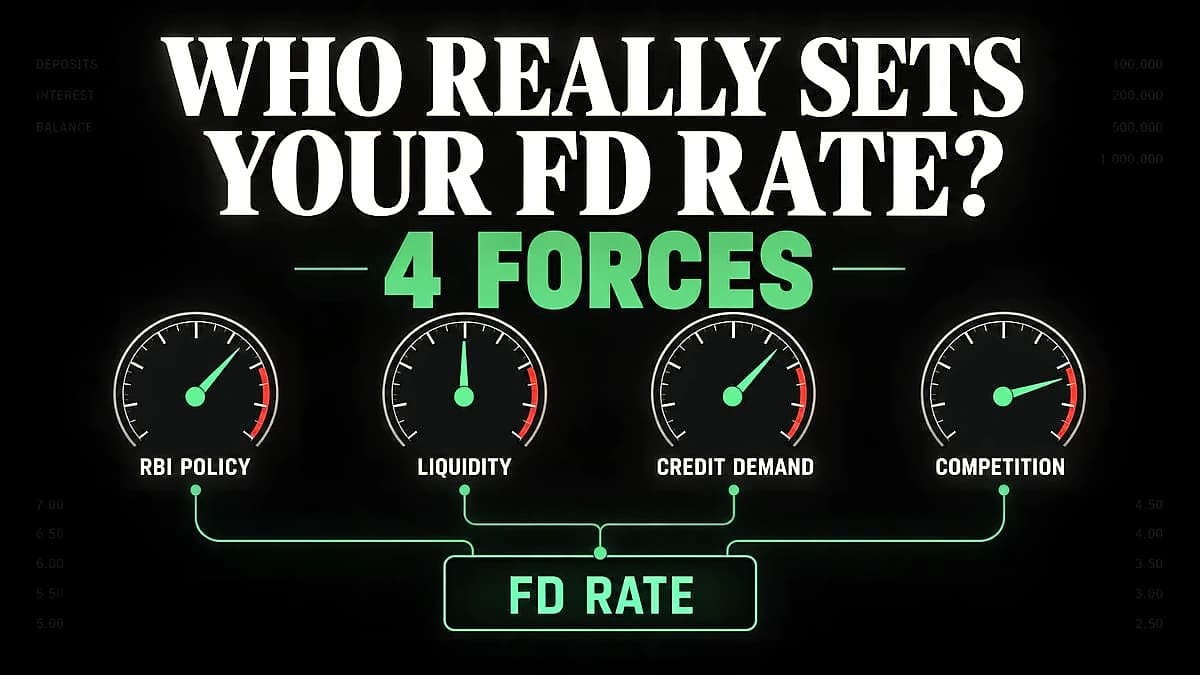
Banks utilize four primary factors when determining FD rates, as reported by financial experts. These include the RBI repo rate, competitive market conditions, customer demand patterns, and institutional liquidity requirements. The rate-setting process reflects banks' need to balance deposit mobilization with their liquidity management objectives, creating a more nuanced approach than the traditional single-factor model. This framework becomes particularly relevant as global rate cycles diverge, with banks in different regions facing varying funding cost pressures. The RBI's monetary policy committee faces a critical decision as inflation approaches the policy rate while economic growth and credit expansion remain robust.
The RBI's monetary policy committee faces a critical decision as inflation approaches the policy rate while economic growth and credit expansion remain robust. As reported by financial experts, this combination creates a scenario where the policy rate becomes less effective each month it remains unchanged. The central bank retains timing as its primary instrument, with a 25 basis point adjustment ultimately costing less than a delayed 50 basis point correction. This approach aligns with global central banks' strategies to act pre-emptively before conditions deteriorate further. The Government implemented reverse auctions to buy back and close outstanding IIB stocks with surplus cash balances, including the 1.44% Inflation Indexed Government Stock-2023, due to lower retail appetite and more complex structures.
Banks must adhere to DICGC limits when pricing their fixed deposits, according to regulatory requirements. Additionally, tax rules significantly impact FD returns, with specific tax treatment applying to different FD categories and tenures. These regulatory and tax considerations form part of the comprehensive framework that influences banks' FD pricing strategies beyond the RBI repo rate, particularly as global rate cycles create different funding cost environments across regions. The CPI (Consumer Price Index) in India has averaged about 5-6% over the long term, continually increasing the cost of household products, medical care, education, and other necessities. An investment with nominal interest of 7% after 30% income tax would result in a post-tax real return of negative if inflation hovers around 5-6%.
Recent regulatory changes have introduced new disclosure norms for 2026 that affect how banks communicate FD rates and terms to customers. As reported by financial experts, these disclosure requirements represent a significant shift in how banks must present their FD offerings to depositors, potentially influencing how banks structure their rate-setting approaches and customer communication strategies. This regulatory framework becomes increasingly important as global monetary policy divergence creates more complex rate environments for banks to navigate.